
Pinned

⭐
Nov '25 •
NEW? START HERE 👇
Welcome to ADHD Harmony. I'm excited you're here. This community helps you turn ADHD from something you fight against into your greatest advantage. No quick fixes or productivity hacks that fall apart after a week. This is identity-level transformation, grounded in neuroscience and real experience. The 5-Day Challenge is OPEN for FREE temporarily. 👉 Get started here
Pinned
⭐
2d •
🚨 DOORS CLOSING SOON - 6 weeks from now, your life could look like this.
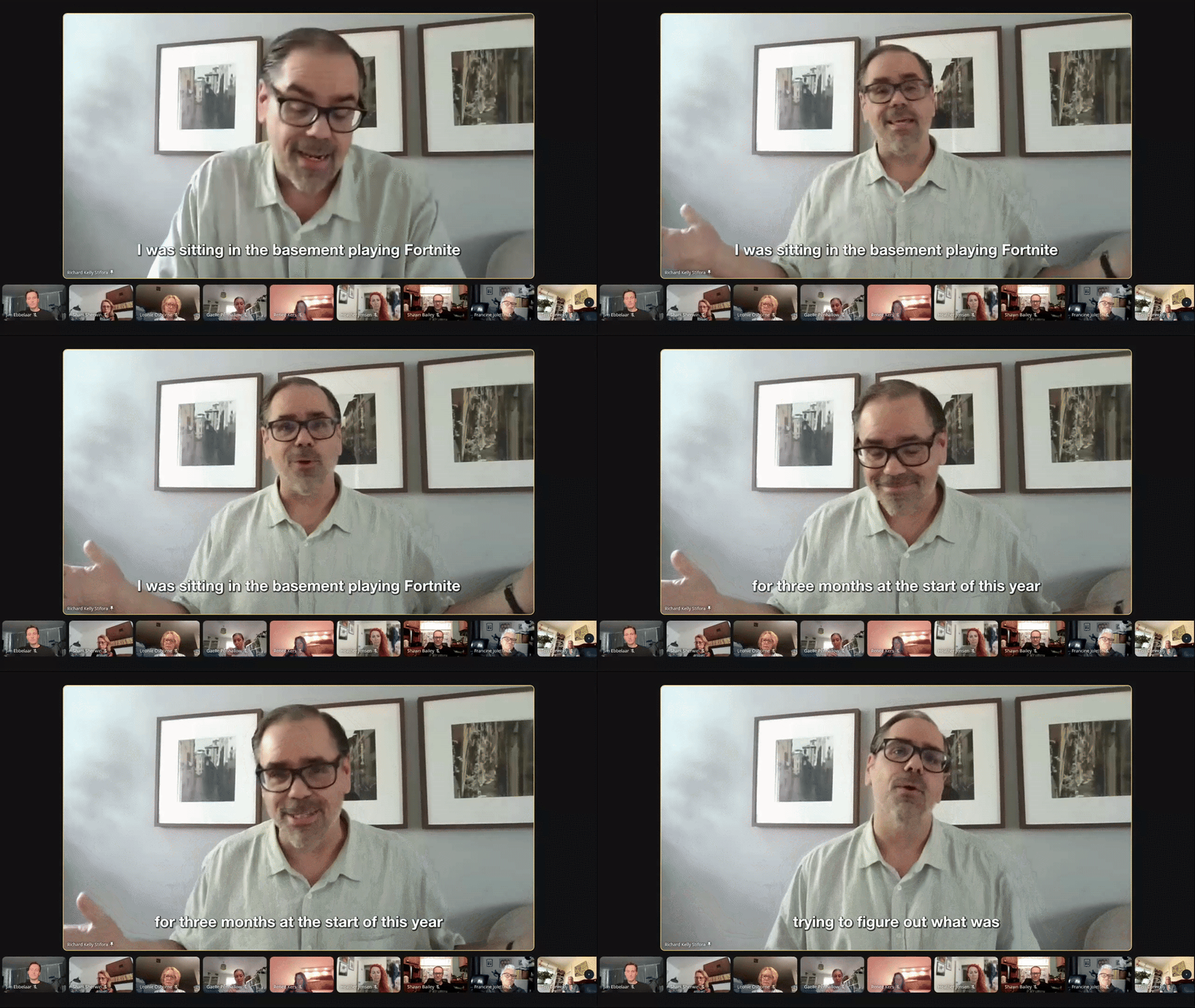
I could spend hours telling you what the 6 week program "Reinvent your ADHD Life" is. I'd rather show you. Below is Cohort 3 on the day they completed the 6-week program, sharing, in their own words, what changed. Just 42 days earlier, they were sitting where you might be today: overwhelmed, skeptical, exhausted, or wondering if anything would finally stick. Now it's their turn to tell the story. If you're wondering whether this could be the right next step for you, start here. More information → Thank you to everyone in Cohort 3 and our continuation members for your courage, honesty, and willingness to share your journey. Your stories will help more people than you know. Much love, 💛 Jim @Daisy M @Kimi M @Vesna S. @Annika Strandhed @Bobbie Eden @Shani Sherwin @Kelly Slater @T B @Colleen C @Dorine Hooykaas @Martina Rant- Lipovac @Leonie Osborne @Jana Covington @Richard Kelly Stifora @Jessica Walker @Cheryl Issa @J Posco @Clint Dunham @Cherie Perry @April Terreau @Jeff Preciado @Nancy Grosso @Karen Hand @Gaelle Penhallow @Jeff Jamison @Stormee Willett @Robin Keeler @Val Otto @Ganesh Sanjivi @Laura Robinson @Lorna Clark @Vincius Oliveira @Mik Shridhar Højlund Bøll @Kathy Parks @Ligia Ryon @Vienna Dunham @Emelie Axelsson @Francine Jolette @Lisa M @Kate Everitt @Shawn Bailey @Con For @Penn S @Teri Connolly @Maria Wright @Regina Dunne @Penny Gillett @Britt Moore @Sam Collins @Jacqueline Millar @Winfried Jakob @Dana Wells-Gomez @Andrew Mich @Randi Winter @Trish Sanders @Lorna Boales @Diana Domantay @Esther Lindsey @Deb Brouwer @Martin Hunt @Gerard O'Hara @Sara Ellisson @Gillian Caughey @Tracy Weiss @Cathy A Castagna @Fiona Wright @Lynn Berry @Gail Coleman @Heather Jensen @Mamta Buch @Randy Keats @Sammy Boyster @Corinne Clements @Varun Sharma @Darci Wert @Marion Steed @Marlies de Boer @Deanna Dalton @Harley Sherman @Nadine Fargier @Shanon Grady @Katie W @Sean Frost @Pam Raney
Pinned
⭐
15h •
Curious, what has been most valuable to you?
I’m improving the onboarding for ADHD Harmony and I’d love your input. What has been the most valuable thing you’ve gotten from this community/our programs so far? I want to make sure new members get as much value as possible right from the start, so your answer will help me shape the onboarding around what actually works. Would love to see your input in the comments.

21h •
📅 Daily Check-in - June 30, 2026
💭 Reflection: I’m over the moon I have done this challenge it’s made me feel more peaceful, calm and learned so much about ADHD and how I can take action to keep myself balanced, my happiness, energy, focus, motivation and calmness have all improved since I first started. I have seen a real improvement in myself over the last few days. Although just like me, I realised that this tab was all the way to the right and I had been posting them in the wins area. I’m such a pudding!! 🤪😂🤣 Wellbeing Scores: 😊 Happiness: 10/10 ⚡ Energy: 9/10 🎯 Focus: 10/10 😌 Calmness: 10/10 🌙 Sleep Quality: 7/10 🔥 Motivation: 10/10 ⭐ Average: 9.7/10 Activities from yesterday: 🛏️ Slept well not for long but it was restful ☀️ Morning Sunlight 💧 Stayed Hydrated 🌬️ Breath work 🍬 No Added Sugar ☕ No Late Caffeine 🥩 Hit Protein Goal 🧘♂️ Meditation ✨ Positive Mindset 📧 Inbox Zero 🌅 Focused Morning 1️⃣ Single Tasking 💊 Took medication and Supplements 🧠 Learning 🥦 Ate Fresh Vegetables 🌃 No Screentime at Night 🥗 Healthy Eating 🍺 No Alcohol 📅 No Meetings 📚 Reading 🎨 Creative Work 🤝 Helped Someone

17h •
Smiles!!!
I was nervous about going back to modern dance tonight after being off last week due to my injury. Extra pains and flare ups started last night in fearful anticipation. But, I did it! And, did it pretty well! I generally leave rehearsals for this company feeling down, heavily feeling that I'm not as good as I was before, and using the 45 minute drive home to criticize every little thing that I might have not done well enough, or said well enough, and beat myself up. Which just continues when I get into bed. Tonight, I smiled on the drive home! This might seem small, but is huge for me. I've been searching for that happiness again in dance. The self-criticism and health issues took that away from me at some point. Instead of the usual negative thoughts of every little mistake, I drove home smiling and proud of myself. I found myself saying "you are powerful and capable" versus the mean things I usually say to myself. Wow. I'm actually changing and improving. That darn doubt cockroach in my head can run away and shove off for now lol. Grateful and smiling! 🙏🤗❤️
1-30 of 6,061

skool.com/adhd
#1 Free ADHD community | 5-day Challenge: Learn to finish what you start in just 5 days and turn ADHD from liability into your greatest advantage ⚡️
Leaderboard (30-day)
1

🔥
+1758
2

🔥
+1619
3

+1558
4

🔥
+1476
5

🔥
+1168
Powered by