

Jun 4 •
Travel crock pot
Hey all, I got this travel crockpot which has worked great to heat up my fried cauliflower rice with meat. https://a.co/d/0a8tO38T


8d •
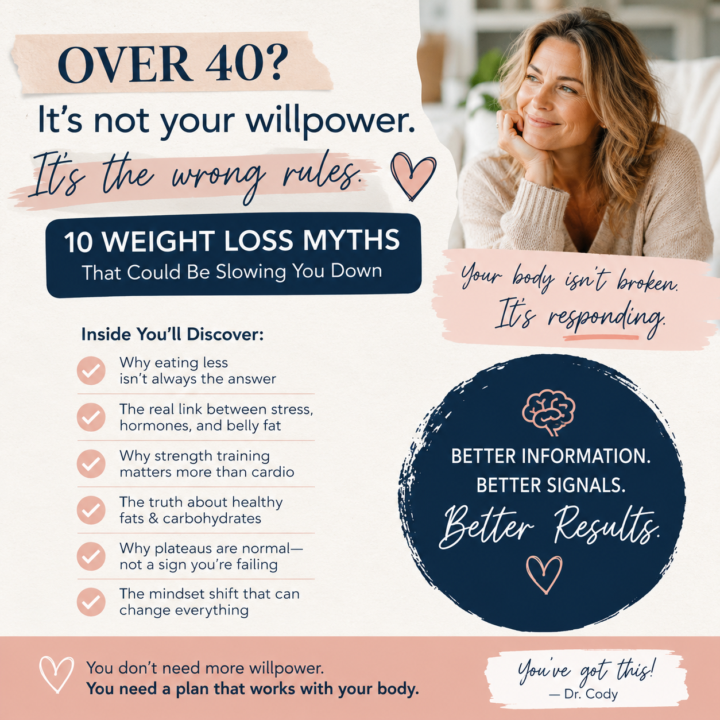
The Weight Loss Rules You Trust Most Might Be Keeping You Stuck
Most women over 40 don't need more willpower. They need better information. ❤️ If you've ever thought... ➡️ "I'm eating less, but the weight won't budge." ➡️ "Maybe I just need more cardio." ➡️ "I should probably cut out all carbs." ➡️ "I guess this is just what happens after 40."...you're not alone. The truth is, many of the "rules" we've been taught about weight loss were never designed with a woman's changing hormones in mind. Here are 10 of the biggest weight loss myths I see women following every single day—and some of them may actually be slowing your progress. ✅ Eating less is always the answer. ✅ Cardio is the best way to lose weight. ✅ Healthy fats make you fat. ✅ All carbs are bad. ✅ Weight loss should be perfectly linear. ✅ If a diet doesn't work, you failed. The reality? Your body responds to the signals you give it. Those signals come from your nutrition, your movement, your sleep, your stress, and your daily habits—not just how many calories you eat. Whether you're already in FAST40, working to maintain your results, or you're just beginning your journey here in our free community, understanding how your body works is one of the most powerful things you can do. Remember... Your body isn't working against you. It's responding to the signals it's receiving. When you change the signals, your body can change too. 💙 I'd love to hear from you... Which weight loss "rule" have you believed for years that you're now starting to question? Drop it in the comments. Let's learn from each other. Dr. Cody
3
0
Jun 4 •
Travel oven for car and travel
Hey all, I got this travel oven to reheat my food on the go. Don’t use ziplock bags with it but the bentgo food storage works well. https://a.co/d/0gnDJqQL

Jun 3 •
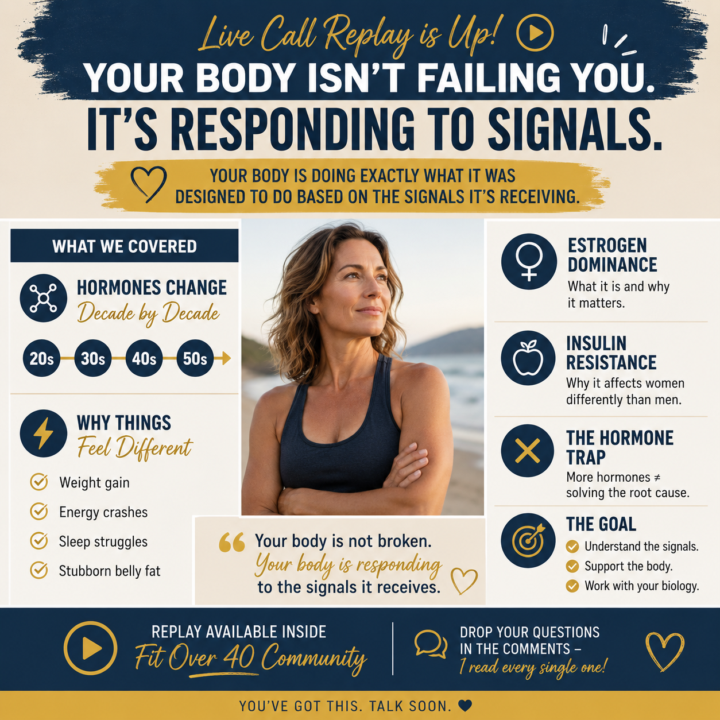
YOUR BODY ISN'T FAILING YOU. IT'S RESPONDING TO SIGNALS.
Just a quick reminder that yesterday’s live call replay is up in the Fit Over 40 community on Skool, and if you missed it live, you are going to want to carve out time to watch this one. We went deep on something I’ve been wanting to cover for a while, what’s actually happening to your hormones decade by decade. Your twenties, thirties, forties, and fifties. And more importantly, why the weight, the energy crashes, the sleep issues, none of that is your body failing you. Your body is doing exactly what it was designed to do based on the signals it’s been getting. We also broke down what estrogen dominance actually is, why insulin resistance hits women differently than men, and why chasing hormones with more hormones is exactly why so many women are still stuck. The replay is waiting for you. Go watch it, drop your questions in the comments, I read every single one. You’ve got this. Talk soon.
4
0
Jun 2 •
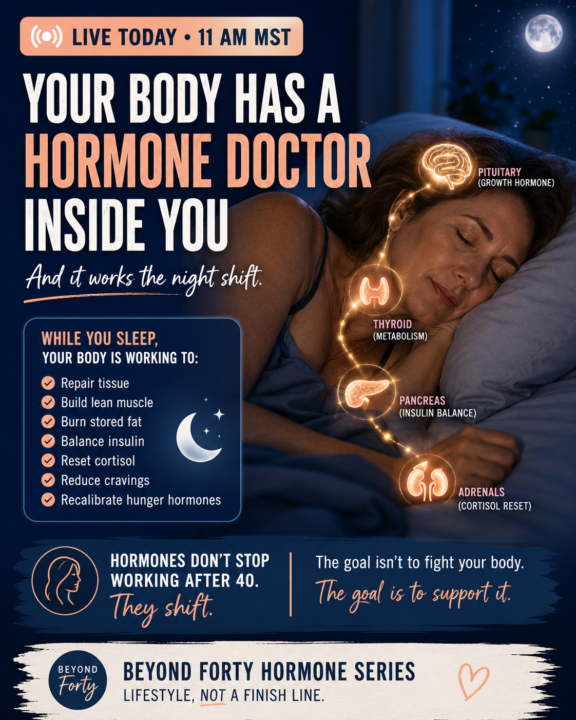
What If Your Body Is Trying to Burn Fat Every Night While You Sleep?
Quick reminder, we have our live call today at 11 AM Mountain Time, and I would absolutely love to see you on there live. Today we’re kicking off our hormone series, and we’re going to be talking about how your hormones change throughout your life and what that actually means for your body, your energy, and yes, your weight. Now, the call will be recorded, and it will be posted in your classroom inside the Beyond Forty training series. These trainings are specifically designed to support you after your 40 days, because this is a lifestyle, not a finish line. But if you can make it live, please do. That’s where the magic happens, the questions, the conversation, the breakthroughs that you just can’t get from a recording. Now while I have you this morning, let me give you a little taste of what we’re going to cover today, because I want you fired up before you even get on that call. Hormones. Let’s talk about what they actually are for a second. Your hormones are chemical messengers. And I mean that literally, they are signals your body sends from one place to another to tell your organs, your cells, your metabolism what to do and when to do it. We’re talking about estrogen, progesterone, cortisol, insulin, leptin, ghrelin, thyroid hormone, growth hormone — and every single one of them is in constant conversation with every other one. It is the most sophisticated communication network ever designed. And it didn’t come from a lab. It came from inside you. Here’s what most people don’t realize. As you move through your 30s, 40s, and 50s, this network doesn’t break down, it shifts. Estrogen and progesterone begin to fluctuate. Cortisol, your stress hormone, starts to have more influence. Insulin sensitivity changes. And when these messengers get out of sync with each other, your body gets a confused signal, and one of the first things it does when it’s confused is hold onto fat. Especially around the midsection. Sound familiar? But here’s what I want you to really hear this morning. And this is exactly what we’re going to dig into on today’s call.
2
0
1-30 of 36
skool.com/weight-loss-hormone-reset
Learn to lose weight and get healthy after 40
Leaderboard (30-day)
1
+31
2

+10
3

+8
4

+8
5

+4
Powered by