

Apr 16 •
Dynamic Effort and Bar Speed
For those that are implementing conjugate like dynamic effort methods in training, how much attention do you pay to the accuracy of bar speed on dynamic effort day? I find it very hard for myself and some of my athletes to hit the 0.8 meters per second with 50% of 1RM without any accommodated resistance. Add bands or chains into the mix, and obviously, bar speed would slow down even more. Previously, I've used the accommodated resistance and dynamic effort work with success and never actually measured bar speed, but I would definitely be working a lot slower than 0.8 . My initial thoughts is paying that much attention to the velocity of the bar is likely majoring in the minors, and attention should probably be applied to velocity or speed loss over the course of the sets, or speed relative to the individual athlete's norm. But wondering if anyone has more experience with this and are we possibly missing the mark by not achieving a certain bar speed.

Mar 4 •
Density Progressions: The Missing Programming Variable
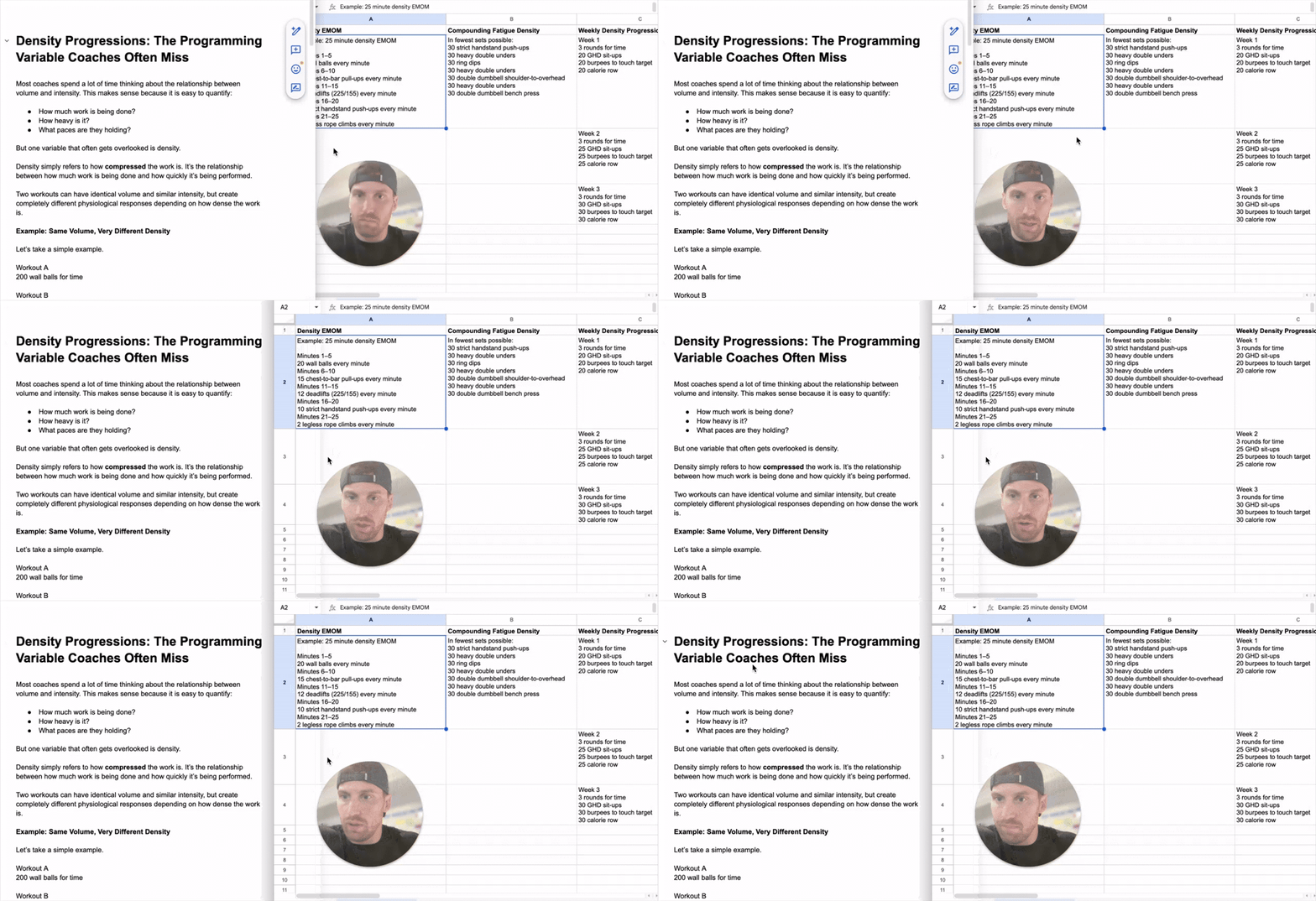
Density Progressions: The Programming Variable Coaches Often Miss Most coaches spend a lot of time thinking about the relationship between volume and intensity. This makes sense because it is easy to quantify: - How much work is being done? - How heavy is it? - What paces are they holding? But one variable that often gets overlooked is density. Density simply refers to how compressed the work is. It’s the relationship between how much work is being done and how quickly it’s being performed. Two workouts can have identical volume and similar intensity, but create completely different physiological responses depending on how dense the work is. Example: Same Volume, Very Different Density Let’s take a simple example. Workout A 200 wall balls for time Workout B 10 wall balls every minute on the minute for 20 minutes In both cases, the athlete is doing 200 wall balls. But the experience and the physiological response are completely different. In the “for time” version, the work is much more dense. Fatigue accumulates continuously. Metabolites build up. Intramuscular pressure increases. Perfusion drops. Tension under fatigue increases as the athlete tries to maintain movement speed. All of this creates a much more stressful internal physiological environment. You get: • More accumulated fatigue • Less metabolite clearance • More ischemia inside the working muscles • More tension being produced while the muscle is already fatigued That combination dramatically increases the amount of muscular damage and soreness that athletes experience. In the EMOM version, every minute includes a built-in rest period. That rest allows partial clearance of metabolites, restoration of blood flow, and recovery of force production. The volume is the same, but the density is much lower, so the physiological cost is very different. Why Density Matters in CrossFit Density becomes even more important when we consider the nature of the sport. CrossFit workouts tend to be very dense especially formats like:

Mar 20 •
Zones/FTP/MAP
I’ve been consuming a lot more content on Zones/FTP/MAP as it’s been a good few years since I directly used them in training. I’ve been wanting to reincorporate them into more targeted training that has a blend of each. Before you ask there is no true goal from the training rather spend more time integrating it in novel ways. See where things break, excels or just plain doesn’t work. So my question is; how have you guys used similar tools, what did you like, not like, or just wish to try.
Dec '25 •
My strain Recovery Philosophy
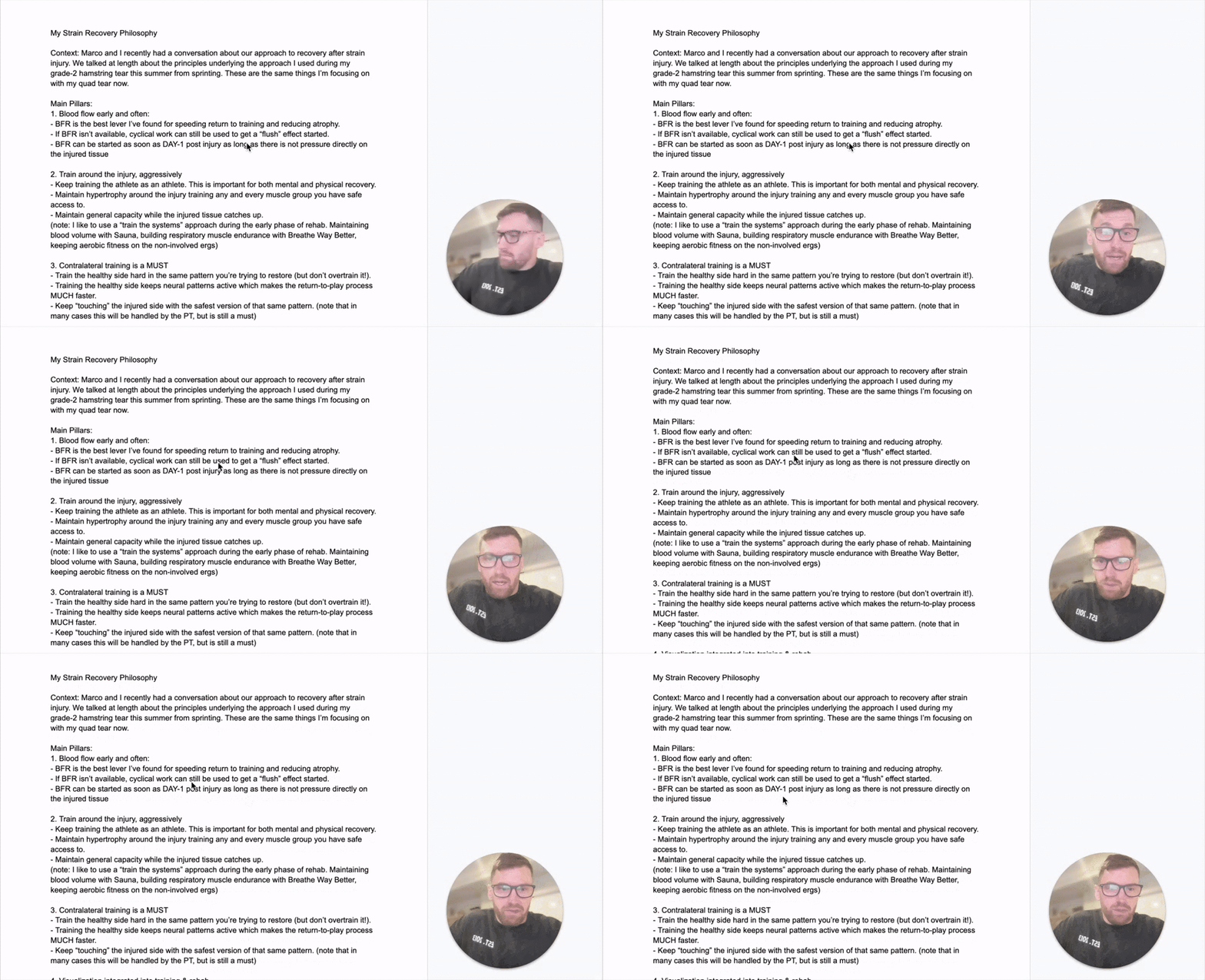
My Strain Recovery Philosophy Context: @Marco Mar and I recently had a conversation about our approach to recovery after strain injury. We talked at length about the principles underlying the approach I used during my grade-2 hamstring tear this summer from sprinting. These are the same things I’m focusing on with my quad tear now. Main Pillars: 1. Blood flow early and often: - BFR is the best lever I’ve found for speeding return to training and reducing atrophy. - If BFR isn’t available, cyclical work can still be used to get a “flush” effect started. - BFR can be started as soon as DAY-1 post injury as long as there is not pressure directly on the injured tissue 2. Train around the injury, aggressively - Keep training the athlete as an athlete. This is important for both mental and physical recovery. - Maintain hypertrophy around the injury training any and every muscle group you have safe access to. - Maintain general capacity while the injured tissue catches up. (note: I like to use a “train the systems” approach during the early phase of rehab. Maintaining blood volume with Sauna, building respiratory muscle endurance with Breathe Way Better, keeping aerobic fitness on the non-involved ergs) 3. Contralateral training is a MUST - Train the healthy side hard in the same pattern you’re trying to restore (but don’t overtrain it!). - Training the healthy side keeps neural patterns active which makes the return-to-play process MUCH faster. - Keep “touching” the injured side with the safest version of that same pattern. (note that in many cases this will be handled by the PT, but is still a must) 4. Visualization integrated into training & rehab - Visualization is “free volume” for the brain. - No tissue cost + positive transfer to movement patterns. - Can be integrated during rest periods of rehab work. ------------------------------------------------------------ General takeaways 1. The fastest recoveries I’ve seen happen when we keep the athlete training, not when they take time completely off.
Dec '25 •
The Four Primary Purposes of Using Intervals in CrossFit Training
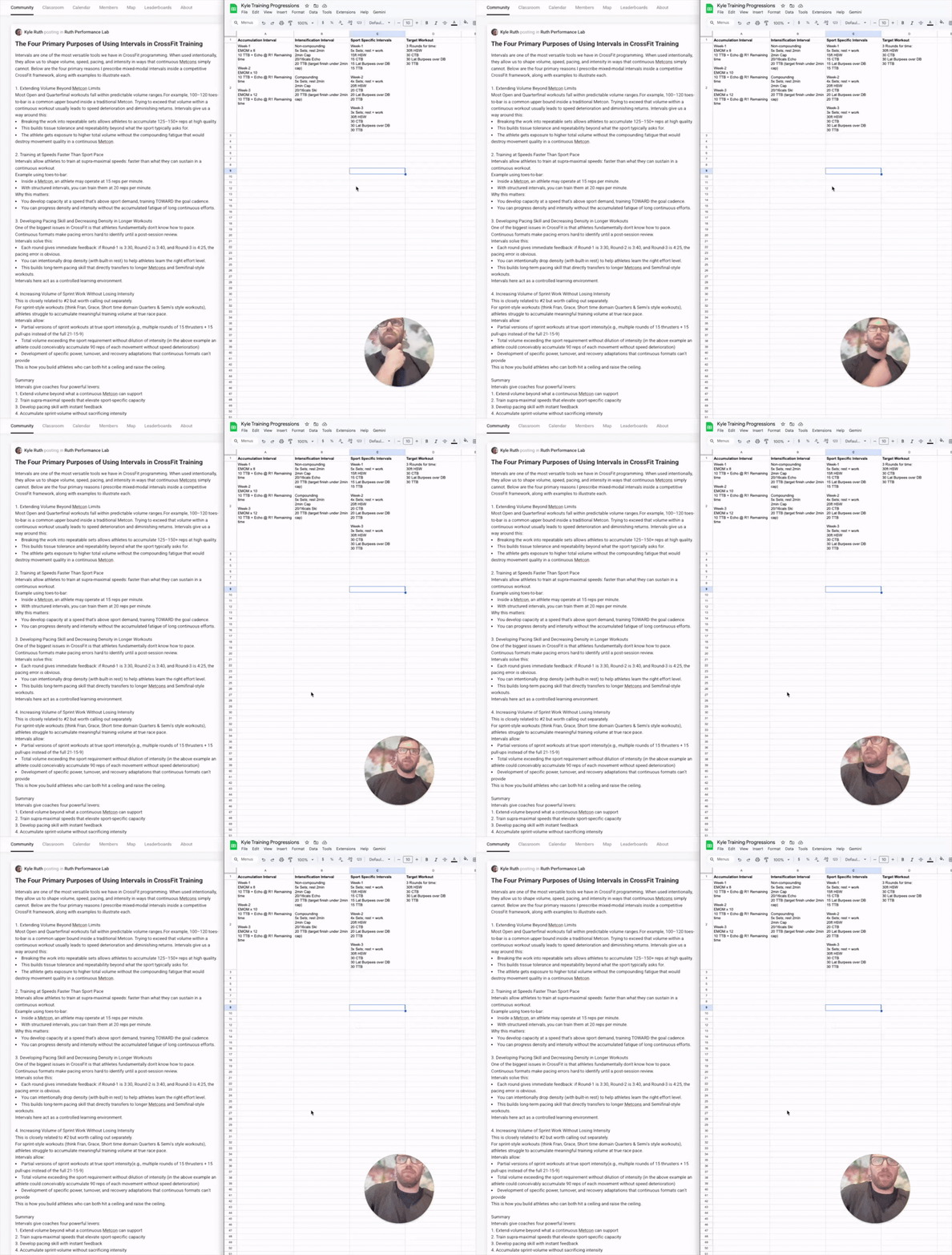
Intervals are one of the most versatile tools we have in CrossFit programming. When used intentionally, they allow us to shape volume, speed, pacing, and intensity in ways that continuous Metcons simply cannot. Below are the four primary reasons I prescribe mixed-modal intervals inside a competitive CrossFit framework, along with examples to illustrate each. 1. Extending Volume Beyond Metcon Limits Most Open and Quarterfinal workouts fall within predictable volume ranges.For example, 100–120 toes-to-bar is a common upper bound inside a traditional Metcon. Trying to exceed that volume within a continuous workout usually leads to speed deterioration and diminishing returns. Intervals give us a way around this: - Breaking the work into repeatable sets allows athletes to accumulate 125–150+ reps at high quality. - This builds tissue tolerance and repeatability beyond what the sport typically asks for. - The athlete gets exposure to higher total volume without the compounding fatigue that would destroy movement quality in a continuous Metcon. 2. Training at Speeds Faster Than Sport Pace Intervals allow athletes to train at supra-maximal speeds: faster than what they can sustain in a continuous workout. Example using toes-to-bar: - Inside a Metcon, an athlete may operate at 15 reps per minute. - With structured intervals, you can train them at 20 reps per minute. Why this matters: - You develop capacity at a speed that’s above sport demand, training TOWARD the goal cadence. - You can progress density and intensity without the accumulated fatigue of long continuous efforts. 3. Developing Pacing Skill and Decreasing Density in Longer Workouts One of the biggest issues in CrossFit is that athletes fundamentally don't know how to pace. Continuous formats make pacing errors hard to identify until a post-session review. Intervals solve this: - Each round gives immediate feedback: if Round-1 is 3:30, Round-2 is 3:40, and Round-3 is 4:25, the pacing error is obvious. - You can intentionally drop density (with built-in rest) to help athletes learn the right effort level. - This builds long-term pacing skill that directly transfers to longer Metcons and Semifinal-style workouts.
1-11 of 11

skool.com/ruth-performance-lab-1681
Ruth Performance Lab: Training principles and systems for athletes and coaches to think clearly, perform better, and develop long-term mastery.
Leaderboard (30-day)
1

+1
2

+1
3

+1
4

+1
5

+1
Powered by