
Write something


May 17 •
22 weeks out👀
Coach potentially making my MMA return on the 17th of October@Clan Wars 56 in Belfast after over 7 years out of the cage so just wondering which of your programs you would recommend starting with🤔

May 12 •
Rest Day
Hit the gym yesterday with an upper body workout. Might be lifting too heavy, feeling joint discomfort.
4
0

Mar 30 •
🚀🔥
Discipline beats motivation. Show up when you’re tired, stay consistent when it’s hard. Build your body, sharpen your mind, push your limits. Strength, endurance, and resilience aren’t given — they’re earned every day. No excuses. Just results.
5
0


Mar 23 •
Hamstring Research
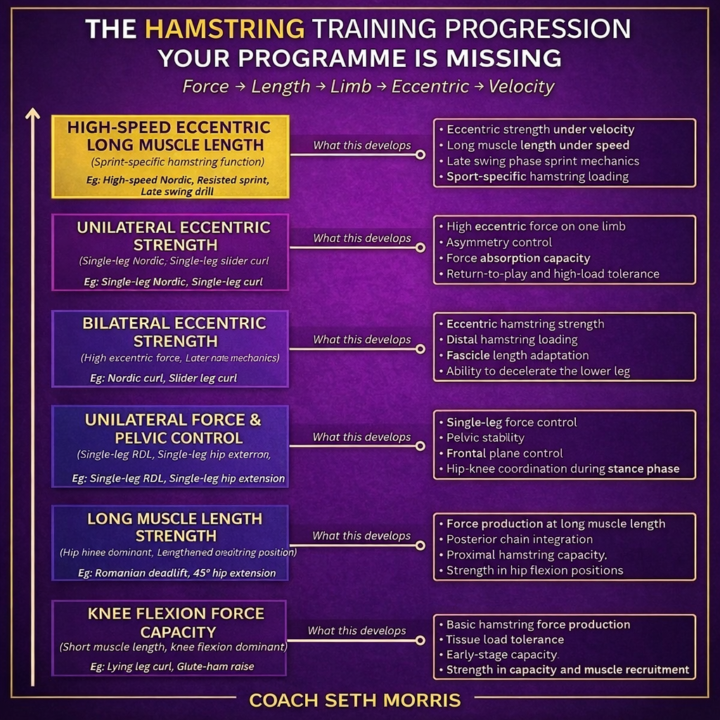
Most hamstring injuries don’t occur due to a lack of strength. They happen because the athlete wasn’t exposed to the length and velocity at which injuries actually occur. I’ve seen this pattern countless times: An athlete pulls up mid-sprint, grabs their hamstring, and the season is disrupted. Everyone wonders what went wrong. The answer isn’t the sprint itself it’s what did or didn’t happen months before. Here’s what many miss: Hamstring injuries most often occur in the late swing phase when the hamstring is lengthened, contracting eccentrically to decelerate the lower leg before ground contact. At 80–90%+ sprint intensities, hamstring demand peaks yet many athletes are never prepared for this. It’s not about fitness or warm-ups. It’s about the gap in training. If we don’t progressively train the hamstring at long muscle lengths, single-leg loading, high eccentric forces, and high-speed contractions, we’re only building strength not true preparedness. So, it’s not just, “Is the hamstring strong?” The real question is: “Is the hamstring prepared for game-demands?” We build strength in the gym. Hamstring injuries happen on the field. Our training progression must bridge that gap.
1-30 of 77

skool.com/darustrong
Phil Daru’s private community for training, mindset, and discipline.
Built to make you stronger in every area of life.
Leaderboard (30-day)
1

+33
2
+31
3

+12
4

+10
5

+10
Powered by