Activity
Mon
Wed
Fri
Sun
Jul
Aug
Sep
Oct
Nov
Dec
Jan
Feb
Mar
Apr
May
Jun
What is this?
Less
More
Memberships
111 contributions to Castore: Built to Adapt

Mar 12 •
can BHB with electrolytes cause anxiety?
My friend's 72 year old mother had a stroke a year ago and recently tried ketones (not the kind you recommend, but the one pictured) and her aides said it made her difficult and anxious. I'm curious as to why or how this could do that. Do you think she needed a smaller dose to start with or is the electrolytes in this formulation the cause of throwing her off balance?
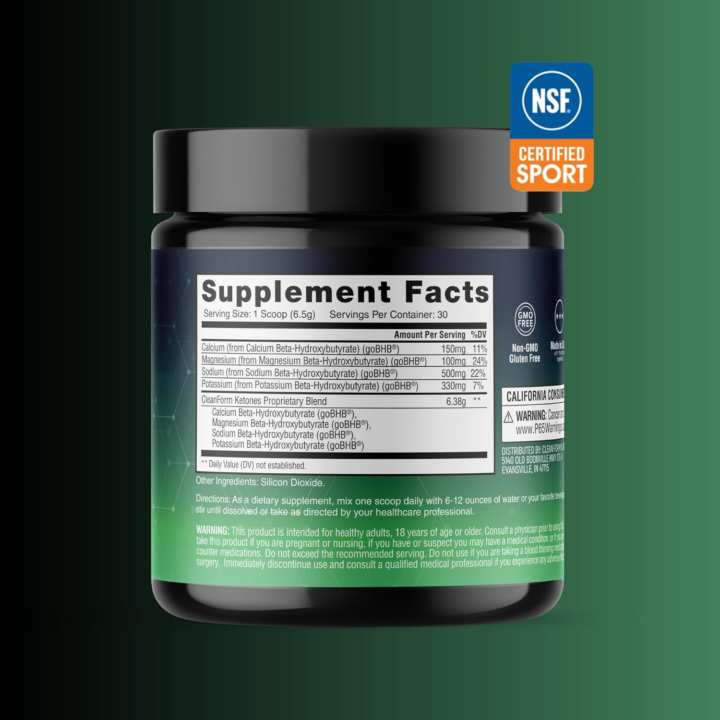

0 likes • Mar 12
Not sure you can necessarily attribute this to the ketones. I can be stimulated by sodium...to the point where I actuallyuse it as a preworkout ergogenic aid. If I avoid sodium after 6pm I actually sleep better - independent of water intake. Just food for thought.

Mar 6 •
The Mixed Peptide Myth: Why the “30-Day Stability Test” Doesn’t Prove What You Think
The argument that mixed peptides are stable simply because a chromatography test showed high purity after 30 days does not hold up under basic principles of chemistry, molecular biology, or analytical science. The claim relies entirely on HPLC purity results, but HPLC only measures retention time and peak area. It does not prove that the molecular structure of a peptide is unchanged. A peptide can undergo oxidation, racemization, conformational changes, or aggregation and still appear as the same peak on a chromatogram. For example, oxidation of methionine to methionine sulfoxide changes the molecule chemically but often produces little or no shift in retention time. This means a sample can still appear 99% pure on HPLC even though part of the peptide population has been chemically altered. Detecting these types of structural changes requires more advanced techniques such as LC-MS/MS, peptide mapping, circular dichroism, NMR spectroscopy, capillary electrophoresis, or dynamic light scattering. None of those analyses were performed, so the conclusion that the peptides remained fully intact cannot be supported. Another major issue is the chemistry of copper and oxidation. When a copper-containing peptide such as GHK-Cu is mixed with other peptides, copper ions can catalyze oxidative reactions. Copper can participate in redox cycling that produces reactive oxygen species, which can oxidize amino acid side chains such as methionine, cysteine, tryptophan, tyrosine, and histidine. Methionine oxidation in particular is one of the most well-known stability problems in peptide drug formulation and pharmaceutical companies spend enormous resources preventing it. Even very small amounts of copper can catalyze these reactions, and the changes they produce may not be visible on a standard purity test. There is also the issue of peptide aggregation, which is governed by basic protein physics. Peptides in solution do not exist as isolated molecules. They constantly interact with water and with each other through hydrophobic interactions, electrostatic interactions, hydrogen bonding, and metal-mediated coordination. When multiple peptides are placed in the same solution, these interactions can create oligomers, aggregates, or misfolded complexes. Aggregation can dramatically change biological activity and receptor binding, yet aggregated peptides often still appear pure during chromatography testing because the test does not necessarily distinguish between properly folded and aggregated structures.
4 likes • Mar 6
Thank you for making this statement. It's been long overdue. It needs to be emphasized and understood that peptides are signaling molecules, not substrates. The amino acid sequence is a unique signature that when present SIGNALS a response. Altering the peptide via combining, changing pH, or inducing reactions from contact with other compounds results in a different or possibly non-existent signal. Peptides should be treated as signaling molecules not substrates.
Feb 21 •
liver effects of 1,3-Butanediol
Hi Anthony, I recently saw this rodent study done by Ben Bikman's lab on BHB and 1,3 BD. https://www.mdpi.com/2072-6643/18/4/675 This study found: "1,3 BD induces significant hepatic stress characterized by ATP depletion, oxidative stress, and lipid accumulation. These results align with and extend recent findings by Ari and D’Agostino demonstrating formulation-dependent hepatic outcomes of chronic ketone supplementation, where ketone salts preserved liver health while BD-based ketone esters and precursors drove inflammation and steatosis" What are your thoughts on their findings? Does their study design bias the outcome? Are there similar studies that show that 1,3 BD is neutral in its effects? Does KineticPro or KE4 use ketones that are different than what was studied here? (It looks the same to my naive and uninformed eyes, so that's why I'm asking.)
2 likes • Feb 21
https://ketoneaid.com/products/hard-ketones
Feb 19 •
Daylight savings prep - Epitalon protocol?
@Anthony Castore With the impending time change in a few weeks (spring forward 1hr) I was going to start going to bed incrementally earlier and waking up incrementally earlier to avoid the abrupt change when we "spring forward". I know a common Epitalon protocol is to do 5-10mg before bed for 10 days during "time shifts". My specific question is, we know the time change is 1hour, so if a person typically goes to bed at 10PM and wakes up at 5AM, would you start dosing the Epitalon at 9PM to start creating that new cycle/circadian entrainment? Or would you say do 9:55PM day 1, 9:50PM day 2, 9:45PM day 3, etc. and gradually get to the 9PM point for the new "normal" - which at that point is going to say 10PM on the clock? I know an hour doesn't sound like a huge shift, but anything to best modulate function and alleviate unnecessary stress is woth it IMO. I'll be shifting my red light, PEMF, and 10,000lux light protocols at the same time to create my new circadian rhythm.
2
0

Jan 26 •
SuperCharge Your Plate: High-Protein Veggies
Some easy summarized reading - While most veggies are known for vitamins and other macronutrients rather than protein, a few high protein vegetables can significantly boost your daily intake. [🍲High Fiber ‘HF’; 🥔High Protein ‘HP] Daily Goal: 2-3 cups, ugh.. 😉 These nutrient-dense cooked options, offer a little more than just protein per cup. Here are 10 high-protein vegetables to add to your meal planning: 1. 🫘Chickpeas: one cup of cooked chickpeas, you can find 14.53 grams of protein, sauteed, cooked, salad. 2. 🫘 Edamame (Soybeans): HF, HP - A complete protein with approximately 11–18.5 grams per cup, (a complete protein) - snacks / stir-fries. 3. 🫘 Lentils: Technically a legume, but a staple with 11 grams of protein per cup, (potassium, iron, fiber) - salads / soups. 4. 🥗 Green Peas: Provides about 8 grams of protein per cup, heart n gut healthy fiber, pasta / rice. 5. 🥔Russet Potato: large potato w skin (baked), 7.86 grams per cup. 6. 🥬Spinach: HF, HP - When cooked, provides roughly 5.3 grams of protein per cup. Takes about 5 cups of raw spinach to equal 1 cooked cup. 7. 🧄Brussels Sprouts: HF, HP - Provides nearly 3-4 grams of protein per cup (cooked), Vit C, side dish. 8. 🌞Asparagus: HF, HP - Contains approximately 3–4.3 grams of protein per cup, rich in vitamins C and K. 9. 🥦Broccoli: Provides about 4 grams of protein per cup (cooked), great source of fiber and vitamins. 10. 🌽Sweet Corn: HF, HP - A large ear of corn provides around 4 grams of protein, (Vit Bs, antioxidants). ‼️Other notable mentions: Mushrooms (specifically Portobello), Lima beans, and Collard greens. 👉Daily Fillers: Cucumber, Zucchini – Have less than 2g per cup, focusing more on hydration and micronutrients. 🗒️Note: For Maximum PROTEIN protected intake, enjoy them STEAMED, ROASTED, STIR-FRIED. DO NOT BOIL – no nutrients contained.
0 likes • Jan 31
@Taylor S not going to get into a debate about the PDCAA, complementary AAs, etc. Vegetable protein is incomplete. The ability to get the minimum essential needs by combining several pounds of various veggies is inconsequential in the grand scheme of things. Getting the minimal adequate EAAs this way vs. what is needed for optimal function and even moreso, for muscle protein synthesis is not a conversation or debate I will partake in. Sedentary people can probably get their minimal EAA requirement through veggies to maintain baseline function, but it's not adequate nor efficient for the vast majority of people particularly those that exercise.
2 likes • Jan 31
I'm done responding. We're not going to agree and you have an agenda.
1-10 of 111

@drew-wurst-2767
Enthusiast of all things physiology, biology, kinesiology & performance
Active 4d ago
Joined Aug 5, 2025
Powered by