Activity
Mon
Wed
Fri
Sun
Sep
Oct
Nov
Dec
Jan
Feb
Mar
Apr
May
Jun
Jul
Aug
What is this?
Less
More
Owned by Anthony
Where science meets results. Learn peptides, training, recovery & more. No ego, no fluff—just smarter bodies, better minds, built to adapt.
TPC ARMY
227 members • $200/m
Program Delta Performance Lab
18 members • Free
DDT Method
207 members • $10/m
Business Facilitating
104 members • Free
Enhanced Executive Coaching
31 members • Free
Cody Moxley Coaching
6 members • Free
Skoolers
161.7k members • Free
402 contributions to Castore: Built to Adapt

May 16 •
You’re Wasting Your Peptides…And It’s Not the Peptides’ Fault
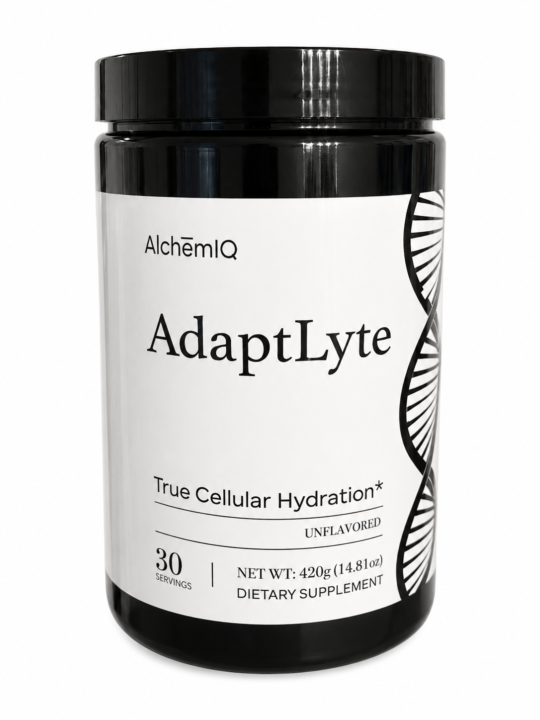
You probably aren't as hydrated as you think. “Drinking water” and “becoming hydrated” are two very different conversations Most people think hydration is solved at the kitchen sink. Fill the bottle. Drink the bottle. Repeat. Maybe toss in some electrolytes if training was hard or the sauna ran long. The internal scorecard says hydrated, the body says something else, and we keep moving. Here is the uncomfortable part. You can drink water all day and still have cells that are under-volumed, undercharged, and under-resourced. The water moves through you. It does not always move into you not where it counts. This article is about where it counts. The Two Compartments Almost Nobody Talks About When you drink water, that water enters the extracellular space first, the bloodstream and the fluid bathing your tissues. That is the easy compartment. It moves fast, it dilutes quickly, and you can pee most of it out within an hour if the terrain is not set up to hold it. The compartment that actually drives performance, recovery, and adaptation is the intracellular space. That is the water inside the cell. Roughly two-thirds of your body water lives there. It is the environment where mitochondria make ATP, where ribosomes build protein, where signaling cascades fire, where peptide messages get translated into actual biological responses. A useful analogy: extracellular water is the rain on the roof. Intracellular water is the rain that actually reaches the roots. You can have a lot of one and very little of the other, and the plant will tell you which one matters. The goal of real hydration is not to soak the roof. The goal is to get water to the roots. Cell Volume Is a Signal, Not a Side Effect This is the piece that reframes everything once you see it. A well-hydrated cell is not just a wetter cell. It is a cell with a different internal pressure and that pressure is interpreted by the body as a signal. The biochemist Dieter Häussinger’s work established that cell swelling, within normal limits, tends to bias the cell toward an anabolic, building, repairing state, while cell shrinkage tends to bias it toward a catabolic, stressed, breakdown state.
0 likes • Jun 26
@Daphne Pirtle thank you for your support. If you can message me I am happy to send it out to you. It is 49.99 per container flat rate shipping is 20.00 UPS domestic. Just let me know how many you want, send your address to ship to and I will provide payment options.
0 likes • 6d
Yes I can get those sent right out. If you can message me your address I will share the payment details and as soon as you send payment I will get tracking over
Jun 28 •
The Fire You Cannot See: Why The Type Of Ketone You Use Matters
A man I coach sent me a photo last spring. Not a lift, not a plate of food. A handheld meter with one number glowing on it. 2.1. Underneath he wrote, "Dialed in." He had chased that number for weeks and finally caught it, and I was happy for him. I was also quietly certain it had told him almost nothing about what was happening inside his cells. That gap, between the number a device reports and the work a cell is actually doing, is the whole argument about ketones, and it is where nearly everyone gets lost. Two people can hold up meters reading the same 2.1 and be living in completely different bodies. One fed a fire. The other smothered it. The meter cannot tell them apart. So let me take you inside the cell the slow way, and let the fire teach the rest. Inside almost every cell sit structures called mitochondria, and it is fair, almost literally, to call them furnaces. They take fuel and oxygen and burn the two together to release energy, the way a wood stove turns logs and draft into heat. What comes out is not flame but a molecule called ATP, the cell's spendable currency. The intuition of a fire holds all the way down. A fire cares what you feed it, how fast you feed it, and how much air it can pull. Get any of those wrong and the same fuel that should warm the room fills it with smoke. Ketones are a fuel for that fire. Beta-hydroxybutyrate, or BHB, is the main one. Your liver makes it from fat whenever food runs short, and your heart and brain burn it gladly. The trouble starts the moment someone sells you BHB in a tub. Here is the first thing the meter hides. When you prick your finger, it reads how much BHB is floating in your blood that instant. It does not read how much is being pulled into a furnace and burned. Those are different questions, and confusing them is the original mistake underneath almost all ketone marketing. A reading of 2.1 tells you a certain amount of firewood is stacked in the yard. It says nothing about whether any of it is in the stove, catching, throwing heat. Dump more wood in the yard than the stove could ever take, and the surplus gets hauled off. In the body the haulers are your kidneys. Past a certain blood level you spill ketones into your urine, and the meter counts that lost fuel as a triumph your cells never touch.
2 likes • Jun 28
@Mike Schultz R3HBG. Let me save you the rabbit hole. It stands for R-3-hydroxybutyrate glycerides. Picture a glycerol backbone with three D-BHB molecules hanging off it, like fatty acids on a triglyceride. You drink it, gut enzymes snip the bonds, and free D-BHB hits your blood. A clean way to deliver the exact ketone your body already makes, no salt load, no rocket-fuel taste. The chemistry is legit. Pure D-BHB, not the 50/50 junk in most salts. Against ketone salts, it wins. Here is where it slows down. Every comparison is against salts or MCT oil. Never against the monoester, which is the molecule that actually carries the human research. That is picking the easy opponent and skipping the real one.“100 percent bioidentical” is doing a lot of work. The BHB it releases is bioidentical. The molecule you swallow is engineered, and about a tenth of it by weight is glycerol, which is not a ketone at all. The “3 to 6 millimolar in 30 minutes” line has no dose and no study attached. The monoester needs around 25 grams to hit that. These shots are 6 to 10. The math does not line up. And “FDA recognized” is marketing. An NDI filing is a voluntary safety notification, not an endorsement that it works. Same label still reads “not evaluated by the FDA.” Bottom line. R3HBG is a sensible delivery format. Pure, salt-free, pre-formed. What it has not earned yet is the clinically superior label. And remember, BHB is not a free pass. Burning it pushes your NAD couple more reduced. Ketones earn their keep when the problem is an energy supply gap, not as something you throw at everything.
1 like • 17d
@Jenelle Zingg that is my favorite flavor too.

22d •
Yesterday's live recording
Hi, just wondering when the recording of the July 27 Q&A will be available. TIA!
0 likes • 22d
I will be recording the Member Q&A on July 30 at noon. I will have the recording posted in Classroom over the weekend. The Coach’s Protocol from Monday is up in the Classroom now.
27d •
Coach Protocol Webinar rescheduled for Monday 5pm EST
I am traveling fr an cerification and the internet in my hotel room Has been a little spotty. Rather than half deliver it, I am pushing it to Monday. It is going to be one you will not want to miss. I am covering my protocol, training, supplements, nutrition, and the thinking behind all of it. Also I am going to be sharing my experience with a peptide I keep getting asked about. See everyone Monday.
2 likes • 25d
@Clay Fitzhugh yes this and last months are going to be in the Classroom. It will serve as the archive for all of my webinars, interviews and Q&A’s

28d •
5 Amino VS Slu PP 332
Which of these two are the better investment when it comes to weight loss and trimming?
3 likes • 28d
Daniela Tha k you for your question. These two aren’t competing for the same job. They solve two different problems. 5-Amino-1MQ blocks NNMT, an enzyme that’s overexpressed in fat tissue in obesity. When NNMT runs hot, it drains NAD+ and burns methyl groups, and the fat cell gets stuck in storage mode. Block it and you take the brake off fat release. Think of it as unlocking the warehouse door. SLU-PP-332 works on muscle instead. It turns on ERR alpha, the switch that builds mitochondria and raises fat oxidation, basically the same gene program endurance training turns on. That isn’t unlocking a door. That’s building furnaces. One opens the cell that stores fat. The other builds the machinery that burns it. Unlock the warehouse with no furnace downstream and you just dump free fatty acids into circulation and feel worse. Build furnaces with nothing coming out of storage and you’ve paid for an upgrade you can’t use. That’s why the phenotype comes first. The question is not which one is better. It’s which problem your cells actually have right now.
1-10 of 402

@anthony-castore-4271
Anthony Castore — SSRP Fellow & strength coach blending peptides, training, and cellular medicine to optimize performance and recovery.
Active 3h ago
Joined Jul 31, 2025
Powell, OH
Powered by