Activity
Mon
Wed
Fri
Sun
Apr
May
Jun
Jul
Aug
Sep
Oct
Nov
Dec
Jan
Feb
Mar
What is this?
Less
More
Owned by David
Complete recovery from OCD is possible.
Memberships
5 Biological Laws
62 members • Free
Synthesizer
37k members • Free
Skoolers
189.7k members • Free
Reward Funnel
1.7k members • Free
ME Healing Hub
1.2k members • Free
Jordan's Lab Rats
246 members • $26/m
Oscar's Community
6.1k members • $39/m
The YouTube Blueprint
1.6k members • Free
The Buyer's Mind
51 members • Free
6 contributions to The Buyer's Mind

Jan 9 •
Good Person Bullsh*t
I learned this from a mentor years ago, and I still see it destroying quality coaches with real skill. The belief sounds like this: “I can’t make money because I’m a good person.” “If I charge more, upsell, or guide someone into a better option, I’m being unethical.” “If I stay moral, money will eventually show up.” It feels virtuous and safe. BUT... it keeps people broke. The reality is that this belief isn’t moral. It’s just unexamined. Only in certain industries do we pretend that helping someone buy more of what actually helps them is somehow wrong. Walk into a restaurant and you’ll be offered an entrée and dessert. Go to the movies and you’re offered popcorn and a drink. Rent a car and you’re offered insurance upgrades. No one calls that manipulation. It’s just business. Yet the moment someone opts into your world and you help them see a better path forward, people panic. Here’s what I feel like most people miss at the start of their business journey ⬇️ When someone first shows interest, they are almost always under-informed. They don’t know the real variables. They don’t know what will actually get them the outcome they want. So they default to the only question they know how to ask. “How much is it?” Your job as the expert isn’t to trap them in the first thing they clicked. Your job is to help them clarify: - What they actually want - Why they’ve failed before - What will realistically give them the highest chance of success - What level of support matches that outcome That conversation is not unethical. It’s the opposite. It’s guidance. Your job is to guide people to a decision that helps them solve a problem and experience a transformation they've put their hand up in saying they want. This is where the money story breaks people... If you believe money corrupts you, you will avoid asking. If you avoid asking, you will avoid offering. If you avoid offering, you will under-serve the very people you claim to want to help. And then you’ll tell yourself a story about being “values-driven” while quietly resenting the people who charge properly.
Poll
5 members have voted

1 like • Jan 18
For me the point is not letting other people's limiting beliefs get in the way of what you know to be true.
Jan 17 •
DM Hacks For Setting More Appointments
DM's require just as much attention as a sales call. I see a lot of people giving them half-ass energy because either they don't see the people they're talking to as serious leads or they're just not confident about what to do next once they've got into the conversation. So, first tip is to have the DM's To Dollars course OPEN when you're doing DM's. Don't have a quick scan of some content and then try to wing it once you're inside. - You're not going to remember the 3 stages of enrolment. - You're not going to know the right questions. - You're not going to know how to handle objections. - You're not going to know how and when to follow up. Second, set dedicated time to sit and do DM's. No distractions. Don't half-ass this. @Simen Gulbrandsen and I were chatting about this last night. I directed him to watch this video again. A couple of minutes later, he had booked a call from having this open. DMs aren’t casual conversations. They are sales conversations without the structure most people rely on. When structure disappears, confidence disappears. And when confidence disappears, people hesitate, over-explain, or ghost the moment there’s resistance. That’s why most DMs die right after the first bit of interest. This is also why reading content about DMs and actually doing DMs are two very different things. You don’t build fluency by consuming. You build it by repetition, with the right frame open in front of you, while you’re in the conversation. Because you can't actually do content in sales. You’ve actually got to do skills in sales. Which brings me to this ⬇️ I’m thinking of running a 2–3 day DM workshop next week inside the community. Live. Real DMs. Real conversations. We’d: - Do live hot seats - Break down messages line by line - Decide what to say next and why - Handle objections as they come up - Turn active chats into booked calls
Poll
3 members have voted
0 likes • Jan 17
@Joshua Whitlock Okay cheers, so yeah it is possible to sell a high ticket without sales calls but it takes setting up properly I guess . That was my view so thanks for confirming as well 👍
0 likes • Jan 17
@Santana Vega Yturralde right, I think there might be other ways in terms of offer doc being WOW and I also came across a reward funnel system that looks cool to create buy-in. I'm in a program right now to potentially address this.
Jan 13 •
A Secret From My Time Working With Ben Patrick...🤫
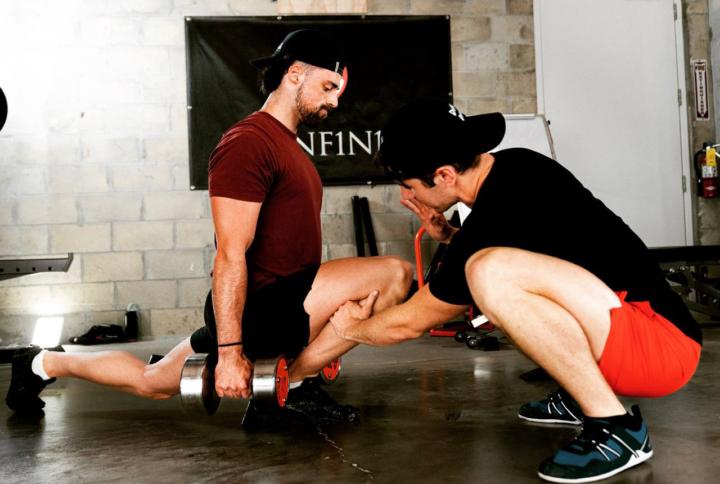
Most people assume that when someone gets really big in a market, the natural move is to raise prices. A larger audience usually brings more demand, and more demand usually brings more leverage. That logic makes sense, which is why it surprises people when they learn how Ben Patrick actually prices his core offers. During my time working with Ben, his main offerings sat around $25 to $50 per month. For someone with his reach, influence, and results, it feels counterintuitive to most people. They assume higher prices are the inevitable next step. What they miss is that pricing decisions only make sense once you understand the psychological state of the buyer 🧠 Ben had a very clear understanding of who he was speaking to, and more importantly, the state they were in when they found him. Most people did not arrive at his work feeling ambitious or aspirational. They arrived because something already hurt. Knee pain, chronic limitations, repeated failed attempts to fix their body, and a quiet fear that things were only going to get worse. That kind of audience is not operating from ambition.They are operating from desire. In The Buyer's Mind, this distinction matters more than most people realise. Ambition is future oriented and identity driven. Desire is present tense and emotionally charged. Desire is about relief, safety, and reducing discomfort. When someone is in that state, their brain is not evaluating offers in a rational, comparative way. They are asking very simple questions. - “Can this help me?” - “Can I start now?” - “Is this safe to say yes to?” In that moment, friction becomes the enemy. High prices increase hesitation. Complexity increases hesitation. Anything that slows the decision down increases hesitation. Lower pricing removes resistance at the exact moment the buyer’s nervous system is already under stress. That choice was intentional. But pricing alone was never the strategy. The part most people overlook is what happens after the purchase. Low price only works when the experience reinforces the decision.
Poll
5 members have voted
2 likes • Jan 13
Ambition is desire and imagination in the positive scenario
Jan 3 •
The Long Game to the Top 100 and Winning the Skool Games📈🏆
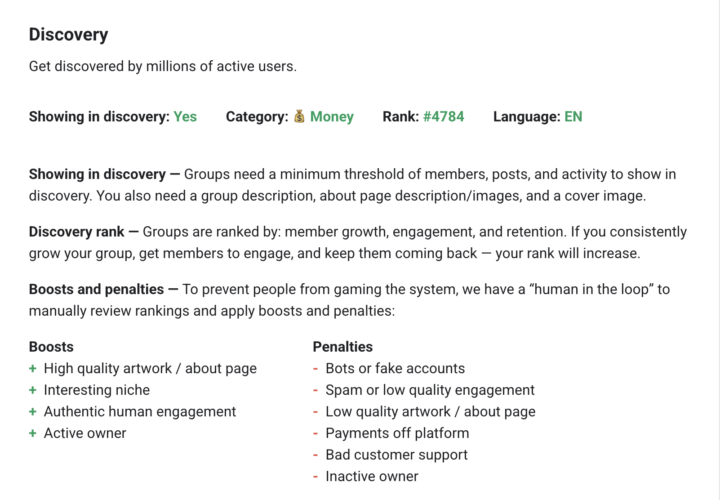
I want to share a quick update on where this community is heading, because what’s happening here matters more than most people realise😳 The Buyer’s Mind is now actively showing in Skool discovery, and we are climbing steadily. Right now, we’re ranked in the mid-4000s across the entire platform. That might not sound dramatic at first glance, but when you consider how many groups exist on Skool globally, it means we are already well inside the visible layer where momentum actually compounds📈 My intention is simple and long term. I want this to become one of the highest ranking, most trusted communities on the entire platform. Hitting the top 100 is a very real goal for me, and yes, I would love to eventually win the Skool games, not as a flex, but as proof that a thinking-led, substance-first community can outperform the noise. Rankings move based on growth, engagement, and retention, which means this is not something I can force or manufacture. It only happens if the room itself is alive. That outcome does not come from settings or algorithms alone. It comes from YOU. Every post you write, every question you ask, every reply you leave, and every insight you share signals to the platform that this is a place worth paying attention to. Engagement here is not cosmetic, it's the engine!🏎️ This is also why I want to reward the people who help grow this properly. From today onward, I am offering 40% COMMISSION on all referrals that join the community. If you invite the right people, and they benefit from being here, you should share in the upside of that growth. What we are building here is not a content dump or a passive library. It is a living environment shaped by the quality of the people inside it. If you value what this space represents, the simplest way to support it is to stay involved and invite others who will do the same. I appreciate everyone who has been contributing so far. This next phase is about momentum, and you are the reason it exists❤️
1 like • Jan 3
Looking forward to seeing where you take your group Joshua
Dec '25 •
Question about neurological correlates for sales behaviours
hey, so I read the book first of all and really enjoyed it. I've got a lot out of it for sure in terms of how individuals make decisions from their emotional centres of the brain as opposed to logical centres. However I didn't resonate/agree with the sections on specific neurochemical correlates (oxytocin for trust, dopamine for desire, serotonin for confidence) and the sequential activation phases. I think the underlying behavioral observations are valid but I don't believe the neurochemical explanations reflect what is going on in the brain.
1 like • Dec '25
@Joshua Whitlock I agree Joshua, it's more about the psychology and actually I don't think the neurobiology is necessary because it's about psychological principles
1-6 of 6

Online now
Joined Dec 7, 2025
INFJ
Powered by