Activity
Mon
Wed
Fri
Sun
Jul
Aug
Sep
Oct
Nov
Dec
Jan
Feb
Mar
Apr
May
What is this?
Less
More
Memberships
Stock Trading for Beginners
4.6k members • Free
Invest & Retire Community
3.6k members • Free
Investing Accelerator
482 members • Free
1013 contributions to Invest & Retire Community

Apr 30 •
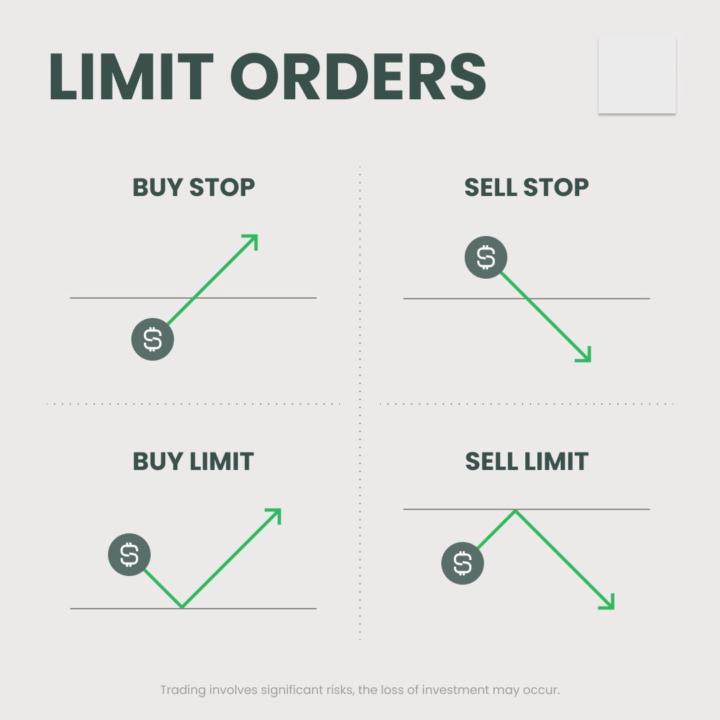
📌 How Do Limit Orders Work?
❓ We have a few questions about order types, so let’s break them down for you, guys. There are two main types of orders: 1️⃣ Market Order: executed instantly at the current price. 2️⃣ Limit Order: executed only when the price reaches your set level. Here’s how limit orders work: ⤴️Buy Limit — set below current price. You expect the price to drop, then rise. ⤵️Sell Limit — set above the current price. You expect the price to rise, then reverse. 🔼Buy Stop — set above the current price. You expect a breakout upward. 🔽Sell Stop — set below current price. You expect a downward breakout. 👀 Use them to plan your trades, no need to stare at the screen all day.

2 likes • May 1
Thanks!


4 likes • Apr 30
@Kevin Esmati this flew over my head so when I digest it, i will reach out with more questions!
3 likes • May 1
@Sukhwinder Dhanoa i know!

Apr 26 •
Boomers had every single opportunity to be rich - so what are the "boomer opportunities today"?
I often hear the younger generation says "the boomers had it easy. You can pick up a job, support a family and easily buy a house with low prices" Now the market is a lot more difficult We need degrees, large down payments etc to have the same lifestyle as before Instead of whining about it, the real question is - what are the boomer type easy opportunities today? If we look back 40 years from now, what are some obvious opportunities we cannot miss? Now - answering this question is not so easy, is it? Because we don't have the same hindsight as we attribute to boomers. But here are my best guesses: 1. Bitcoin - Limited in supply. The anti-government money 2. Semiconductor - The next 10 years of AI race will be based on chips and power 3. Solar / Nuclear power - To fully support the AI race, oil and coal wouldn't be enough. We need solar or nuclear power. 4. SpaceX type company - SpaceX is going IPO soon with a crazy valuation. Likely a ploy for insiders to dump shares at insane prices. But reusable rocket type companies will be the driver of next frontier innovation 5. Robotics / drone - Mostly China developed robots where it would automate manufacturing significant. What do you think? Cheers, Eric ---- Eric Seto Chartered Professional Accountant (CPA) Chartered Investment Manager (CIM) Founder of 5MinInvesting.com In May, I’m helping 20 people build a retirement cashflow strategy using options. The 2 strategies you will learn in Investing Accelerator: 1. Long-Term Investing with Options → Find discounted blue-chip stocks → Use options to multiply your profits 2. Monthly Passive Income Strategy → Generate monthly cashflow from your portfolio by selling options → Designed to generate cashflow for retirement If you are interested in learning more advanced investing strategies, you can schedule a free strategy call here to see if you are a good fit
3 likes • Apr 28
I hadn’t thought about it this way so thanks for highlighting @Eric Seto. There are so many opportunities for sure for those who are actively looking

Apr 23 •
Avis Budget Group, Inc. (CAR) down 66% in less than 24hrs
Avis Budget Group, Inc. (CAR) crashed down by $540 or 66% in less than 24 hrs, following a short squeeze.
4 likes • Apr 24
Yup!
1 like • Apr 28
@Rong Zhou It clearly worked.

Apr 13 •
How to trade the SpaceX IPO
SpaceX IPO is already in the news and everybody seems that would like to get in. During the weekend I listen to this video and I agree 100% with Adam... wait for a pullback before entering into the stock... maybe the drop will be much more then the IPO price. https://www.youtube.com/watch?v=hky-Ag3F2Zc
2 likes • Apr 28
I would be watching this one closely to see how price action develops.
1-10 of 1,013

Active 10h ago
Joined Dec 26, 2022
Powered by