
Write something
Pinned

2d •
5 Style Deals Worth Your Attention This Week!
Found a few solid menswear markdowns worth a look this week. 1. Thursday Boots Frontier — Arizona Adobe - Product name: Thursday Boots Frontier Arizona Adobe (Seconds) - Store: Thursday Boots - Original price: $220 - Sale price: $129 - Discount: 41% off - The Frontier is Thursday's rugged everyday boot — Goodyear welted, full-grain leather upper, and at this price you're getting their toughest silhouette for less than their entry-level Captain. - Link: https://thursdayboots.com/products/_thrscnd_frontier-arizona-adobe 2. Cuts Divine Fleece Hoodie - Product name: Divine Fleece Hoodie — Latte Classic-fit - Store: Cuts Clothing - Original price: $118 - Sale price: $48 - Discount: 59% off - Cuts' signature Divine Fleece is stupid soft — it's the kind of hoodie that ruins you for everything else. Under $50 for a piece that normally runs near $120 is as good as it gets. - Link: https://www.cutsclothing.com/products/divine-fleece-hoodie-latte 3. Peter Manning NYC Performance Jogger - Product name: Performance Jogger — Grey - Store: Peter Manning NYC - Original price: $138 - Sale price: $88 - Discount: 36% off - PMNYC's performance joggers are built for shorter guys who are tired of rolling their cuffs — four-way stretch, tailored cut, and actually hits at the ankle. Sharp enough to wear out, comfortable enough to live in. - Link: https://www.petermanningnyc.com/products/performance-jogger-grey 4. Thursday Boots Frontier — Tobacco - Product name: Thursday Boots Frontier Tobacco (Seconds) - Store: Thursday Boots - Original price: $220 - Sale price: $129 - Discount: 41% off - Same Frontier build as the Arizona Adobe but in a rich tobacco leather that ages beautifully. At 41% off you're basically paying sneaker money for a boot that'll outlast five pairs of sneakers.
Pinned

Jun 5 •
Why Join RMRS Premium?
I’ve stacked so much value into RMRS Premium that seriously it’s a no-brainer YES decision to join. https://www.skool.com/rmrs/plans The details? - Monthly Q&A "Inner Circle Mastermind" LIVE Calls with Antonio & Expert Guests - Access To 6 Micro-Courses Designed To Level Up Your Image - Access To The Monthly Challenge & Prize Eligible - A Man's Guide To Style Course & Dress Like A Man eBook - As a Patron the "activity" requirement doesn't apply to you. Thank you for your support! - The Style System ($1,000 Value) a proven step-by-step program to transform your image - Premium "White Glove" DM support to help you buy the RIGHT clothing at the BEST price - $1,000+ in Discount Codes at your favorite retailers (Save $$$ building your wardrobe!) - Invite To LIVE Event (Dallas, Oct 2026) Click here to join us - https://www.skool.com/rmrs/plans
60
0
23h •
OOTD late contribution for Monday 6 July
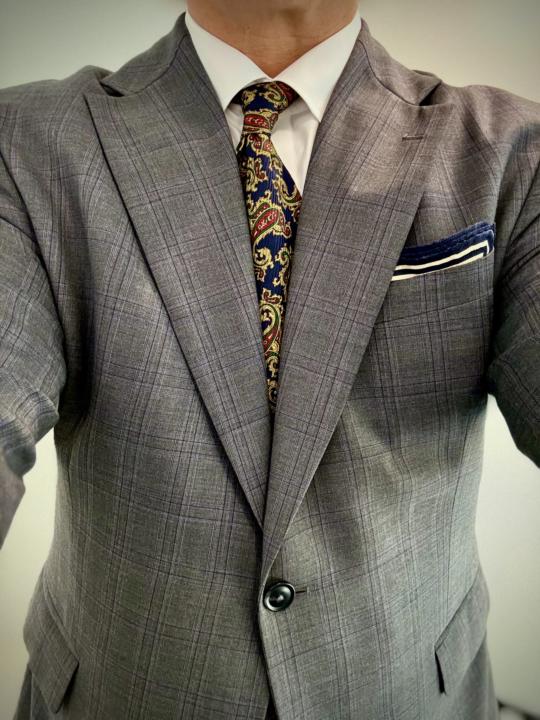
Apologies, chaps, very late with this Monday upload…. In the office today, and catching up with contacts to discuss some potential business opportunities, so going with a conservative look- Bespoke mid grey wool suit Bespoke ivory cotton shirt with French cuffs Passaggio Cravatte navy silk tie made from vintage paisley print cloth Eton wool navy cream pocket square Alfred Dunhill sterling silver cufflinks Nobile Italy navy striped cotton socks Fairfax & Favor black tassel loafers WOTD Submariner No Date SOTD layering Floris No. 89 with Boadicea the Victorious’ Vetiver Imperial This pairing smells like uncompromising wealth, tailoring, and authority. It strips away any "dated" or mature facets from Floris No. 89, replacing them with a sharp, peppery, energetic green edge that makes it perfect for a high-level boardroom setting, formal events, or spring and summer days.

2d •
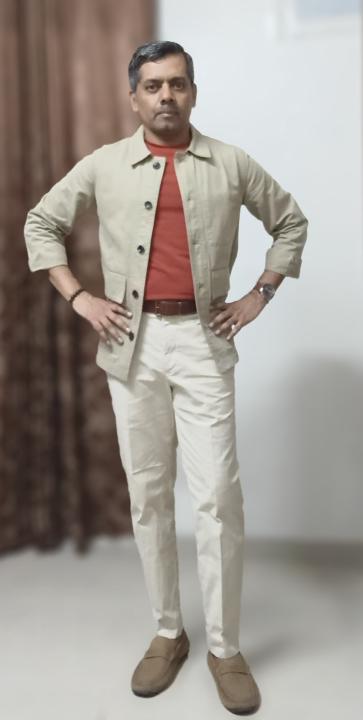
The dressier chore coat!
I have read a lot about the style-quotient of the historical chore coat (Antonio has a video too). Unfortunately, there aren't many makers around in India. But, that was only until now when I found an MTM designer (in Bangalore), and I quickly grabbed my piece! We had a date night last Sunday. My OOTD consisted of: LAYERING PIECE: Sand chore coat in cotton twill (9 Oz) MTM TEE: Burnt orange in supima cotton TROUSERS: Beige cotton MTM SHOES: Tan moccasins in nubuck leather WATCH: Saddle tan strap, gold on silver frame BRACELET: Tiger Eye BELT: Cognac reversible with traditional holes The chore coat has stylish flap pockets at the bottom but the upper pockets are hidden inside (this is how they have reinvented the style). I am not complaining 😎 Your comments are most welcome!

🔥
11m •
For Those Who Are Interested Upcoming Podcast Info
In today’s society, the decline of traditional gentlemanly qualities has become increasingly evident, leading to what many perceive as a crisis in masculinity. Are men truly stepping into their roles as gentlemen, or are we witnessing an extinction of these vital virtues? This post explores why embracing the principles of a true gentleman is essential for individuals and society at large, highlighting the importance of reestablishing morals, morals, and standards for the next generation. Recent years have shown a shift in societal expectations and behaviors, with many men neglecting the core traits that define a gentleman—respect, integrity, morals, and chivalry. Anthony Buntyn passionately discusses how society has veered away from these qualities, turning instead toward entitlement, self-centeredness, and superficial fame. This decline isn't just a cultural trend; it’s a crisis threatening the fabric of social cohesion. As Buntyn emphasizes, a society without gentlemen—men who lead by example—becomes fractured, often resulting in increased violence, crime, and a lack of positive role models for our youth. The question is: how did we get here, and what can be done to reverse this trend? Buntyn introduces a powerful analogy to explain how the noble qualities of being a gentleman have been gradually eroded: the boiling frog. If a frog is suddenly thrown into boiling water, it jumps out immediately; but if you heat the water slowly, it boils to death unnoticed. This metaphor vividly captures how societal changes—gradual and subtle—have slowly chipped away at these virtues. Decades ago, men were trained in morals, manners, and respect, but over time, these standards have been ‘boiled out’ of men’s behaviors. Recognizing this slowly happening is crucial to understanding why reintroducing and reinforcing these qualities is not optional but necessary. Fortunately, Buntyn points out that efforts are underway to rebuild what has been lost. The Society of Ordinary Gentlemen exemplifies a movement dedicated to training men to embody qualities like honor, discipline, and respectful conduct. This society encourages men to see being a gentleman as a lifelong commitment—one that involves daily actions and choices. The Society also promotes the development of young men through initiatives like the Junior Society of Ordinary Gentlemen, aiming to instill foundational virtues before they enter adulthood. Such programs focus on practical skills—how to dress, communicate, handle confrontations, and work ethically—creating role models for future generations.
1
0
1-30 of 30,679

skool.com/rmrs
Leverage style to earn more money and build unshakeable confidence. This is a community for professional men serious about self-improvement.
Leaderboard (30-day)
1
🔥
+4122
2

🔥
+2198
3

🔥
+2129
4
🔥
+2095
5

+1984
Powered by