
Write something

3d •
How your Brain talks to your Immune System
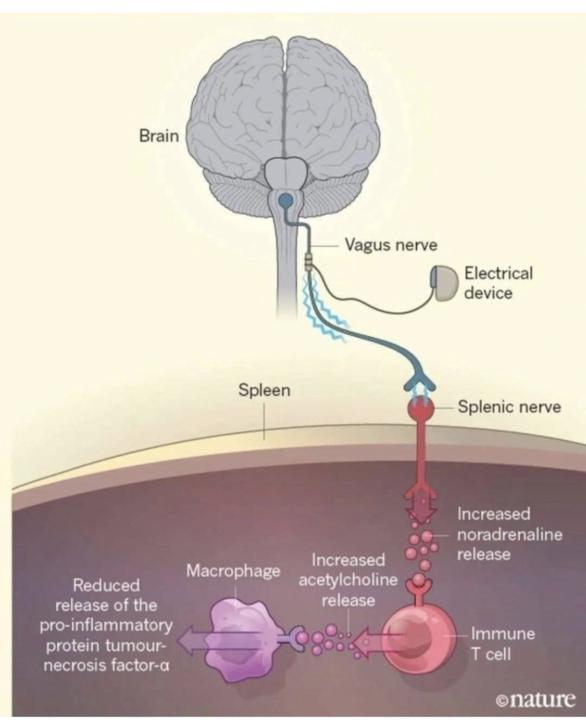
Your brain and immune system are constantly communicating. They are connected through a nerve called the vagus nerve. This connection helps your body control inflammation and stay balanced. 1️⃣ The brain sends the signal The brain sends messages through the vagus nerve to organs that manage immunity, like the spleen. Things like deep breathing, prayer, meditation, and calm states can activate this nerve. When that happens: • Heart rate slows • Stress reduces • Inflammation markers in the body can drop 2️⃣ The spleen passes the message The spleen receives the signal and passes it to immune cells. These immune cells then release a messenger that tells the immune system how strongly it should react. This happens very quickly — sometimes within minutes. 3️⃣ The body calms inflammation A chemical called acetylcholine is released. This helps stop immune cells from releasing too many inflammatory signals. In simple words: It tells the immune system “Relax, we don’t need such a strong reaction.” Why this matters Inflammation is not controlled only by chemicals in the body. Your nervous system also helps regulate it. This means things like: • stress • sleep • breathing • emotional state can directly influence inflammation and health. Your brain can literally tell the immune system when to calm down.
5
0
4d •
Nutrition Label
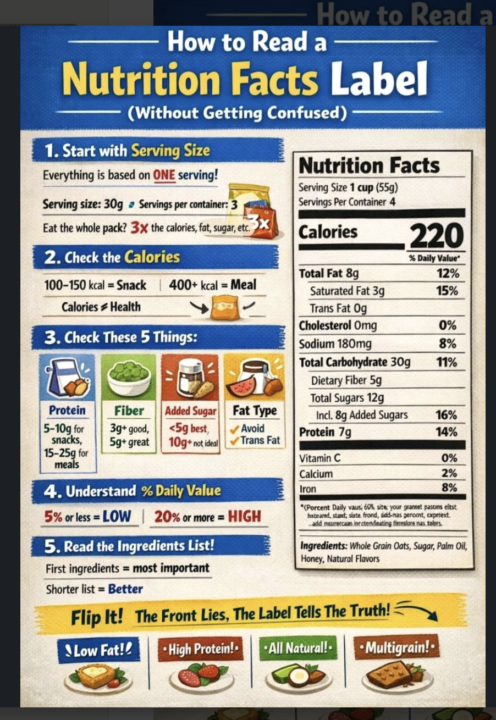
Understanding how to read a nutrition label is one of the most powerful skills for anyone serious about health, weight management, or smart eating. Let’s simplify it. 1. Start with the Serving Size Everything on the label is based on ONE serving. If a packet says: Serving size: 30g Servings per container: 3 And you eat the whole pack — you are consuming 3x the calories, sugar, fat, and sodium listed. Many people miscalculate intake because they ignore serving size. Awareness begins here. 2. Check the Calories (But Don’t Stop There) Calories tell you energy — not quality. 100–150 kcal = Snack range 400+ kcal = Meal range But calories alone don’t define health. A 200 kcal protein-rich snack is very different from a 200 kcal sugar-heavy snack. Calories ≠ Nutrition. 3. Focus on These 5 Key Elements ✔ Protein For snacks: 5–10g is decent For meals: 15–25g is strong ✔ Fiber 3g+ is good 5g+ is excellent ✔ Added Sugar Under 5g = ideal 10g+ = caution ✔ Fat Type Avoid trans fats completely Watch saturated fats ✔ Sodium High sodium contributes to water retention and long-term health issues. 4. Understand % Daily Value (%DV) 5% or less = Low 20% or more = High If sugar shows 20% — that’s high. If fiber shows 20% — that’s good. Context matters. 5. Read the Ingredient List Ingredients are listed in order of quantity. If sugar, palm oil, or refined flour appears in the first three ingredients — that product is primarily made of it. Shorter ingredient lists usually indicate less processing. Most Important Rule: Flip the pack. The front markets. The back informs. As someone who believes in disciplined lifestyle change, I’ve realized that reading labels is not about restriction — it’s about awareness. Small informed decisions made daily create long-term transformation. Because health is not built in the gym alone. It is built in the supermarket.
6d •
Carbs
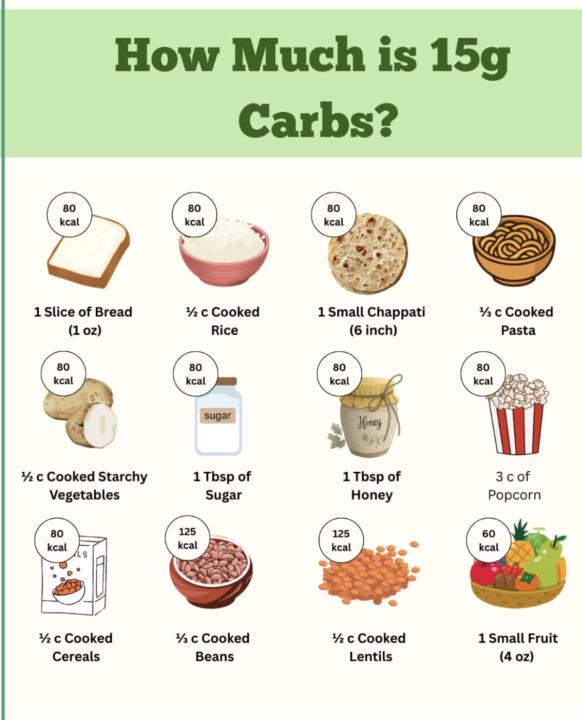
A visual guide to 15 g carbs: see everyday portions of bread, rice, chapati, pasta & more that each equal one carbohydrate exchange (~80 kcal). As the American Diabetes Association states in _Diabetes Care_ (2020), ‘one carbohydrate choice typically provides about 15 g of carbs and 80 kcal, helping manage blood glucose through portion control’ (American Diabetes Association, 2020) — use this cheat sheet to balance your meals with Dhow wellness
7d •
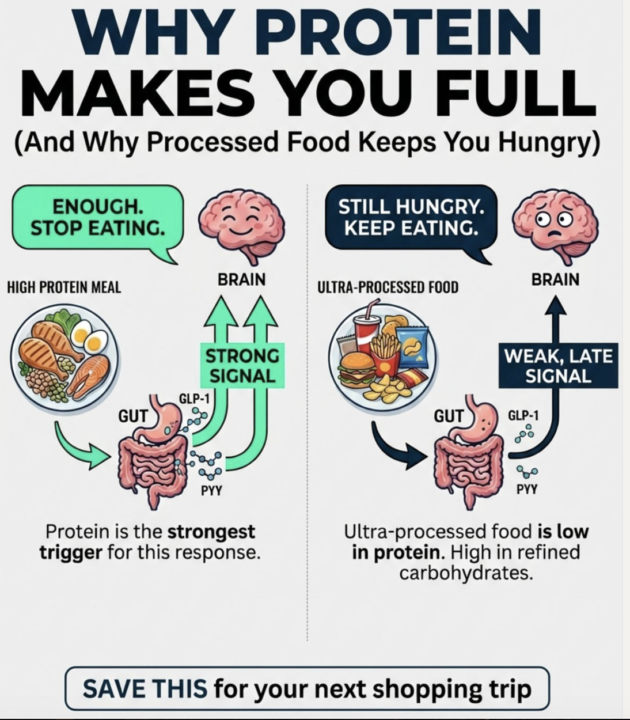
Protein
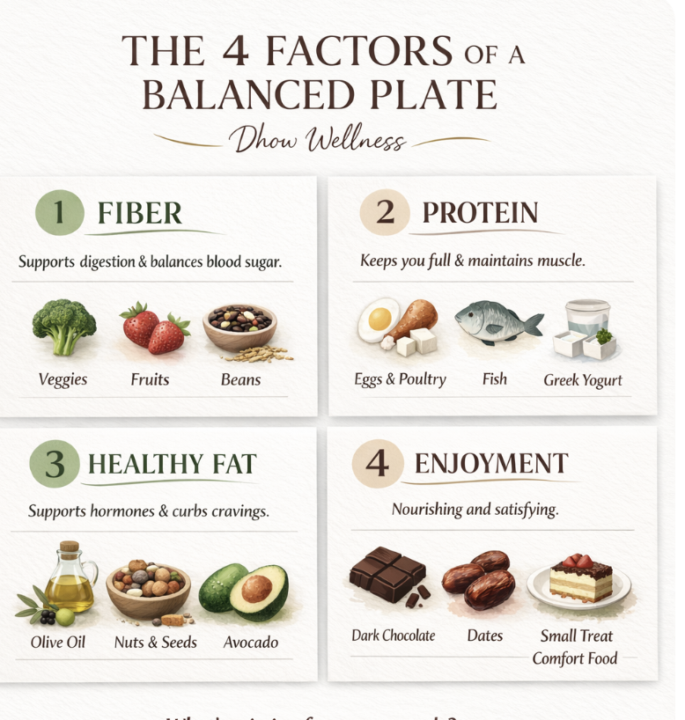
You don’t lack willpower. You lack protein. After 30 years in medicine, this is one of the most common patterns I see. People think they’re “bad at dieting”. They’re not. They’re just not getting the right signals. 𝗪𝗛𝗬 𝗧𝗛𝗘 𝗦𝗜𝗚𝗡𝗔𝗟 𝗙𝗔𝗜𝗟𝗦 After you eat, your gut releases two hormones: GLP-1 and PYY. They travel to your brain. They say: 𝗲𝗻𝗼𝘂𝗴𝗵. Protein is the strongest trigger for that signal. Ultra-processed food is typically: • Low in protein • High in refined carbohydrates • Soft • Fast to eat • Fast to digest The signal arrives late. And weak. So you keep eating. Then you’re hungry again an hour later. Not a discipline problem. A signalling problem. 𝗪𝗛𝗔𝗧 𝗧𝗛𝗘 𝗥𝗘𝗦𝗘𝗔𝗥𝗖𝗛 𝗦𝗛𝗢𝗪𝗦 In a landmark NIH randomised controlled trial (Cell Metabolism, 2019): Two diets Calories matched. Macros matched Sugar, fibre and sodium matched. Participants could eat freely. On the ultra-processed diet: ~500 extra calories per day • Weight gain On the minimally processed diet: • Weight loss Same calories available. But the signal to stop eating was different. 𝗧𝗛𝗘 𝗣.𝗥.𝗢.𝗧.𝗘.𝗜.𝗡. 𝗙𝗥𝗔𝗠𝗘𝗪𝗢𝗥𝗞 𝗣 — 𝗣𝗿𝗶𝗼𝗿𝗶𝘁𝗶𝘀𝗲 𝗽𝗿𝗼𝘁𝗲𝗶𝗻 𝗮𝘁 𝗲𝘃𝗲𝗿𝘆 𝗺𝗲𝗮𝗹 The anchor. Not the afterthought. 𝗥 — 𝗥𝗲𝗮𝗹 𝗳𝗼𝗼𝗱 𝘀𝗼𝘂𝗿𝗰𝗲𝘀 𝗳𝗶𝗿𝘀𝘁 Eggs, fish, meat, legumes, Greek yoghurt. 𝗢 — 𝗢𝗿𝗱𝗲𝗿 𝗺𝗮𝘁𝘁𝗲𝗿𝘀 Protein before carbohydrates blunts the glucose response. 𝗧 — 𝗧𝗮𝗿𝗴𝗲𝘁 𝗮𝗿𝗼𝘂𝗻𝗱 𝟮𝟬–𝟯𝟬𝗴 𝗽𝗲𝗿 𝗺𝗲𝗮𝗹 A practical range. The exact amount varies by person. 𝗘 — 𝗘𝘅𝗮𝗺𝗶𝗻𝗲 𝘆𝗼𝘂𝗿 𝗵𝘂𝗻𝗴𝗲𝗿 𝗵𝗼𝗻𝗲𝘀𝘁𝗹𝘆 Consistently hungry soon after eating? Check the protein first. 𝗜 — 𝗜𝗻𝗴𝗿𝗲𝗱𝗶𝗲𝗻𝘁 𝗹𝗶𝘀𝘁 𝗼𝘃𝗲𝗿 𝗻𝘂𝘁𝗿𝗶𝘁𝗶𝗼𝗻 𝗹𝗮𝗯𝗲𝗹 Lower protein density. Longer ingredient list. Less fullness 𝗡 — 𝗡𝗶𝗴𝗵𝘁-𝘁𝗶𝗺𝗲 𝗶𝘀 𝘄𝗵𝗲𝗻 𝗶𝘁 𝗰𝗼𝗺𝗽𝗼𝘂𝗻𝗱𝘀 Late ultra-processed snacking adds calories when you need them least. Three low-protein meals a day. 365 days a year. Or three meals anchored by protein, and a brain that actually receives the signal to stop. Most people blame themselves. However the signal was never strong enough.
1-30 of 32

skool.com/dhowwellnesscircle
A gentler way to heal your body.
With guidance. With support. Want sustainable weight loss better hormones, sleep stress and longevity. Reverse Aging
Leaderboard (30-day)
1

+19
2

+6
3

+4
4

+2
5

+1
Powered by