
Write something
Pinned

⭐
🔥
22h •
Krusty got a brain transplant 🧠🍞
Krusty, our digital concierge on the recipe pantry, told one of you to use 100 mL. When the recipe said 50. That one stung, because you’re trusting him with your hands covered in dough. So we tore him open and rebuilt him from the inside out. Here’s what’s different the next time you hit “Bake With Me” in the Recipe Pantry: www.recipepantry.app 🥖 He reads the actual recipe card now. Every amount he gives you comes straight from the recipe data, and a built-in fact-checker verifies his answers against the card before you ever see them. If the recipe says 50, he says 50. ⚖️ He knows your batch size. Scale a recipe to 2× and Krusty answers in 2× amounts. Ask and he’ll give you the original too. 📍 He remembers where you are. Tell him “I’m on step 4” and he stays there. No more “ready to start?” after you’ve been at it for an hour. Refresh the page mid-bake and he picks up right where you left off. 🎙️ Voice mode works like a real conversation. Interrupt him mid-sentence with a new question and he stops talking and answers it. Phone across the counter, hands in the dough, keep talking. 👀 He points now. Chat moved to a side panel so the recipe stays in front of you, and when he mentions a step, the page scrolls there and highlights it. And when a recipe doesn’t cover something? He tells you it doesn’t, instead of inventing a number. General baking advice gets labeled as general baking advice. Put him to work on your next bake. And if you ever catch him saying anything that doesn’t match the card, tell me. A member catching that 100 mL slip is exactly how he got this upgrade. www.recipepantry.app Perfection is not required. Progress is. Now that includes Krusty. 🍞 ~Henry⭐️🔥

Pinned
⭐
🔥
3d •
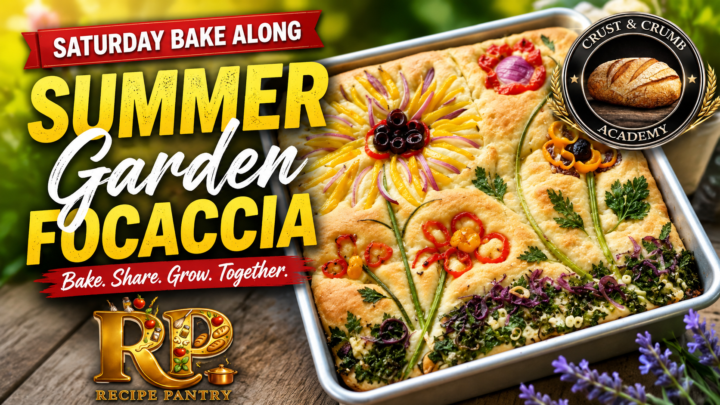
This Saturday: Summer Garden Focaccia, Two Ways 🌸
Look at what summer's handing us right now. Tomatoes coming in. Peppers, herbs, onions, whatever's crowding your counter or your garden. This week we turn all of it into bread. This Saturday's bake is Summer Garden Focaccia, and it might be the most fun we've had in the pan all year. You're going to decorate this one like a garden. Flowers built from peppers and onion. Stems from chives and asparagus. Tomatoes and olives for color. A wildflower meadow, a summer sunset, your kid's name across the top, whatever you dream up. No two loaves in this kitchen will look alike, and that's the whole point. We're running it two ways, so there's a lane for everybody: Yeasted, beginner-friendly. One bowl, no mixer, no starter. Mix Friday night, rest cold overnight, decorate and bake Saturday. If you're newer to bread, this is your week. pantry.bakinggreatbread.com/recipes/summer-garden-focaccia Sourdough, intermediate. For the starter crowd who wants the tang and the big, wild bubbles. Build your levain Friday, cold ferment overnight, bake Saturday. Sandy, Colleen, this one's calling your name. pantry.bakinggreatbread.com/recipes/sourdough-summer-garden-focaccia Both recipes have all four decorating tutorials built in, so you've got real guidance, not just "arrange some veggies." And they link to each other in the Pantry, so pick your lane or peek at both. Here's the rhythm: Friday, get your dough going (sourdough folks, feed that starter first). Saturday morning, decorate and bake together. Doors open 8:00 AM ET Saturday and we bake all day. There's one trick that decides whether your garden comes out beautiful or burnt, and I'll walk you through it all week leading up to Saturday. Stay close. So tell me: yeasted or sourdough, and what's in your garden or fridge right now that's going on top? Drop it below. Let's start planning our gardens.
Pinned
⭐
🔥
4d •
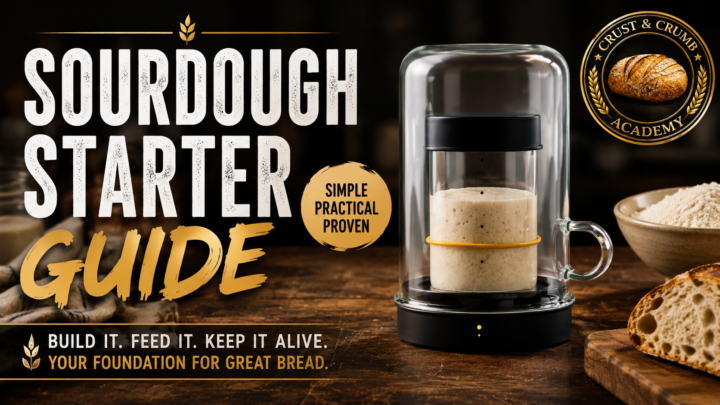
🫙 The Sourdough Starter Care Guide Just Got a Facelift
I went back through our Sourdough Starter Care Guide and gave it a complete refresh. It is not just prettier. It is easier to navigate, easier to understand, and much more useful when you are standing in the kitchen wondering what your starter is trying to tell you. The guide can always be inside the classroom button at the top of our page. https://www.skool.com/crust-crumb-academy-7621/classroom/5e132945?md=10b2221ee5774f8aaed5306cf692d08d Inside the updated guide, you will learn how to: ✅ Build a starter from scratch ✅ Feed it without wasting a mountain of flour ✅ Recognize peak activity and baking readiness ✅ Choose the right jar and keep it clean ✅ Prepare your starter for bake day ✅ Tell harmless hooch from contamination ✅ Dry and store a backup ✅ Understand starter temperature, flavor, and feeding rhythm I also added new visual examples, clearer chapter navigation, a starter resource library, and links to the tools we use throughout the Academy. Whether your starter is brand new, neglected in the refrigerator, or bubbling happily on the counter, this guide will help you understand what to do next. 🔗 Open the updated guide: https://sourdough-starter-guide.vercel.app/ Bookmark it. Keep it close. Come back whenever your starter starts speaking a language you do not understand yet. This free guide contains clearly labeled affiliate links. Perfection is not required. Progress is. ~Henry⭐🔥

🔥
15h •
Summer Tips To Keep A Mold Free Starter
Mold is the end of your starter. There's no saving it once a mold spur gets in. Mold occurs because a foreign bacteria has been introduced into starter ecosystem. Now that we're experiencing such a hot and humid summer mold can develop quickly so here's a few tips to keep the mold away.. 1. WASH YOUR HANDS!! 2. Change your jar every 1-2 days 3. When cleaning your jars, spurtles, chopsticks or whatever you stir with, add white vinegar to the dish soap and water. 4. Don't clean those items in the dishwasher or in you regular dish water. Use a big bowl and hand wash ONLY your starter jars, spurtles and whatever you stir with. Rinse well and allow to completely air dry 5. DO NOT use sponges to clean your jars, bowls, counters or sourdough utensils 6. Every time you feed your starter, after mixing dampen a small piece of a paper towel and wipe the inside walls of your jar clean all the way down to the level of your starter. A clean habitat helps to prevent mold growth/formation. If your starter is fridge kept you should get a clean jar with every feed and follow the washing/cleaning instructions above Keep those starters healthy, your jars & utensils clean and your feeding schedules locked in!!

⭐
🔥
18h •
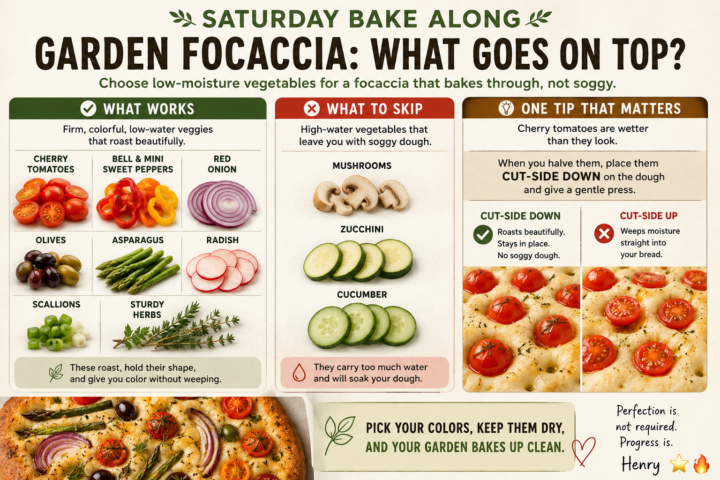
🌿 Building Your Garden Focaccia: What Goes on Top?
We’ve covered oiling and herb timing. Today, let’s talk about what actually goes on top. The secret to a garden focaccia that bakes through instead of turning soggy is simple: 💧 Choose low-moisture vegetables. Water is the enemy here. A vegetable that holds a lot of water releases it as it bakes, and that moisture soaks straight down into the dough. The result? A gummy, undercooked patch right under your prettiest flower. ✅ What works well Choose firm, colorful vegetables that roast nicely and hold their shape: 🍅 Cherry tomatoes 🫑 Bell peppers and mini sweet peppers 🧅 Red onion 🫒 Olives 🌱 Asparagus 🔴 Radishes 🧄 Scallions 🌿 Sturdy herbs These give you good color without releasing too much water into the dough. 🚫 What I’d skip Avoid the heavy weepers: 🍄 Mushrooms 🥒 Zucchini 🥒 Cucumbers They carry too much water and can leave the dough underneath soggy. 🍅 One cherry tomato tip that matters Cherry tomatoes are wetter than they look. When you halve them, place them cut-side down on the dough and give them a gentle press. Cut-side up, they release their juice straight into the bread. Cut-side down, they roast better and behave themselves. Pick your colors. Keep everything as dry as possible. Your garden will bake up clean, colorful, and fully cooked. 📖 The full vegetable rundown is included in both recipes: Yeasted Garden Focaccia: https://recipepantry.app/recipes/summer-garden-focaccia Sourdough Garden Focaccia: https://recipepantry.app/recipes/sourdough-summer-garden-focaccia Perfection is not required. Progress is. Henry ⭐🔥
1-30 of 2,294
powered by
skool.com/crust-crumb-academy-7621
#1 Sourdough Community on Skool 🍞
Coaching, not judgment. Sourdough, starter, yeasted, enriched & every bread between.
✅ ProveWorth Certified ⭐⭐⭐⭐⭐
Suggested communities
Powered by