
16h • Training 💪
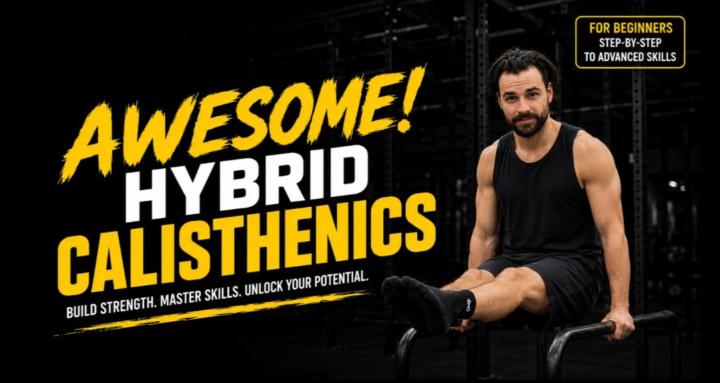
✨ Get The L-Sit Now!
The L-sit is one of the best first skills in calisthenics.
It looks simple.
It looks clean.
And it teaches way more than people realize.
The L-sit helps build:
• core strength
• hip flexor strength
• compression strength
• shoulder depression
• body tension
• control in support positions
It is also one of those skills that carries over into a lot of other things later.
So let’s break down:
• why it is hard
• what you need
• how to start
• the progressions
• common mistakes
• how it connects to other skills
🤔 Why the L-sit is harder than it looks
Most people think the L-sit is just an ab exercise.
It is not.
The L-sit is a combination of:
• pushing down hard through the arms
• lifting the hips up
• compressing the legs toward the chest
• keeping the legs active
• holding tension everywhere
That is why people often feel it in:
• abs
• hip flexors
• shoulders
• triceps
• quads
And one more important thing:
You do need some flexibility for a clean L-sit.
Not to start training it.
But to make it look like a real L-sit later.
If your hamstrings are very tight, getting the legs straight and high becomes much harder.
So yes, flexibility matters.
But no, you do not need perfect flexibility before you begin.
✅ What do you actually need first?
To start L-sit work, you mainly need:
• the ability to support some weight through the arms
• some basic core control
• willingness to start with easier positions
Helpful things to already have:
• dip support hold
• tuck hold
• seated leg lifts
• pike compression work
• basic hamstring flexibility
If you do not have those yet, that is okay.
That is exactly where the progressions come in.
🧱 Why the L-sit is one of the first skills people should learn
The L-sit is a great early skill because:
• it teaches body tension
• it teaches support strength
• it teaches compression
• it is easy to break into progressions
• it fits into many workout plans
• it carries over into other skills later
The L-sit helps with things like:
• handstand entries
• press handstand progressions
• hanging leg raises
• V-sits
• dip strength positions
• parallettes work
• some bar and ring combinations
So even if the L-sit is not your “dream skill,” it is still worth learning.
📍 The true starting point
A lot of people make the mistake of trying to jump straight into:
• straight legs
• both feet off the floor
• perfect shape
That usually leads to frustration.
The real starting point is usually one of these:
• support hold
• tucked hold
• seated compression lifts
• one leg out, one leg tucked
That is where most people should begin.
🪜 L-sit progressions from easiest to hardest
Here is a really practical roadmap.
1. Support hold
Start by just holding yourself up on:
• dip bars
• parallettes
• yoga blocks
• sturdy chairs if needed
Goal:
• arms straight
• shoulders pushed down
• hips lifted
This teaches the base.
If you cannot support yourself well yet, the L-sit will feel impossible.
2. Tucked support hold
Once the support hold feels okay, bring the knees in.
Think:
• knees bent
• feet off the ground
• hips lifted
This is the first real taste of the L-sit pattern.
3. One leg out, one leg tucked
This is one of the best progressions.
You keep:
• one knee bent
• one leg straight
Then switch sides.
This helps bridge the huge gap between tucked and full L-sit.
4. Alternating leg lifts
From a seated position or support position:
• lift one leg
• lower
• lift the other
• lower
This builds the compression strength people are often missing.
5. Seated leg lifts
Sit on the floor or on yoga blocks and try to lift both legs.
Even if the legs barely move, that is useful.
This is one of the best beginner drills because it teaches the exact compression needed.
6. Tuck L-sit hold
This is stronger than just a tucked support hold.
Now the idea is to really bring the knees up and hold with more intention.
7. One leg L-sit hold
Same idea as before, but now hold it longer and cleaner.
8. Full L-sit
Now both legs are straight.
This is where flexibility and compression really start to matter more.
9. Longer holds and cleaner shape
After you get a basic L-sit, the next level is making it cleaner:
• straighter knees
• better posture
• longer hold
• stronger shoulder position
10. V-sit and combinations
Eventually, the L-sit can lead into more advanced skills like:
• V-sit
• press work
• L-sit to tuck planche transitions
• L-sit to handstand style progressions
• bar and ring combinations
🧠 Flexibility and mobility for the L-sit
Let’s make this part clear.
You do not need to be able to fold in half before starting.
But if you want a cleaner, stronger L-sit, these help a lot:
• hamstring flexibility
• pike stretch work
• active compression
• seated good mornings
• pike pulses
• toe touch progressions
A lot of people are strong enough for more of the L-sit than they think.
They are just limited by:
• tight hamstrings
• weak compression
• not being used to lifting the legs actively
That is why passive stretching alone is not enough.
You also need to strengthen the position.
💥 Common mistakes
Here are the most common mistakes people make with L-sits:
1. Trying the full version too early
This is the biggest one.
If you skip tucked work and straight to the full version, you usually just get frustrated.
2. Not lifting the hips enough
A lot of people focus only on the legs.
But if the hips are low, the whole position gets harder.
3. Bent arms
The support position matters.
If the arms bend too much, you lose one of the main benefits of the skill.
4. Shoulders shrugged up
You want to push down through the bars or floor.
Think:
• shoulders away from ears
• chest proud
• hips lifted
5. Legs too low
Sometimes people “kind of” get the L-sit, but the legs are hanging low.
That usually means the compression strength is not there yet.
6. Ignoring flexibility
If the hamstrings are tight, the full L-sit will feel much harder.
Not impossible.
Just harder.
7. Only training the hold
A lot of people only try the skill itself.
That is not enough.
You also want drills that build the pieces.
🛠 Best exercises that help the L-sit
If you want to improve your L-sit faster, these exercises help a lot:
• support holds
• tuck holds
• seated leg lifts
• hanging knee raises
• hanging leg raises
• pike compression pulses
• dip support holds
• hollow body holds
• pike stretching
• hip flexor strengthening drills
These all build pieces of the skill.
📅 How to train the L-sit
The L-sit can fit into a lot of workout plans.
You can put it on:
• push day
• core day
• skill day
• or even a short daily skill session
A simple structure could be:
Beginner version
• support hold
• tuck hold
• seated leg lifts
• light pike stretch
Intermediate version
• tuck L-sit
• one leg L-sit holds
• seated compression lifts
• hanging leg raise work
If you only have 5 minutes
Do:
• 1 support hold drill
• 1 L-sit progression drill
• 1 compression drill
That is enough to make progress if you stay consistent.
⏱ Hold time or reps?
Both can work.
For holds:
• 5 to 15 seconds is great to start
For reps:
• 5 to 10 controlled lifts works well
The key is:
• quality
• active position
• not just surviving
🔄 Why the L-sit is good for combinations
The L-sit is a skill that connects really well to other skills later.
That is one reason it is so useful.
It can lead into:
• V-sit
• handstand press variations
• L-sit to tuck planche ideas
• hanging transitions
• bar support combinations
• ring support combinations
It teaches you how to hold tension and move from one shape into another.
That is a huge part of advanced calisthenics.
🚫 What if the floor version feels impossible?
That is very common.
The floor is harder because there is less space.
That is why many people start with:
• parallettes
• yoga blocks
• dip bars
Those give you more room and make the progression more realistic.
So if the floor version feels impossible, that does not mean the L-sit is impossible.
It usually just means you need a better starting version.
🔥 Final thought
The L-sit is one of the best first skills because it teaches so many things at once.
It builds:
• strength
• compression
• control
• posture
• awareness
• carryover into future skills
And even if you are not close to the full version yet, the progressions themselves are already making you better.
If you are interested in having all the progressions and videos mapped out for you, the Skill Tree App has that available when you upgrade to Premium.
That also gives you access to the Workout App, which makes it much easier to follow your training, track progress, and keep all the calisthenics work organized in one place.
👇 Question
What part of the L-sit feels hardest for you right now?
• lifting the hips
• straightening the legs
• hamstring flexibility
• compression strength
• just knowing where to start
6
1 comment
✨ Get The L-Sit Now!
skool.com/awesome-ninja-fitness
THE Beginner Calisthenics hub → 💪🔥 Master pull-ups, handstands & more with step-by-step progressions + coaching. Build strength, control & skills.
Leaderboard (30-day)
1

+379
2

+362
3

🔥
+189
4

+185
5

+181
Powered by