Activity
Mon
Wed
Fri
Sun
Aug
Sep
Oct
Nov
Dec
Jan
Feb
Mar
Apr
May
Jun
What is this?
Less
More
Memberships
Game Master's Laboratory
407 members • Free
424 contributions to Game Master's Laboratory

11h •
Friendly Local Gaming Store
I’ve recently moved and am hoping to visit my friendly local gaming store for some events! Anyone have any favorite events/games for their local hobby shop, RPG or otherwise? I’ve had some fun at Friday night Magic before, but I’m realizing I’ve only ever played one or two RPGs at a hobby shop event before
0
0
13d •
Playtest Cosmere RPG!
Hello folks, I've been hard at work on an adventure-writing gig for Brotherwise Games. Part of my responsibilities for the module I'm developing is to oversee playtest programs---if you're interested in running some Cosmere RPG, this is a standalone adventure that can be completed in a few sessions of play (probably two or three). It's 10th level, so if you haven't tried Stormlight RPG before, it might be a bit of extra work to get through, although it's a pretty intuitive D20 system. Each group chooses ONE person to fill out the form, and in the next month or so, they'll run the adventure and fill out the attached form. I'll sift through the results and use them in revision. If you're interested, check out this form! The project does require that you and your players sign an NDA, which you should send my way if you're selected for the playtest. Spots are limited due to the way we sort through the data, but we need a good number of groups, so consider checking it out if you're interested! It's a cool glimpse into an upcoming Cosmere project, a chance to try out the game, and has what I think is a pretty cool scenario. Here's the link: https://docs.google.com/forms/d/e/1FAIpQLSd5ApuSyCDx-lVDmqmK1P-FoFn6Q_NpycuUARsFVdCxtxSDqw/viewform?usp=dialog Let me know if you have any questions!
3 likes • 10d
@Lavagust Fox not for the time being, but I’ll be sure to post here if something comes up! The nice part about working with publishers like brotherwise is they take care of most stuff other than writing for me haha
1 like • 17h
@Zachary Wilson Hey Zach! Unfortunately the form has closed and I selected the max number of groups I'm allowed to take into the playtest, but if it enters another playtest later I'll update this post and respond to your comment again so you can see it!
5d •
Happy Hour Starting Wednesday!
Hello all, since I've been in the process of moving and starting a new job, I haven't had as much time as I'd like to run our weekly game here. For the time being, I'd still like to do some community events, so I'm going to start holding an evening Happy Hour (much like Jonah's Coffee Hour) at 7:00 PM ET on Wednesdays! Even though I don't have a weekly game to prep right now, I have some GenCon prep to do, some freelance work for a few systems, and some personal projects for future campaigns that I'd love to work on and talk shop with folks about. I also have an endless pile of grey shame in unpainted minis that I want to get to. Come grab a beverage of choice and talk about planned and ongoing games! Excited to see you there.
1 like • 3d
This is tonight! See you all in a few hours
1 like • 3d
@Mark Petersen sorry to have missed you guys! I dipped from the call early but I’ll make sure to stick around next week!

8d •
Thoughts on tools
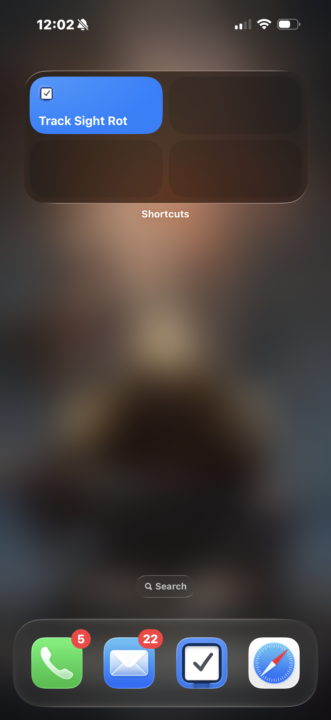
I had an idea today, I'm interested in hearing thoughts from others. I've basically tried everything to keep my game events organized, Google Docs, Evernotes, notion, pieces of paper. Nothing ever really sticks or works well, at least for me. While I was setting up some shortcuts (ie Apple's version of macros/automation) on my iPad to quickly create tasks in my task manager (Things 3). It dawned on me, why not create pre-canned shortcuts for stuff I want to track? For instance, in 5e D&D contracting a disease involves a few steps (Con check DC10-15, Incubation period (1d4 days), etc. A pain to track on paper/notebooks but really simple in a task manager with checklists. Has anyone used a todo list or task manager to help organize your game?
1 like • 6d
I haven't used these specifically, but I have used some premade ones that are very similar in concept on Foundry. When I'm running online, that's my preferred VTT, and various communities have created a wild amount of automation for just about everything, it's very handy for really crunchy games. For example, there might be a spell module---if a player picks fireball, a button gets added to their sheet, and when they click it, it automatically measures the size and shows everyone on the map. It's very handy for complex systems, especially ones that use maps! I tend to ignore it for less crunchy systems, but once in awhile there's a super handy one, like clock trackers everyone can see for blades in the dark I don't tend to use these tools at my in-person games, and do everything analog with pencil and paper. But that is 100% personal preference haha

13d •
Introduction
Hello Game Master's Laboratory! My name is Michael (like many of us) and I've been playing RPGs beginning with but not limited to D&D (like many of us) for many years. Although I played in the "good old days" I'm only somewhat nostalgic for them. I like almost everything that has evolved in roleplaying games. I joined Skool to build my own community around teaching the art of being a "Dungeon Master" and I was delighted to find this group because I'm already a fan of proactive roleplaying. It actually comes pretty close to my own philosophies in a lot of ways, and in the past I have had similar thoughts to putting that in a system. "Player-centric" was one term I've played with before. But you guys have done a lot better with proactive, because I realized along the way that we need to involve the players in the creative process, but there is more to game than just satisfying the player's needs. What I think about, these days is in terms of the whole table is working together to serve the needs of the world, itself: a world in which nothing is real (or canonical) until it happens at the table. The GM may have ideas about the lore and background of the setting, they may know about plots and agendas going on behind the scenes, but the output of playing, the living world, is the result of those ideas coming together with the actions of the players, one scene or encounter or adventure at a time. Well, there's my grand philosophical statement. That was the assignment, right? "introduce yourself with a grand philosophical statement on the deep structure of Tabletop Roleplaying Games?" Or did I make that up?
3 likes • 10d
Great to have you here Michael! I love your writeup about the collaborative, living world. There’s something very cool about TRPGs I’ve never seen elsewhere when players collaborate on a setting, it really is greater than the sum of its parts
1-10 of 424
@tristan-fishel-9232
He/Him. Co-Author of the Game Master's Handbook of Proactive Roleplaying, GM, TTRPG enthusiast, half of the Quest Brothers. Wiser than Jonah Fishel.
Active 8h ago
Joined Aug 6, 2024
Powered by