Activity
Mon
Wed
Fri
Sun
Sep
Oct
Nov
Dec
Jan
Feb
Mar
Apr
May
Jun
Jul
What is this?
Less
More
Memberships
Health Has No Finish Line
56 members • $29/month
16 contributions to Health Has No Finish Line

Apr 8 •
Sweaty and questioning
I decided to start a core challenge. It’s 14 days. Today being day one and I learn I can no longer do a sit up. I can do all the planks and crunches and side planks and all that jazz but I physically can’t do sit ups anymore. I said this to my sister her response was “you had a c section 4 years ago. You shouldn’t be able to do sit ups anymore” Now my question. Is there any truth to this? If so I guess I can get over it but it seems weird the to can do all other core things but that one
0 likes • Apr 8
@Amanda Steele I can see some reason behind it with the argument of cutting through all the layer but at the same time I know they don’t cut the muscle they manually move

Mar 1 •
Local group gathering
Open to ANYONE who lives close by! @Kristen Burns and I decided that since next Saturday's forecast is too good to pass up, we'd like to get the kids (AND US) together. Where: Cedar Beach Park/Playground When: Anytime after 10am -- Stay as long as you want! What: Yap with the ladies (don't feel the need to be a mom to join us!! all women welcome!) and let the kids play and get out the energy! Feel free to bring your own coffee, energy drink, and/or snacks!! :)

1 like • Mar 5
Eleanor has dance class till 10. Hopefully I can swing by for a little after class with her
Mar 2 •
March goals
Goals for this month Keep lifting and riding the peloton 3-4 times a week. Get more mobility and stretching done. This one’s hard for me. I have hyper mobility and tend to over stretch. I stretch till I feel it then push past that. I blame my years of dance training for that mindset For food goals I want to start finding what works and doesn’t work for my working out routine but also supports my endometriosis
1 like • Mar 3
@Amanda Steele trying pre workout meals is on my list. Also trying to be lower on inflammatory foods for my endometriosis. I recently had blood work and I’m having some vitamin deficiencies that go hand in hand with endometriosis. I need to up my iron, vitamin d and magnesium.
1 like • Mar 3
@Amanda Steele I’m definitely more concerned with my vitamin issues right now and pre workout meals. Even tho I feel like the pre workout meals could get hard depending the day. I tend to work out when Eleanor is going to sleep. But the days that I work from home I will workout on my hour lunch break. If I can get some lower inflammatory food mixed in that’s great. For the vitamin issues I started taking a few supplements in the last week to 2. I still feel like I’m dragging myself through the day. But I know it’s also important to keep the adjustment period in mind.
0 likes • Feb 5
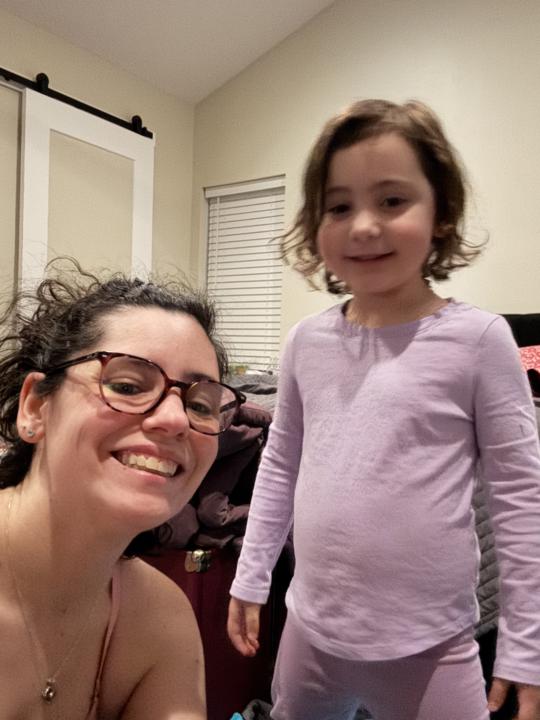
@Jenna Bower she was making fun of me the whole time I was on the bike. Telling me i wasn’t listening to what the instructor said and that my music was poop. Then decided she needed todo the next thing with me. The amount of times she was trying to be directly next to me and touching was a bit much. She ended up telling me it was hard and then started to cover me the blanket she was using as a mat.
Dec '25 •
Rough but did it
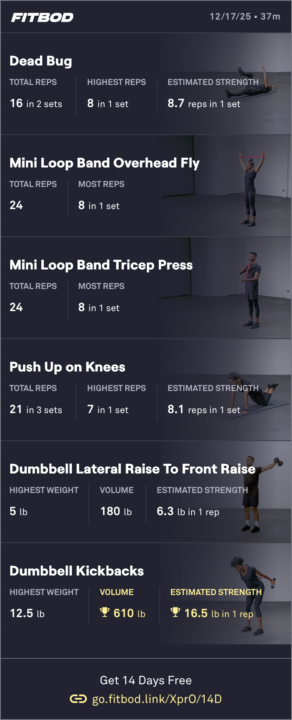
First workout since having my surgery. Abs are rougher than I thought they would be 3 weeks out from abdominal surgery and all I did was some dead bugs and planking. It was a push day too. I use fitbod for my workouts. I have it set up to switch between push, pull and legs. Still need to come up with something for cardio. I don’t like the choices the app has. We have a peloton I should try again I guess before I get walking/jogging pad
1-10 of 16