Activity
Mon
Wed
Fri
Sun
Aug
Sep
Oct
Nov
Dec
Jan
Feb
Mar
Apr
May
Jun
Jul
What is this?
Less
More
Memberships
Game Master's Laboratory
408 members • Free
246 contributions to Game Master's Laboratory

5d •
Friendly Local Gaming Store
I’ve recently moved and am hoping to visit my friendly local gaming store for some events! Anyone have any favorite events/games for their local hobby shop, RPG or otherwise? I’ve had some fun at Friday night Magic before, but I’m realizing I’ve only ever played one or two RPGs at a hobby shop event before

2 likes • 3d
@Tristan Fishel : I met one of my best gaming friends at the non-D&D game night there. They used to rotate Wednesdays. Are you in DC? I can send Dusty your way. He’s in Silver Springs, last I checked.
0 likes • 1d
@Tristan Fishel : Are you up in MoCo? There’s also Third Eye in Annapolis. Last time I was there DC was a big Meetup.com culture. Also, amazing funk bands if that’s your thing. Look for funk fest. Annnnd for reals close the menu. If there’s something you’re into, someone out there is doing it. Lindy Hop, Swing Dancing, bike people, board games… (Almost) no one moves to DC by choice, so they start their own groups so they can bring what they love.

17d •
Factions, Clocks, NPCs, Secrets and more! So I built an app.
The whole thing about factions had eluded me for a long time. But after reading both Proactive and Collaborative books it really made it simple and explained how everything revolves around factions! So I decided to make a tool for myself that helped me track factions and their relationships with other factions (threads). This turned into a “conspiracy board” type visualisation… thus Conspirita was born! It now does a lot more! Secrets was a big deal for me. I’ve added ability to track secrets, who knows them, and if they’ve been revealed; NPCs, locations, PCs, maps and more. It’s been so helpful! You can share a view of it with players too - just a brief outline of a few things. It can even integrate with things like Claude via its own MCP Server! I'm trying out building session plans with Claude since I like to ideate on a bunch of random stuff and then draw some structure from it all. So now Claude and I just chat about what's happened in the last session, I share what I’m thinking for next session, and Claude asks me clarifying questions. Now, rather than Claude trying to constantly remember all about the factions, npcs, locations and stuff from it's own memory (and regularly getting confused about things), it just references my Conspirita board and we're both clear on what's what and who's who. I'd love for anyone who's curious to check it out and let me know what you think! If you want to check it out, you can find it at https://conspirita.com. Once you're signed in to Conspirita, add this URL to your Claude instance: https://conspirita.com/api/mcp If you have any feedback I’d love to hear it! I keep tweaking things when I find myself wanting something more.
1 like • 6d
Love the idea. I signed up, and haven’t received an email to confirm, so I’m stuck in a holding pattern, since there isn’t a “resend” option. Reckon there’s a way to push me through and let me in? It’s been a few days, and yes, I checked my spam.
9d •
Happy Hour Starting Wednesday!
Hello all, since I've been in the process of moving and starting a new job, I haven't had as much time as I'd like to run our weekly game here. For the time being, I'd still like to do some community events, so I'm going to start holding an evening Happy Hour (much like Jonah's Coffee Hour) at 7:00 PM ET on Wednesdays! Even though I don't have a weekly game to prep right now, I have some GenCon prep to do, some freelance work for a few systems, and some personal projects for future campaigns that I'd love to work on and talk shop with folks about. I also have an endless pile of grey shame in unpainted minis that I want to get to. Come grab a beverage of choice and talk about planned and ongoing games! Excited to see you there.
2 likes • 7d
Nooooo worries. I think we’ll pick up a little steam as time goes on. Excited to share what’s been happening in my games.

13d •
Thoughts on tools
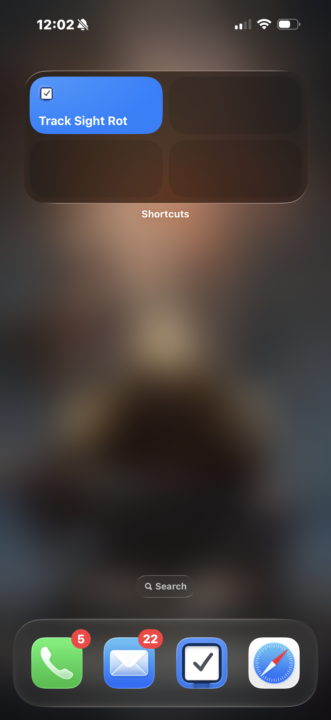
I had an idea today, I'm interested in hearing thoughts from others. I've basically tried everything to keep my game events organized, Google Docs, Evernotes, notion, pieces of paper. Nothing ever really sticks or works well, at least for me. While I was setting up some shortcuts (ie Apple's version of macros/automation) on my iPad to quickly create tasks in my task manager (Things 3). It dawned on me, why not create pre-canned shortcuts for stuff I want to track? For instance, in 5e D&D contracting a disease involves a few steps (Con check DC10-15, Incubation period (1d4 days), etc. A pain to track on paper/notebooks but really simple in a task manager with checklists. Has anyone used a todo list or task manager to help organize your game?
1 like • 11d
I’m interested in the data entry method here. My experience with the proactive lifestyle has been an emphasis on efficiency between switching from a birds eye view (factions, clocks, the world) to zooming in on an encounter or particular story aspect. I’m mostly colored index cards and colored pens when I’m at the table, and with all the collaborative world-building we do in my games, I find I need to place information somewhere I can find it. Tracking conditions is maybe something I need to incorporate. I mostly play the less crunchy systems, so maybe I just need to throw down some cards as if they were aspects. “Electricity coursing” or something.
Jan 25 •
Daggerheart Trilogy
Time to work on organic goals, conflicts and struggles. 🥳 Posting my in-person Daggerheart games in three different threads here… Please post accordingly so I know which game you’re commenting on. 🙏 One thing I’ve noticed is that emergent/proactive play is pretty streamlined in the Daggerheart system during world-building and character creation. I’m also taking some of my lessons learned from previous campaigns since reading the PARP guide and gauging ahead of time how proactive and goal-oriented the players want the campaign to be. That means these three different campaigns may have varying levels of proactive versus reactive play. Stay tuned!
0 likes • 20d
[attachment]
0 likes • 13d
Adieu, Ether Frontier… Welp, it’s finally happened. I got my third or fourth slew of cancelations, so I am closing this campaign down, for now. I will attach a screenshot. Below is my note to the group, after some workshopping with the AI and adding my own language: Hi, gang. Rather than try to pivot tonight’s game again, I’m going to cancel. I also think the schedule we’ve been trying to maintain has become too challenging, and it’s time to press pause on trying to close out this arc of the campaign. I’ve really enjoyed the world we’ve built together, and I appreciate everything everyone has brought to the story. For now, though, I’m not planning to schedule any more Ether Frontier sessions. If there comes a time when it makes sense to adventure together again, I’d be happy to revisit this world or try something entirely new. Until then, I’m going to let this adventure rest for a while. Thanks again, everyone.
1-10 of 246
@james-willetts-2216
He/Him. Big time RPGer, sound engineer by trade, improv theater novice, cat lover, father of two, always looking to improve my GMing and PCing. ☺️
Active 1d ago
Joined Aug 10, 2024
Tucson
Powered by