
Pinned

Sep '24 •
👋 Welcome to the Resilience Academy!
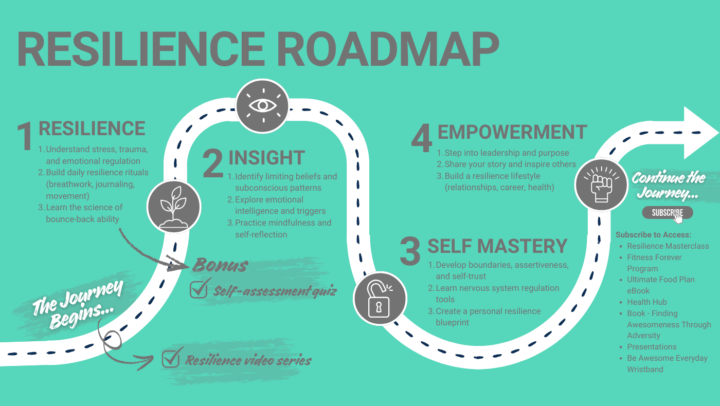
Welcome! This community is here to take you on a journey to live a better life by being more resilient and healthy. Whether you are suffering from a debilitating condition or loss, stressed, need more confidence or help in your relationships, having resilience and health can really help. So where do you start ? In this community, we celebrate each other's victories, no matter how big or small, and support each other. We're all here to grow, push boundaries, and discover new depths of our strength together. Here are your next steps 👇 1. Start the free Resilience Roadmap: https://www.skool.com/leannesklavenitis/classroom/9b9a3386?md=b826f320bf854b158cbff5b4e98b58e0 2. Then move onto the 7 day Resilience Reboot https://www.skool.com/leannesklavenitis/classroom/2b3f02ee?md=c424f2d18af74a208208301b3d75818a 3. Join the weekly Q&A calls: https://www.skool.com/leannesklavenitis/calendar 4. Introduce yourself: name, country, and your goal. 5. Stay active: ask questions, help others, share wins, make friends, have fun! To your success! Leanne PS: What’s your goal for the next 30 days?
25d •
Are You Burnt Out… or Just Really Tired?
My algorithm seems to have decided I need to know everything there is to know about burnout. It's everywhere at the moment. So I'm not sure if burnout is the latest topic we're all talking about… or if Meta is trying to tell me something 😆 Either way, it's got me thinking about how often we use the word... Had a huge week? Burnt out. Work is driving you mad? Burnt out. Tired, cranky and don't want to talk to anyone? Must be burnout. But sometimes… aren't we just really tired? There's obviously a difference between having too much on for a few days and feeling like you've been running on empty for months. A decent sleep, a quiet weekend or a few days away can do wonders when you're tired. But then again, what about when they don't? When you've had the break, caught up on sleep and slowed things down a bit, but you still don't feel quite right. That's the bit I'm interested in. So I'm going to dig into burnout a little more over the next few weeks - what it actually is, what it isn't, how we end up there and, most importantly, what we can do about it. But let's start here: How do you know when you're just really tired and need a break… and when something bigger is going on?

17d •
Are you a "use the good china" person?
You know the stuff. The expensive candle you don't want to burn. The nice bottle of wine you're saving. The new outfit waiting for the right occasion. The fancy dinnerware that spends 360 days of the year in a cupboard. I've definitely become more of a "just use it" person over the years - living with MND probably has something to do with that. When I was diagnosed, I was given 2–3 years to live, so the idea of saving everything for "someday" started to seem a little ridiculous. I'm now nine years down the track, which I'm very happy about... but I still don't see much point in owning lovely things and never actually enjoying them. Although I suspect there are still a few things lurking in my cupboards that would prove I'm not quite as good at this as I think. What are you saving for a special occasion that you should probably just use?

18d •
Bring One Thing Back
If you could bring back ONE thing from your childhood that doesn't really exist anymore, what would it be? Could be a food, a TV show, a shop, something you did after school, the way weekends felt... anything. I'm sure some of these answers are going to bring back memories I'd completely forgotten about! My answer is in the comments ;)

10d •
When Did Exercise Become Another Chore?
When did moving our bodies become another thing we have to tick off a list? 10,000 steps. Gym three times a week. Strength training. Stretching. Get your cardio in. I've worked in health and fitness for more than 30 years, so I'm certainly not going to argue that exercise doesn't matter. But I do wonder whether we've made it more complicated than it needs to be. Movement doesn't always have to be a workout!! Walk while you're talking on the phone. Put some music on while you're cooking and have a dance around the kitchen. Park a little further away. Get outside and do something in the garden. Take the stairs when you can. Play with the kids or the dog. None of it needs activewear, an app or a spot in the diary. These days my own movement looks very different to what it once did, and I've had to rethink what "exercise" means for me. What I can do matters more than whether it fits the traditional definition of a workout. I'm curious about everyone else. What movement do you genuinely enjoy enough that it doesn't feel like exercise?

1-30 of 264

Leaderboard (30-day)
1

+5
2
+5
3

+5
4

+5
5

+4
Powered by