
🔥
1d •
🌸 Want Your Garden to be a Pollinator Hotspot?
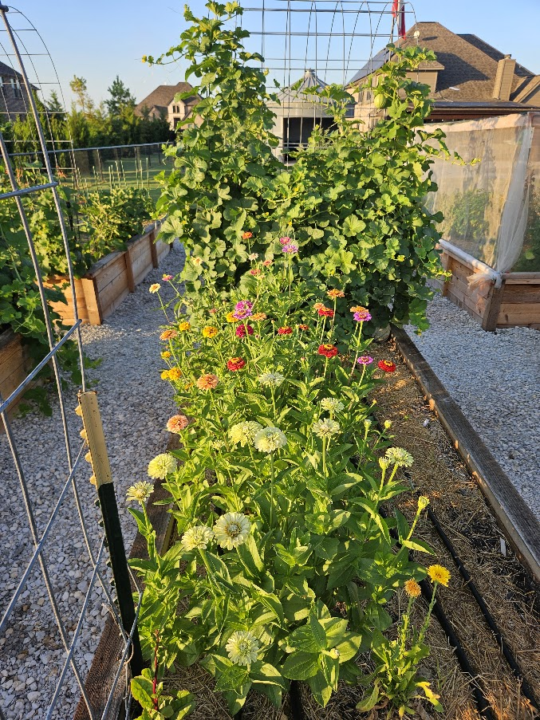
If you want more melons, squash, and cucumbers this year, the secret isn't just soil and sun. It's flowers. 🌻 Here's a good rule of thumb I use in my own garden: for every 3 vegetable plants, plant at least 1 flower. Some veggies rely on pollinators to produce fruit. But veggie blooms alone often aren't enough to catch their attention, especially early in the season before your vegetables even start flowering. Think of flowers as the billboard. Their bright colors and strong scent are basically advertising "food here!" to any pollinator flying by. Once they land in your garden for the flowers, they'll naturally visit your vegetable blooms too. 𝗗𝗶𝗳𝗳𝗲𝗿𝗲𝗻𝘁 𝗙𝗹𝗼𝘄𝗲𝗿𝘀, 𝗗𝗶𝗳𝗳𝗲𝗿𝗲𝗻𝘁 𝗩𝗶𝘀𝗶𝘁𝗼𝗿𝘀 Not all pollinators are drawn to the same things, so a mix of flowers brings a mix of helpers: 🐝 Bees love purple, blue, and yellow flowers like lavender, bee balm, hyssop, and sunflowers 🦋 Butterflies go for clustered or flat, open blooms in red, orange, and pink, like zinnias, lantana, and coneflowers, because they give them a place to land 🐦 Hummingbirds are drawn to tubular, red or orange flowers like salvia, California fuchsia, and trumpet vine 🌙 Moths prefer pale or white flowers that open in the evening, like moonflower or evening primrose, since they're active at night Planting a variety means you're rolling out the welcome mat for more than just bees. 𝗗𝗼𝗻'𝘁 𝗙𝗼𝗿𝗴𝗲𝘁 𝘁𝗵𝗲 𝗪𝗮𝘁𝗲𝗿 Pollinators need water just like we do, and having a source right in your garden makes a huge difference. A bird bath or small fountain works great. If there's no water nearby, pollinators have to leave your garden to find some elsewhere, which means less time pollinating your plants. But if you've got water right there, they can take a quick drink, rest for a second, and get right back to work. However, bees and other small pollinators can actually drown in open water. So, toss a few flat stones, rocks, marbles, or corks into the bird bath or fountain so they have something to land on while they drink. A shallow dish with pebbles works just as well if you don't have a bird bath.
🔥
8d •
For the next Workshop: What topic(s) interest you most?
It's time to start planning the next workshop! Cast your vote on which topic you want to cover next! P.S. We will cover all these topics and more over time. So, vote based on your CURRENT needs/situation. If you're in between a few or want something else, let me know your thoughts!
Poll
36 members have voted
🔥
Mar 28 •
Who's growing carrots this year? 🥕
Carrots are one of those veggies that 𝒍𝒐𝒐𝒌 easy, but gosh darn they can be tricky! If you've ever had trouble growing them before or are trying for the first time, check out this video 🎥 I cover: - How to start carrots from seed - My #1 tip for germination success - Watering & fertilizing for healthy growth - When and how to thin seedlings - Best practices for harvesting - Tips to prevent common carrot growing issues P.S. I recorded & edited this video over a year ago, so while a lot has changed in my garden (and with my editing skills), the points still very much stand!
🔥
Jun 13 •
🌱 How Succession Planting Works - Avoiding "Feast or Famine"
Have you ever had all your lettuce bolt (go to seed and turn bitter) in the same week? ...Or harvested a mountain of bush beans all at once, scrambled to use/preserve them… and then had nothing for the rest of the season? That's "feast or famine". And succession planting is how you fix it. 🌿 𝗦𝗼, 𝘄𝗵𝗮𝘁 𝗶𝘀 𝘀𝘂𝗰𝗰𝗲𝘀𝘀𝗶𝗼𝗻 𝗽𝗹𝗮𝗻𝘁𝗶𝗻𝗴? Succession planting just means spreading out your plantings over time instead of putting everything in the ground at once. Instead of planting all your lettuce seeds on the same day, you plant a small batch, wait a couple of weeks, plant another small batch, wait again, and keep going. The result? Instead of 20 heads of lettuce all ready on the same Tuesday, you get fresh lettuce coming in steadily for weeks, or even months! It’s a fairly simple practice, with a big payoff! 🥗 𝗧𝗵𝗲 𝗽𝗹𝗮𝗻𝘁𝘀 𝘁𝗵𝗮𝘁 𝗿𝗲𝗮𝗹𝗹𝘆 𝗯𝗲𝗻𝗲𝗳𝗶𝘁 𝗳𝗿𝗼𝗺 𝘁𝗵𝗶𝘀: Some plants are natural candidates for succession planting because they tend to produce their harvest all at once, and then they're done. 𝗟𝗲𝘁𝘁𝘂𝗰𝗲, 𝗦𝗽𝗶𝗻𝗮𝗰𝗵, 𝗮𝗻𝗱 𝘀𝗮𝗹𝗮𝗱 𝗴𝗿𝗲𝗲𝗻𝘀 — Classic examples. Heat makes them bolt fast. Planting every 2–3 weeks keeps the salad bowl full from spring into early summer (and again in fall). 𝗕𝘂𝘀𝗵 𝗯𝗲𝗮𝗻𝘀 — Unlike pole beans (which climb and keep producing), bush beans give you a big flush of pods over just a few weeks, and then they're mostly finished. Successive plantings every 2–3 weeks stretch that harvest 𝘸𝘢𝘢𝘢𝘢𝘺 out. 𝗥𝗮𝗱𝗶𝘀𝗵𝗲𝘀 — These mature in as little as 4 weeks, which means a single planting is gone before you know it. Succession planting radishes every 1–2 weeks keeps a continuous trickle coming. 𝗣𝗲𝗮𝘀 — Cool-weather lovers that stop producing and die off once summer heat hits. Plant in waves in early spring & again in late summer/early fall to maximize the growing windows. 𝗖𝗶𝗹𝗮𝗻𝘁𝗿𝗼/𝗖𝗼𝗿𝗶𝗮𝗻𝗱𝗲𝗿 — This herb bolts (goes to seed) incredibly fast in warm weather. Planting a short row every 2–3 weeks is basically the only way to have it reliably all season. (At least, it is for me in Texas 🥵)

🔥
May 31 •
🎥 Fertilizer Workshop Recording & Recap
The full replay AND a written recap of last week's Fertilizer Workshop + Q&A are now posted in the classroom! Huge thank you to everyone who joined live! 𝐇𝐞𝐫𝐞'𝐬 𝐰𝐡𝐚𝐭 𝐰𝐞 𝐜𝐨𝐯𝐞𝐫𝐞𝐝: 🧪 What NPK numbers actually mean and how to stop letting them stress you out 🌿 How organic fertilizer builds your garden over time (and how synthetic can actually work against you long-term) 💧 When to use liquid vs. granular — and why using the wrong one at the wrong time is probably why your plants aren't responding like you think they should 🪱 My three favorite soil amendments and exactly how I use them (including a weird one that also deters pests) ❓ Busting the most common fertilizer myths I see online 🐛 How to identify and get rid of cucumber beetles with stuff you probably already have 𝐍𝐨𝐭 𝐚 𝐩𝐫𝐞𝐦𝐢𝐮𝐦 𝐦𝐞𝐦𝐛𝐞𝐫? Here's what's waiting for you on the other side: workshops like this one, weekly live Q&A calls, written recaps of every session, pest guides, a cookbook, seed starting guides, and recordings of every session we've ever done. If you're tired of getting ten different answers on Google and just want someone to help you figure out your actual garden... come hang out with us. Check it out HERE.

1-30 of 37
skool.com/diygardening
No green thumb? No problem. This is organic backyard gardening, made simple. (And fun 😉).
Leaderboard (30-day)
1

🔥
+539
2

+387
3
🔥
+194
4

+167
5

+152
Powered by