
Write something
Pinned

⭐
🔥
4h •
🍞 SATURDAY BAKE-ALONG RECAP
🍑 Brown Butter Peach Cobbler Cinnamon Rolls — Week 26 A migraine, a heatwave, and a mango marathon didn't stop Sandy Chong from baking, and by the end of the day she'd welcomed a brand-new member into the giant-roll club. Maureen Kilbride forgot her tangzhong Friday night and still hosted brunch Saturday morning. Robert Caldas let Henry fix his lumpy yudane in front of the whole room. 1,304 comments in the working thread alone, and a full week of real life, cancer recovery, fibromyalgia, a first Saturday bake from Honolulu, showing up anyway. Full recap is live: https://cerulean-grove-s8gt.here.now/ This week we featured: @Sandy Chong @Maureen Kilbride @Donna Angelo @Candi Brown-McGriff @Patt Stanaway @Susie Kendall @Robert Caldas @Cyrill London @Lizel Maleta @Barb Kratzmann @Briana Rodulfo @Sue Peterson @Deborah Karaban @Tammi Thurston @Ann Snow @Judy Lyle @Mary Nunaley @Ehsan Omara @Angela Sides-McKay @Linda Glantz @Pat Van Schalkwyk @Stacey Avraham @Colleen Vergara @Heather Lattanzio @Cheryl Odden @Michele Nilson @Mauvette Bailey @Jen Dolan @Lisa D @Shirley Suttle @Linda Gregory @Jana Hassett @Scott Fisher, Jr. @Tamsin Boshoff @JoAnn Amato @Jayla Weaver @Anne-Marie Bilella @Tina Shafer @Dianne Givens @Jewels Allison @Dusty Commons @Jesse and Veronika Olson @Jenny Rader-Bakos @Jill Hart @Cynthia Powell @Kim Cochran @Nicole Dawson @Stephanie Noble

Pinned
⭐
🔥
2d •
SATURDAY BAKE-ALONG: Brown Butter Peach Cobbler Cinnamon Rolls
This is it. Today we bake together. This thread right here is home base. Post your progress in the comments as you go, your mixing, your rolling, your cutting, the pretty ones and the ugly ones, all of it. Ask your questions here too. I’ll be in and out of this thread all day, coaching, cheering, and answering. You are not baking alone today. Here’s the recipe, yeasted and sourdough, whichever road you’re on: https://pantry.bakinggreatbread.com/recipes/brown-butter-peach-cobbler-cinnamon-rolls THE FLOW FOR TODAY Get your pieces ready. Cold dough. Cooled peach jam with no free liquid. Your cinnamon smear. Streusel out of the fridge and into the freezer 30 minutes before you need it. And a few raw peach pieces set aside for the garnish. Roll it out. Long side facing you, into a rectangle. Leave the bottom inch bare so you can seal the seam. Fill it. Dollop the smear and spread it gentle with your hand, not a tool. Then the peach jam, thin and even. Remember, drain the water, respect the water. Roll and cut. Snug, even log. Pinch the seam and set it seam side down. Trim the ends, then cut 12 rolls with unflavored dental floss. Pan and proof. Big rolls on the outside edges and corners, small ones in the middle. Proof until puffy and just touching. Streusel and bake. Cold streusel on top. If you’re running the heavy cream trick, pour the cream first, then the streusel. Bake at 350F until the middle of the dough reads 190 to 195F, and temp the dough, not a peach pocket. Foil tent if the tops race ahead. Finish. Cool a bit, drizzle the frosting instead of smearing it, and crown it with that raw peach, red side pointing up. Sourdough crowd, if your dough is still finishing its proof, take your time and jump in whenever you’re ready. No rush. We’ll be right here. Now let’s make a mess and make it beautiful. Post those first photos. Show me where you’re starting. I’m in the kitchen with you.
Pinned
⭐
🔥
6d •
🍑 This Week’s Bake: Brown Butter Peach Cobbler Cinnamon Rolls 🇺🇸
Well, we survived Croissant Week. 🥐👏 All that lamination, all those butter layers, all that patience. You all showed up and did the hard thing, and I couldn’t be prouder of the folds that came through this kitchen. Now it’s time to let summer all the way in. ☀️🍑 This week we’re baking Brown Butter Peach Cobbler Cinnamon Rolls, and this one’s personal. I’m a South Carolina boy. Down here in the Deep South, peach cobbler isn’t just dessert. It’s a staple and a delicacy both at once. It’s the thing that shows up at the church supper, the Sunday table, and the family reunion, and everybody’s grandmother swears hers is the best. That cobbler is in my bones. 🧡 So I did what I always end up doing. I took something I grew up loving and turned it into something we all already know by heart, the cinnamon roll. Peach cobbler on the inside. Pillowy roll on the outside. Brown butter running through the whole thing. And a streusel top that’ll have your house smelling like a Carolina summer. 🔥🍑 And I’ll be honest, this one came out of my daughter Payton. She’s always challenging me, always poking at me to take it one step further. Don’t play it safe, Dad. So here we are. Cobbler in a cinnamon roll. That’s a Payton bake if I ever made one. ⭐ No fresh peaches where you are yet? Don’t worry. Frozen and canned work great, and I’ll walk you through every swap this week so nobody gets left out. Here’s the recipe so you can look it over before Saturday: https://pantry.bakinggreatbread.com/recipes/brown-butter-peach-cobbler-cinnamon-rolls The sourdough version: https://pantry.bakinggreatbread.com/recipes/sourdough-brown-butter-peach-cobbler-cinnamon-rolls?utm_source=skool&utm_medium=community&utm_campaign=recipe-share We bake together Saturday morning. 🇺🇸🍑

⭐
🔥
21m •
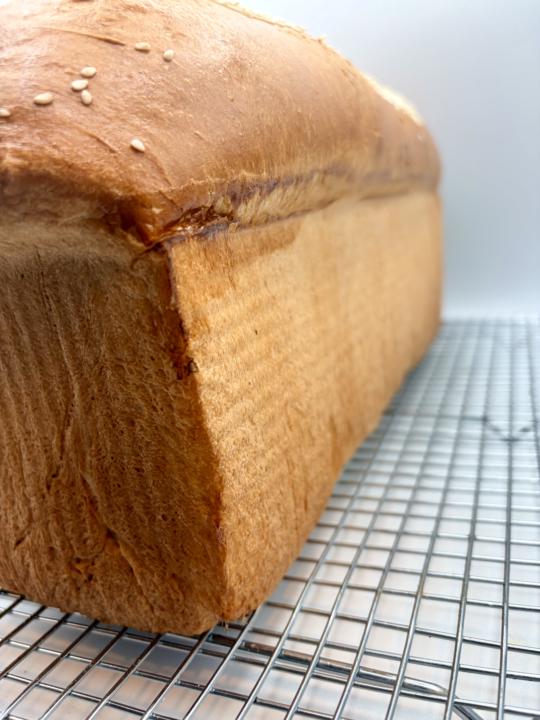
This is a big loaf of bread!
This is an enriched sandwich bread baked in a 13 x 4 x 4” Pullman. It’s huge! This should last me a few few days
1-30 of 2,255
powered by
skool.com/crust-crumb-academy-7621
#1 Sourdough Community on Skool 🍞
Coaching, not judgment. Sourdough, starter, yeasted, enriched & every bread between.
✅ ProveWorth Certified ⭐⭐⭐⭐⭐
Suggested communities
Powered by