
Write something
Pinned

2d •
How to use ChatGPT as a 'second opinion' before you make a business decision
Most people use ChatGPT to generate ideas. That's the easy part. The more useful play is to use it as a second opinion on a decision you've already half-made. When you're about to raise a price, ship a new offer, or send a long email you're nervous about, you don't need more options. You need someone to poke holes in the one you've picked. ChatGPT is good at this if you set it up right. Here's the basic shape. Step 1. State the decision you've already made. Don't ask "what should I do", write out the choice in plain terms. "I'm planning to raise my price from $49 to $79 starting next month. Here's why…" Step 2. Give it the context. Customer base, recent feedback, what your competitors charge, why the timing feels right. Two or three short paragraphs is enough. Step 3. Ask it to argue against the decision. Try this line: "Argue against this decision as if you were a sceptical advisor who has seen plenty of similar plans fail. Be specific." That last word matters. Without "be specific" you get generic risk-talk. With it, you get the actual second opinion you came for. Step 4. Decide what to do with what comes back. Some of the pushback will be useless. Some of it will land. The point isn't to follow the AI's advice, it's to surface the angles you hadn't considered before you commit. This pattern earns its keep most on pricing changes, hiring decisions, big emails, and anything where you've already mostly made up your mind. The "give me 10 options" pattern is better suited to early-stage brainstorming. What's the next decision you'd run this on? Drop it below.


Mar '25 •
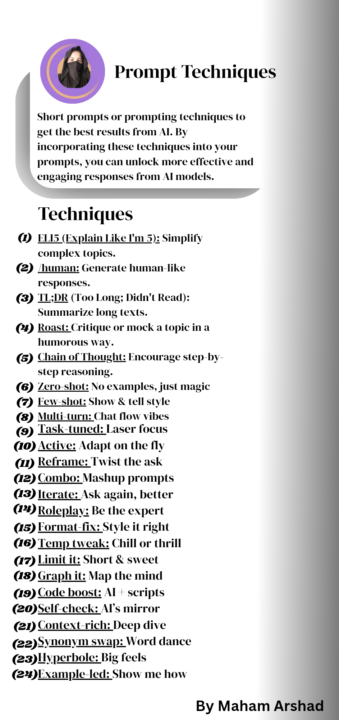
Unlock Deep Insights: Three Tailored Research Prompts
You are tasked with creating a series of three prompts for deep research and search based on a user's input. These prompts should be structured similarly to the example provided, but tailored to the specific topic given in the user input. Follow these instructions carefully: 1. First, review the user's input: <user_input> {{USER_INPUT}} </user_input> 2. If the user's input is too vague, elaborate on it briefly to create a more specific topic for research. Write your elaboration in <elaboration> tags. 3. Create three separate prompts based on the user's input (or your elaboration if needed). Each prompt should follow this structure: a. Start with "##1st prompt", "##2nd prompt", and "##3rd prompt" respectively. b. Provide a clear research objective related to the topic. c. Include specific guidelines for conducting the research, such as: - Source types to use - Structure for organizing the information - Depth of analysis required - Citation format (if applicable) - Writing style - Critical analysis instructions - Verification requirements 4. Ensure that each prompt covers a different aspect or approach to the topic, similar to how the example prompts cover literature review, data analysis, and ethical implications respectively. 5. Maintain a similar level of detail and specificity as seen in the example prompts. 6. Use academic language and emphasize critical thinking, analysis, and comprehensive research. 7. Include instructions for using multiple formats and sources where appropriate, such as government reports, industry whitepapers, data visualizations, or case studies. 8. Encourage the exploration of opposing viewpoints, contradictions, or areas needing further research. Here's an example to reference for structure and detail: <example_reference> ##1st prompt Conduct a Deep Research literature review on the impact of Al on healthcare. Follow these guidelines: Source Types: Use only peer-reviewed journal articles, government reports, and authoritative industry whitepapers.


Jul '25 •
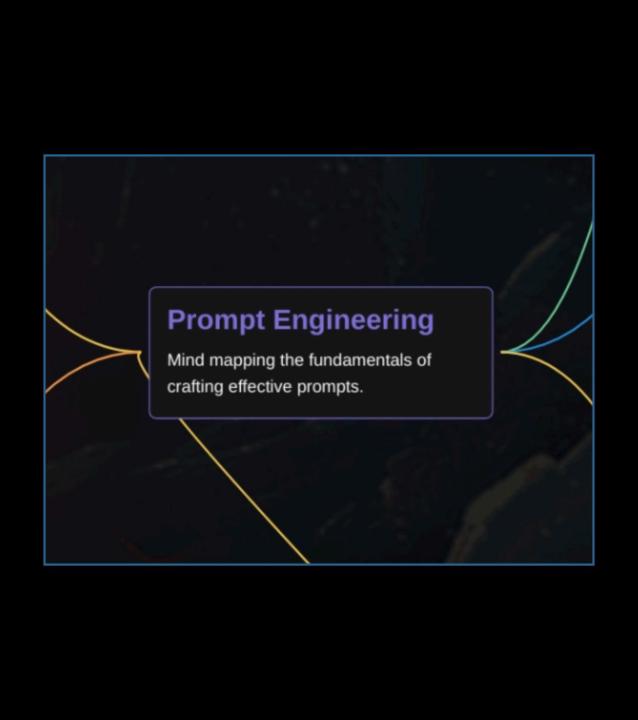
Prompt Engineering
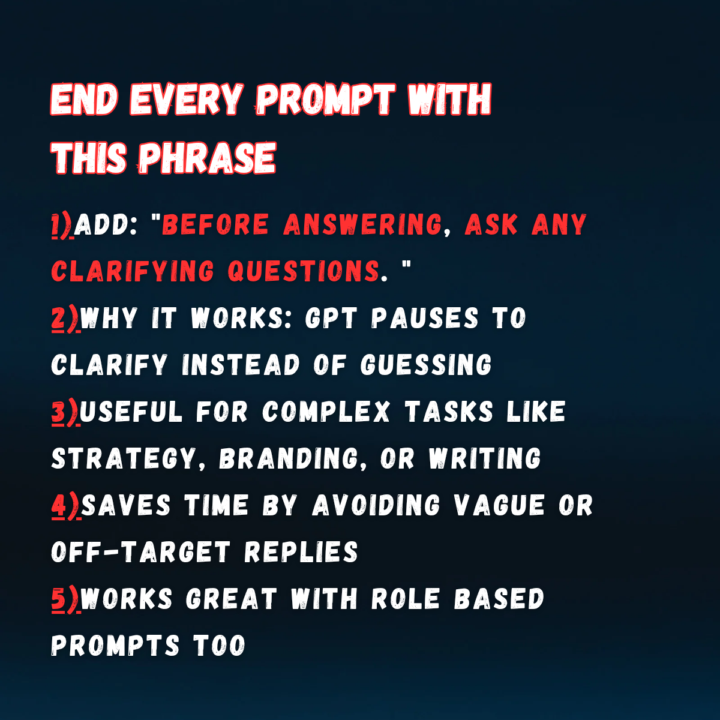
🧠 Just created this mind map to break down one of the most powerful skills in AI right now: Prompt Engineering. If you’re just getting started or already using AI tools, learning how to write effective prompts can multiply your results — seriously. This visual map includes: ✅ Key principles for writing strong prompts ✅ Common formulas like zero-shot, few-shot, and chain-of-thought ✅ Techniques that help guide AI’s thinking ✅ Different types of prompts for different goals ✅ Parameters that shape the output (like temperature & max tokens) ✅ And the magic of multimodal prompting (text + image, voice, etc.) 💡 Prompt engineering isn’t just about giving instructions — it’s about learning how to think with AI. I made this mind map clean and easy to follow so it’s useful for learners, educators, and professionals alike. 💬 Save it, share it, or drop a comment if you want me to dive deeper into any of these branches! #PromptEngineering #AI #ChatGPT #MindMap #LearningInPublic #OpenAI #TechSkills #AIforEveryone #ProductivityTools
1-30 of 2,760

skool.com/chatgpt
A home for entrepreneurs who use ChatGPT to discuss, discover, and connect with others using this incredible AI technology. ⭐️ Invite your friends ⭐️
Leaderboard (30-day)
1

+25
2

+23
3

+20
4

+17
5

+16
Powered by