Activity
Mon
Wed
Fri
Sun
Jun
Jul
Aug
Sep
Oct
Nov
Dec
Jan
Feb
Mar
Apr
May
What is this?
Less
More
Memberships
OFM Conquest
21.5k members • Free
Amplify Views
28.4k members • Free
Content Academy
14k members • Free
Agency Owners
19.9k members • Free
OS Architect
11k members • Free
AI Money Lab
72.7k members • Free
AI Automation (A-Z)
154k members • Free
Airbnb Free Course
8.5k members • Free
Synthesizer: Free Skool Growth
41.8k members • Free
17 contributions to Content Academy

6d •
Looking for feedback: AI-automated video pipeline vs my $100/month VA in Nigeria
I run a UK digital agency and one of my clients is a builder who sends me raw build project videos via WhatsApp. We turn these into branded shorts and reels for YouTube, Instagram, Facebook, and Nextdoor. Current setup ($100/month): My VA in Nigeria handles the whole pipeline manually: • Downloads videos from WhatsApp • Runs them through Descript (adds voiceover when client’s ops manager hasn’t recorded one) • Polishes clips in Opus Clip Pro • Adds logo and branding • Writes captions • Schedules to YouTube, Insta, Facebook • Manually posts to Nextdoor via GHL workspace He’s reliable, the quality is OK, and at $100/month it’s hard to beat on cost. The AI-automated alternative I scoped: Make.com + Claude API + Creatomate (branding) + ElevenLabs (voice clone) + Opus Clip Pro API + GHL scheduling. Roughly £60-75/month in tooling, plus probably 20-30 hours of build time on my end. The build would handle: WhatsApp ingestion, Claude analysing each video and writing platform-specific captions, voiceover generation when needed, automated clipping, branding overlay, scheduled posting across all platforms, with one approval gate before publishing. Where I’m stuck: On paper the AI route looks cheaper long-term, but when I actually compare: 1. My VA costs $100/month flat, no build time, no API surprises, deals with edge cases naturally 2. The AI stack is ~£60/month in tools but needs my time to build and maintain, and breaks when APIs change or videos are unusual 3. Nextdoor still needs a human click either way (no API) 4. Voice cloning needs careful setup and consent 5. The VA can also handle other ad-hoc tasks the AI can’t My questions for the group: • Has anyone built something similar and found the maintenance cost was higher than expected? • Is there a hybrid worth considering — AI for the captions and Claude analysis, VA for the video editing and posting? • Am I overcomplicating this when a good VA with the right SOPs is genuinely the more cost-effective answer?

1 like • 5d
At $100/month the VA honestly sounds hard to beat, especially with all the edge cases and posting steps involved.

🚀
Apr 6 •
Multi Coding Agent System (Claude Code, Codex, Gemini & More)
Hey Academy, Most coding agents lock you to your desk but this one works on your phone too. In this video I'll show you a single open-source system that lets you run any coding agent—Claude Code, Codex, Gemini, Kimi, and more—from your desktop, your phone, or headlessly in the background while you sleep. I built this from scratch with 30 years of coding experience, and it already has 1,400 GitHub stars. You'll see a full demo where I create a Next.js SaaS project entirely from my phone using voice dictation, switch seamlessly between devices, and manage multiple projects at once through one unified browser interface. I'll walk you through every feature including plan mode, code mode, the built-in editor, git controls, and how to install everything for free. By the end, you'll have coding agents running for you 24/7.
1 like • 25d
Running multiple agents across devices like that is actually pretty slick.

Apr 2 •
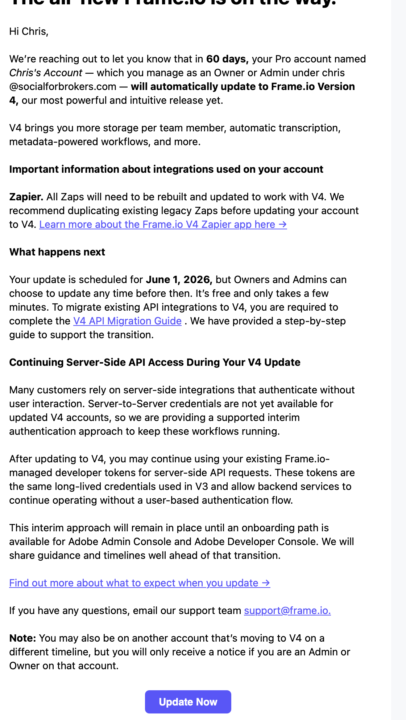
Frame Upgrade to V4
Not sure if this is the right place to be posting this, so please move if it needs to be. Frame looks to be forcing th V4 update on everyone, but I know there were issues with the KEDB Extreme last year moving it from v3 to v4. What's the best course of action to take at the moment with it? Any help would be appreciated (Screenshot of email attached) Thank You :)
1 like • Apr 4
I remember hearing about those issues too definitely interested to see what others recommend before updating.
🚀
Mar 30 •
How to Use Claude Code for FREE
Hey Academy, For support join the AI Architects. The $200 subscriptions and API fees make it hard to get started with AI coding—so I built a solution that runs Claude Code 100% free on your computer using local models. In this video I'll walk you through a live demo of the full setup: free local models through Ollama, budget-friendly alternatives like DeepSeek and MiniMax, and a flexible interface that supports multiple coding agents including Claude Code, Gemini CLI, and OpenAI Codex. You'll see how to switch between chat mode and interactive mode, configure any LLM provider you want, and use the complete development environment with a built-in editor and shell. I'll also walk through the entire installation step by step so you can get up and running today—whether you're a complete beginner or an experienced developer looking to cut costs.
1 like • Apr 2
This is super helpful the cost barrier is real when you’re just getting started.

Mar 9 •
How I got AI chatbots to recommend my product (before I launched)
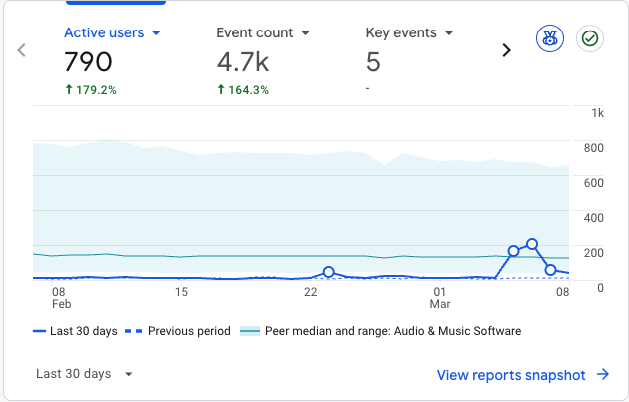
Your product is probably invisible to a growing segment of buyers. Not because your SEO is bad. Because they're not using Google. A growing number of people search by asking ChatGPT, Gemini, or Perplexity a question. The AI gives them a ranked list. They research from there. If your product isn't in that answer, you don't exist. I realised this early and did something most founders skip entirely: I built the layer of my website that AI models can actually read and cite. Before writing a single ad or social post, I spent weeks on what I call the "AI-readable layer." Here's what that looked like: 1. llms.txt files at the site root. These are plain-text documentation files designed for AI crawlers. Not a robots.txt. A structured brief that tells AI models what your product is, what it does, who it's for, and how it compares. Think of it as a pitch deck for machines. 2. 62 blog posts before launch. Not SEO filler. Honest comparison posts — my product vs each major competitor. Use-case deep dives. Technical explainers. FAQ content written in the natural question-answer format that AI models actually cite. 3. JSON-LD structured data on every page. FAQPage schema on the homepage, feature pages, use case pages, blog posts. This is the metadata AI models parse when they build their knowledge base. 4. Dedicated pages for every use case and feature. Not just a features list on the homepage. Individual pages at /for/podcasters, /for/game-developers, /features/ voice-cloning. Each with its own structured FAQ. 5. Competitor comparison content that's fair. Not "why we're better." Honest trade-off breakdowns. AI models prefer balanced, cited content over marketing copy. When the AI ranked my product third — not first — that's actually more credible than ranking it #1. This approach has a name: GEO — Generative Engine Optimization. It's early. Most founders haven't heard of it. Most AI tool builders haven't optimised for it either, which is ironic. The core insight: AI models don't read your marketing
1 like • Mar 15
This is a smart approach!
1-10 of 17

@robert-hayes-3152
Pay-per-performance AI Optimization Expert - More Leads, More Sales, More Revenue. No upfront costs.
Active 4h ago
Joined Jan 5, 2026
Powered by