Activity
Mon
Wed
Fri
Sun
Nov
Dec
Jan
Feb
Mar
Apr
May
Jun
Jul
Aug
Sep
What is this?
Less
More
AI Automation Vault
39.3k
Free
AI Systems for Human Content
11k
Free
Claude Code Architects
1.7k
Free
AI Workshop Lite
64.8k
Free
Easy Machine AI
4k
5.0
Free
Creator Academy
11.1k
Free
Self Publishers Unite!
633
Free
Voiceover Masterclass
172
$27/m
KDP Publishing
2k
5.0
$59/y
28 contributions to Content Academy

24d •
[WIN] The tool I built for myself is launching on AppSumo
A small personal win to share with the creators here. I'm mildly dyslexic, and text-to-speech has been part of my life for years. When creating my own content meant paying again for every tiny revision, I started building something for myself. That became Vois Studio: an app that turns written scripts into finished voiceovers for videos, podcasts and courses. Now other creators are using it, and a learning and development team at one of the largest space exploration companies is quietly testing it too. That part still surprises me! I'm launching it on AppSumo with a lifetime deal: https://appsumo.8odi.net/5kDBO9 New AppSumo customers only: 10% off with code "voisstudio10" at checkout. I built Vois. Happy to chat about whether it fits what you're making.
![[WIN] The tool I built for myself is launching on AppSumo](https://assets.skool.com/f/1de55a9d0aaf45b89c138dfca5a58fb0/ca9e7d9d2c714037a82efeaaf7500d016a78772b94e542c9a360329bc264e523-md.png)
1 like • 16d
@Gregg Blazer thanks mate, it took 9 months and I could really have a baby. TBH, knowing what I do now and had to do it all over again, I would not do it and likely stay way.
1 like • 16d
@Gregg Blazer it’s complicated, DMd you if you are curious. I can’t say much in public just yet
Jul 20 •
[V2] I built a Markdown memory layer so coding agents stop rediscovering the same project context
Most useful answers in a community disappear into the feed. Someone solves a hard problem today. A month later, the same question returns because the answer was never turned into something durable. The community keeps paying the cost of rediscovery. That is why I built LLM Wiki: a simple shared memory for AI agents. Instead of saving every conversation, it keeps the knowledge worth reusing: 1. Save a useful article, transcript, note, or exported community thread. 2. Let the agent compile it into linked Markdown pages. 3. Ask a question later and retrieve the right section with evidence. 4. File useful conclusions back so the next answer starts from what the community already learned. This is useful for recurring questions, research libraries, customer conversations, project decisions, and any topic a group explores over time. LLM Wiki v2 improves how that memory is searched: - exact section search finds names, flags, and phrases - optional semantic search finds paraphrased ideas - reciprocal rank fusion combines both result lists - citations and source metadata show where an answer came from Cerebras recently published a detailed article about its internal knowledge base. Employees ask it more than 15,000 questions a day, according to the team. Their system is enterprise-scale, but the need is universal: information is scattered, and good answers should not have to be rebuilt every time. No embedding service is required. The default is local, Markdown-first, and dependency-free. The clever parts are optional; the knowledge stays readable. Open-source project: https://github.com/praneybehl/llm-wiki-plugin Cerebras article: https://www.cerebras.ai/blog/how-we-built-our-knowledge-base What valuable answer in this community keeps getting rediscovered?
![[V2] I built a Markdown memory layer so coding agents stop rediscovering the same project context](https://assets.skool.com/f/1de55a9d0aaf45b89c138dfca5a58fb0/9805b7c35bd340b1856234b933b6e2c057e7b8db2f36424ab727451a3aed2f85-md.png)
1 like • Jul 22
@Santosh Soni sorry I don’t think I can do that. You will need to reach out to the admins
1 like • Jul 22
@Stephen G. Pope Cheers
Jul 15 •
What 1.5 days and about 5 billion AI tokens produced
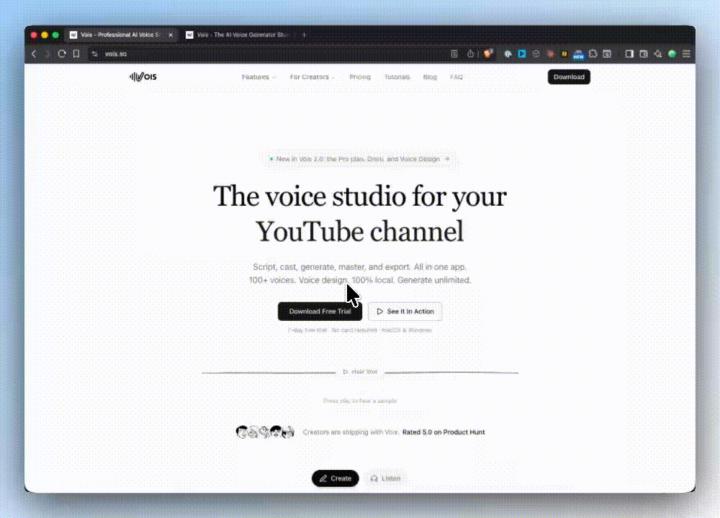
I just shared the full walkthrough of the Vois website refresh on LinkedIn. I have attached it here too because the process is more useful than the screenshots alone. The headline is big: less than 1.5 days from idea to deployment, with about 5 billion text-agent tokens used along the way. That total excludes image and video generation. Before I posted it, I asked a friend who is a veteran UI/UX designer to review the work. His response: "I hate you. this is good... I hate you for making it" For context, I am the founder of Vois, and this is my own product and codebase. I ran the refresh like a coordinated AI product team. I stayed responsible for the product direction, visual taste, quality bar, and every ship or reject decision. The setup: • GPT-5.6-sol handled the main orchestration. It broke the work into plans, assigned specialist agents, integrated their output, and kept the release moving. • More than 300 specialist sub-agents using GPT-5.6-terra and Grok-4.5 worked in parallel and in sequence across planning, UX, choreography, visual design, asset creation, copy, frontend development, mobile QA, accessibility, browser testing, performance optimisation, and deployment. • Fable-5 acted as an independent advisor. It reviewed alternatives, challenged decisions, and sent weak work back through another pass. • GPT-image-2 generated the images and characters. Grok Imagine generated the video assets. Their generation usage is not included in the roughly 5 billion text-token total. The text-agent token split: Main agent: 13% Sub-agents: 51.3% Advisor agent: 35.7% What shipped: • a complete visual refresh for Vois • a cinematic, scroll-driven homepage • a consistent design system across the site • dedicated desktop and mobile behavior • generated visual and motion assets • accessibility, performance, browser, and deployment fixes The 5 billion total makes the trade visible. I used far more compute and coordination to compress a large design and engineering cycle into less than 1.5 days.
1 like • Jul 18
@Ivonne Teoh Thanks for sharing your feedback and you are right. So as soon as the intro wraps, we have our voices demo.
1 like • Jul 18
@Stephen G. Pope Cheers, let me put together something.
Jul 7 •
Roast my two landing pages? (A vs B)
Hey everyone, building in public and could use honest eyes from people who actually get this space. I'm building a white-label AI front desk that agencies resell to local businesses. I made two completely different landing pages and I genuinely can't pick: A) the classic SaaS page: https://a.konvy.ai B) a scroll story, the page plays as you scroll: https://b.konvy.ai Not selling in this post, just asking for critique: which one would make you keep reading, and where exactly do you drop off? Comment A or B plus one sentence why. Brutal beats polite. Mods: if links aren't allowed here, say the word and I'll delete or move them to a comment.
3 likes • Jul 15
@Daniels Lathum Thank you so much for sharing.
1 like • Jul 15
@Max Voro Thanks for sharing
Mar 5 •
I emailed 600 people I hadn't spoken to in 14 years
I emailed 600 people I hadn't spoken to in 14 years. 5 of them became my first paying customers — within 60 minutes. Here's what I built and why. I'm partially dyslexic. Long text has always been a struggle. Since high school I've been converting written content to audio — articles, reports, white papers, ebooks. I kept building tools to do this. Eventually one of them got good enough that content creators started asking for it. A friend wanted it for creating custom bedtime stories for her kids. Another had a stack of ebooks he'd never read — wanted them as audio for his commute. Others were producing YouTube content and tired of paying per-character for cloud voiceover tools. That personal tool became a full desktop voice AI studio. 63 voices, voice cloning, 23 languages, multi-speaker editing, professional mastering. Everything runs locally — no uploading scripts to someone else's server. Then 3 days ago I emailed 600 customers from a product I built in 2012. Plain text, no design. Some of them bought. Revenue before the product even launched publicly. Tonight it goes live. For content creators here — how much of your workflow involves voiceovers? And what's your biggest frustration with the tools you're using now?
1 like • Apr 11
@Ilyas Serter Its all automated
1 like • Apr 25
@Giovanni Scotti Thanks, I currently run it on a M2 pro Macbook pro with 16GB RAM
1-10 of 28

@praney-behl-3117
Creator, Developer, Entrepreneur, Marketer, Husband & a Dad.
Building Vois.so, konvy.ai, heynyx.app, volant.app and a couple more ;)
Online now
Joined Apr 28, 2025
Melbourne AUS
Powered by