Activity
Mon
Wed
Fri
Sun
Aug
Sep
Oct
Nov
Dec
Jan
Feb
Mar
Apr
May
Jun
Jul
What is this?
Less
More
Owned by Pj
For serious freight, brokerage & supply chain operators. Real strategies. Battle-tested workflows. 🌐
Memberships
Skoolers
166.9k members • Free
Freight Skool Group
594 members • Free
69 contributions to The Logistics War Room

6h •
Freight Activity Post July 4th
Good morning, everyone, how’s the market treating you post the holiday weekend?
0
0

0 likes • 14d
Should be pretty easy in this market @James Clark , shoot for 5 shippers (you'll get 3 within two months)
Feb 18 •
The Great Unwinding is Here: How GenLogs Will Collapse the Two-Tier Trucking Market
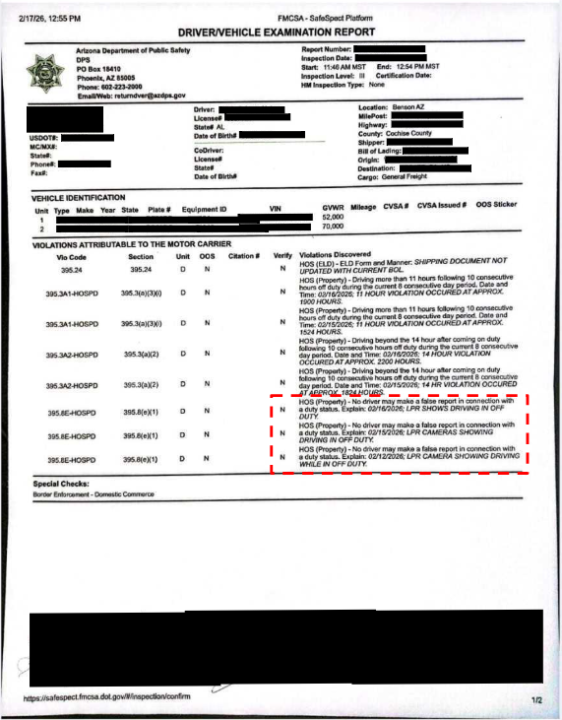
We're at a major inflection point in the industry. The news that GenLogs has a government contract giving the DOT access to its verifiable, location-based data is the beginning of the end for the information asymmetry that has propped up a huge segment of the market. For years, we've operated in a two-tier market: • Compliant Carriers: Running ~2,500 miles/week at a cost of ~$2.30/mile, often losing money in this freight recession. • Non-Compliant Carriers: Running 4,000-5,000 miles/week by manipulating ELDs, operating at ~$1.99/mile and turning a healthy profit. This second tier, estimated to be at least 30% of the market, has been suppressing rates and forcing good carriers out of business. The GenLogs effect will be a one-two punch: 1. HOS Enforcement: The DOT will now have an "incorruptible ground truth." Discrepancies between ELD data and GenLogs' real-world tracking will be undeniable. The 5,000-mile weeks are over. This will trigger a massive, rapid wave of carrier failures as their cost advantage evaporates overnight. 2. Insurance Fraud Crackdown: GenLogs is also selling data to insurance companies. The widespread practice of underreporting fleet sizes to get lower premiums is about to end. When an insurer sees a carrier operating 100 trucks in network while only insuring 50, the game is up. Expect massive premium hikes and policy cancellations. This isn't a forecast btw, it's already happening. I'm attaching a redacted inspection I just received from a carrier showing LPR cams capturing them active on the road while their ELD showed 'Off Duty.' This is ground zero. The capacity shakeout will be faster and deeper than anything we've seen. What are your thoughts? How are you preparing for this shift?
1 like • Feb 18
@Deborah Newton The inspection referenced above took place yesterday, and I believe this has already been happening to some extent. It will likely continue to ramp up. It’s hard to say whether the impact will be gradual or more immediate, as it depends on the loopholes the more witty carriers may find and their tolerance for risk.
Feb 1 •
The Hidden Crisis That’s Slowly Choking U.S. Freight Capacity
There’s a quiet storm brewing: the escalating collapse of Class A CDL driver retention and recruitment. And in an inflationary 2026 economy? This might be the single biggest constraint on freight flow as we head further into 2026. The Numbers: - 80,000+ driver shortfall today, projected to hit 160,000 by 2030 (ATA) - 90%+ turnover at large truckload carriers (some long-haul fleets: 100-300%) - Average driver age: 47, with massive retirements looming while 18-35s avoid trucking - ~$12,799 cost per lost driver (before equipment recovery and late fees + ~G&A) - Wages declining: 2024 saw only 2.5% pay increase vs. higher inflation. Average weekly pay dropped 7.4% Q1-Q2 2024 ($1,730 → $1,602) Why This Matters Now: Since April 2025, inflation re-accelerated (core CPI 3.8%, diesel up 12% YoY). But here's what makes this critical: We're entering a tight capacity regime. Market structure indicators show that capacity availability is falling below critical thresholds. The kind of inflection point that precedes contract rate increases by months. This creates a collision of forces: - Capacity tightens just as the driver crisis intensifies - Wage pressure intensifies as drivers demand cost-of-living increases - Freight rates remain volatile, making mile-based pay even more unpredictable - Consumer demand rebounds, but carriers lack human capital to capture it - Small carriers close (depleted PPP/ERC funds), reducing industry capacity One BIG Problem: Process & Structure Failure: 1. Retention Crisis - 81.9% of job-seeking drivers prioritize predictable pay - 60% cite "lack of miles" as their compensation issue - Mile-based pay creates financial insecurity no bonus can fix 2. Process Inefficiencies - Job postings surged 63.5% in 2024 alone (Apr-Dec), signaling intensifying competition among carriers - Companies lose drivers between the application and onboarding - The company that responds first "wins" when drivers apply to multiple jobs simultaneously
0 likes • Feb 1
Carriers aren't reacting to the driver crisis like it’s a temporary blip anymore. They’re starting to solve it like it’s the structural supply-side threat: Schneider National: Predictable home time = 15% turnover reduction Roehl Transport: Paid training + mentorship = 20% better new driver retention J.B. Hunt: Digital driver app = measurably higher satisfaction

Jan 25 •
👋 Hi, I’m Carlos!
Hi my name is Carlos. I live in Dominican Republic and I plan on making $6,000 per month dispatching trucks. I want to get these 3 things from this course/community: 1. More knowledge 2. Connect with more people 3. Get my first carrier I am very passionate about this industry and highly motivated to begin my career in dispatching. I look forward to learning from this community, sharing knowledge, and growing professionally in this field.

0 likes • Jan 26
HI Carlos, welcome to LWR. That's a great goal, what's your game plan to get to that figure?
1-10 of 69

@pj-zarskus-4489
Relentless operator. I scale brokerages, carriers & sales teams with real systems, global talent, and execution that buries theory.
Active 1h ago
Joined Apr 5, 2025
Powered by