Activity
Mon
Wed
Fri
Sun
Apr
May
Jun
Jul
Aug
Sep
Oct
Nov
Dec
Jan
Feb
Mar
What is this?
Less
More
Memberships
Creative 3D Community
6.5k members • Free
127 contributions to Creative 3D Community


1 like • Feb 15
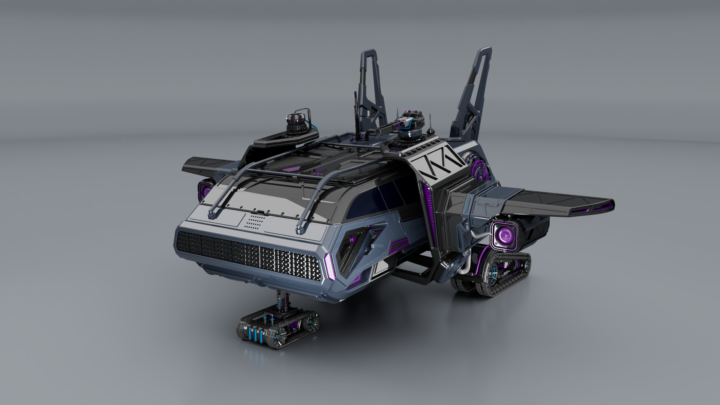
The first picture looks like it was inspired by Thunderbirds Zero X🤓 https://youtu.be/UG3SCmmE3vQ?si=pI9nqZsK_VQQDQc0

Jan 25 •
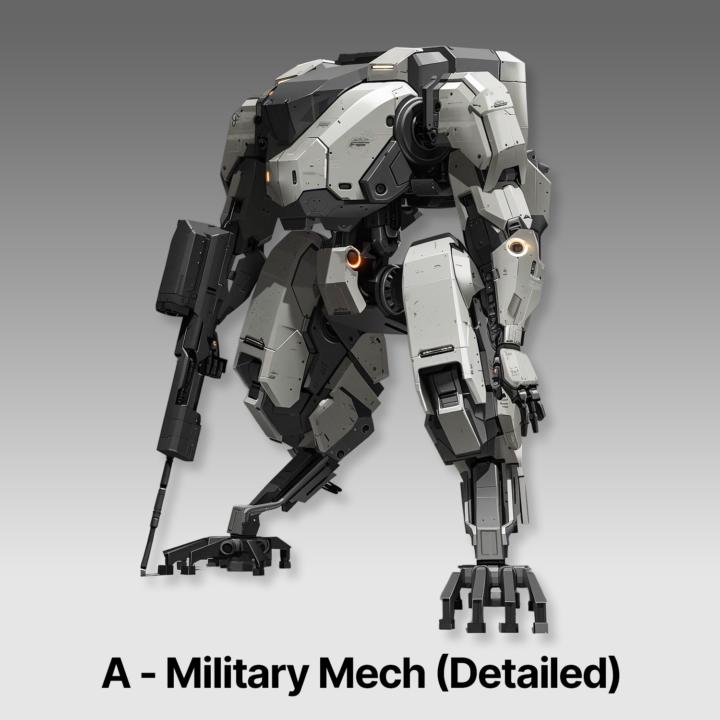
🦾 Which is YOUR Favourite?
1. Check out all 3 images 2. Vote for which one you want to learn👇
Poll
80 members have voted
0 likes • Jan 26
I vote for B. It looks great and has enough details to be interesting to look at without being overwhelming to build at the same time. I would not be too intimidated to start the project. The military mech (A) looks great but I think it would make more sense to have the detailed humanoid (B) knowledge to develop my own military version later on. The clean humanoid (C) looks a bit too simple for my taste. I think it would be better though for the detailed humanoid (B) to change the design of the feet. It looks like it is standing on needles and it feels impractical for the mech to be able to keep itself balanced properly on such small contact surface platforms. Finally, I would have difficulty trying to figure out how to animate the detailed humanoid (B) with those needle feet, and many motion capture files might look funny with this current design.

May '25 •
Any Archviz 3d artists?
Hey there! Anyone here working in the field of architecture renders or visualization? Drop a few examples of your work + your portfolio link if you have one I’m excited to see what you’re creating!
1 like • Oct '25
@Jan Morek Send him my regards!
1 like • Oct '25
@Jan Morek I didn’t work with him but at some point I tried to implement Blender in the 3d rendering process at work. So we ended up purchasing his course.
Oct '25 •
Next Plasticity Course Object?
Which of the following do you want a Plasticity Course about? ⬇️VOTE BELOW⬇️ (Please only once between Skool, YouTube, Email. Thank you!
Poll
70 members have voted
0 likes • Oct '25
A mech since it would help me finish my recreation of this project for a live action testing in Unreal Engine: https://www.facebook.com/share/v/1EqDuB1516/?mibextid=wwXIfr
Jun '25 •
🎥[Plasticity Course] Reference - 3D Scan OR Blueprint?
Do you want to learn how to model a PS5 Controller with a BLUEPRINT or 3D SCAN DATA as a reference?
Poll
125 members have voted
![🎥[Plasticity Course] Reference - 3D Scan OR Blueprint?](https://assets.skool.com/f/c4081c3bbdf942f48f19bceb86b3510f/709e9566272540d7a97b8364dfedb2fbf758dcea4ca14a939fcbf19a92ab478d-md.png)
1 like • Sep '25
@Tom Ellefsen Actually, any phone with a camera can do 3D scanning using Photogrammetry by taking a series of pictures. There are several different apps for that. The ones I tried are Meshroom, Polycam and Luma AI. Polycam will use the LiDAR sensor on an I-Phone. But Luma AI is the best to deal with reflective and shiny materials. From Polycam, you can export a GLTF 3D model which can then be used in Blender 3D to see the results without having to pay for subscription.
1-10 of 127

@pierre-gagne-9026
Started to dabble in 3D since 2007 au Centre National d'Animation et Design (Centre NAD) for the 2007's Winter Session in Montreal Canada.
Active 17d ago
Joined Sep 30, 2023
Powered by