Activity
Mon
Wed
Fri
Sun
Aug
Sep
Oct
Nov
Dec
Jan
Feb
Mar
Apr
May
Jun
Jul
What is this?
Less
More
Memberships
Investing Accelerator
490 members • Free
Invest & Retire Community
3.6k members • Free
97 contributions to Invest & Retire Community

7d •
Google, Microsoft, Meta, and Amazon capex spending to hit $725 billion in 2026, up 77% from last year — analyst says bear thesis is 'garbage'
https://www.tomshardware.com/tech-industry/big-tech/big-techs-ai-spending-plans-reach-725-billion?utm_source=superhuman&utm_medium=newsletter&utm_campaign=openai-launched-strongest-new-models&_bhlid=447fe0c2f31a90a6b3ad6713d6ffa83d73475a5c
4 likes • 7d
@Monica Bernard That would be useful. The key would be to avoid “doom indicators and news narratives” and instead track a small set of signals across the real economy, market structure, credit, liquidity, and investor behaviour. A practical Bear Market / Crash Watch Checklist could include: 1. Trend deterioration - Major indices below key long-term moving averages - Fewer stocks participating in rallies - New lows expanding faster than new highs - Small caps and cyclicals materially underperforming 2. Credit stress - High-yield spreads widening sharply - Regional-bank or financial-sector weakness - Rising defaults, delinquencies, or refinancing stress - Corporate bond issuance slowing 3. Liquidity and policy - Central banks tightening into weak growth - Falling money supply or tightening financial conditions - Treasury-market stress or funding-market dislocations - Major fiscal or geopolitical shock 4. Economic confirmation - Unemployment trend rising - PMIs and earnings revisions deteriorating - Consumer spending weakening - Housing and industrial activity rolling over 5. Valuation and positioning - Extreme valuations without earnings support - Heavy leverage, margin debt, or speculative excess - Narrow leadership concentrated in a few companies - Retail euphoria followed by failed breakouts The goal would not be to predict the exact top. It would be to assign a simple risk level: 🟢 Normal correction 🟡 Elevated caution 🟠 Defensive positioning 🔴 Crisis conditions / capital preservation Most investors get hurt not because they miss the first 10% downturn, but because they fail to recognize when a normal pullback has become a broader credit, liquidity, or earnings problem.
0 likes • 2d
@Kim Huynh agree it's not exhaustive. At some point it's good to test one's theory and pick just one each column to optimize investing constraints and leverage points in the system

6d •
Congrats to the Top 10 Contributors for June 2026 and announcing July 2026 Prize
In Investing Accelerator, we are starting a new monthly prize pool for top 10 most active members Congratulations to the following 10 people for being the most contributing members of the community: 1) @Monica Bernard 2) @Rong Zhou 3) @Rose B 4) @Lindsay Talbot 5) @Sukhwinder Dhanoa 6) @Leon K 7) @John Meaney 8) @Sharon Yuen 9) @Kim Huynh 10) @Cris Bob I (Michael) will contact you in the chat to provide you with the gifts. You will receive: 1 share of IBIT $33.14 USD To show proof of purchase, you must post in the community that you received the share. For next month July, the prizes will be: NFLX Investing Accelerator Incentives: Get Richer by Helping Others Succeed 1. 🎁 Join Investing Accelerator for Free: Share the "How to Join Investing Accelerator for Free" guide with a friend. If they join, you both earn the referral fee. Learn More (https://www.skool.com/invest-retire-community-1699/how-to-join-investing-accelerator-for-free) 2. ⏱️ Speed & Success Bonus: Complete the program within 90 days and pay off the remaining balance to get 10% off the balance. 3. 📈 Trading Milestone Rewards: - First 30% Return from a Single Trade: Share your success in the community to receive a free stock. - 30% Portfolio Return in One Year: Achieve a 30% annual return to earn another free stock (once per year). 4. Student Referral Program: Refer a friend to join Investing Accelerator and you both earn $1,000 USD + a free stock each. Learn More (https://5mininvesting.com/free-case-study/)
3 likes • 6d
Thank you @Michael Leung, @Eric Seto and community!

8d •
What should you invest in if you have $1 million?
If you had $1 million and were done with the 9-to-5 grind for good and housing , offsprings are all taken care of (no other obligations whatsoever)— how would you allocate it? What mix of investments would give you financial security, a comfortable income, and the peace of mind that comes from a portfolio that practically runs itself?
5 likes • 7d
Fun thought experiment. Mine would be built around one principle: never needing to make a desperate financial decision again. I would probably split it roughly like this: - 45% broad global equities — low-cost index ETFs for long-term growth - 20% dividend / quality companies — boring, durable businesses that pay me to wait - 15% bonds, GICs, and cash equivalents — enough runway to ignore market panic - 10% real assets — REITs, infrastructure, maybe a small gold allocation - 5% higher-conviction growth bets — AI, semiconductors, space, or companies I genuinely understand - 5% “life capital” — travel, experiences, learning, family, and a few investments purely because they make life more interesting The portfolio should cover the basics, keep compounding, and still leave room for curiosity without risking the whole plan. My real rule: I would want enough safe income and liquidity that a 30–40% market drop would be annoying, not life-changing. What would be the hardest part for everyone: resisting lifestyle inflation, or resisting the urge to constantly tinker with the portfolio?
4 likes • 7d
@Liv L For me the desire to tinker is a big issue. To compartmentalize the damage I can do to my portfolio has been a huge win. 💥

14d •
SpaceX $135 -> $225 -> $154
SpaceX in a matter of weeks went from $135 to $225 to $154 This means most people who invested above $154 are losing money When you are investing in IPOs, most insiders who invested in previous private equity rounds are excited to "exit" and "take profit" This is why IPOs are very difficult to trade Most of the tech IPOs I observe go down in 6-12 months after IPO. Firms on wallstreet calls it - Price Discovery. But to me, it is just insiders liquidating their positions to retail investors This is why I avoid new IPO until the dust settle It is possible that you bought at $135 and sold at $200. But you need to be quick on your feet and monitor the market very closely. Cheers, Eric Eric Seto Chartered Professional Accountant (CPA) Chartered Investment Manager (CIM) Founder of 5MinInvesting.com If you are looking for a free investing training, you can attend the free webinar here, including how to set up your chart: https://5mininvesting.com/value-video-2-0/ Once you finish the free webinar above, For people who are interested in Investing Accelerator, you will: 🚀 Master investing in 7 weeks or less (using 2-3 hours per week) ⭐ Follow model monthly passive income trades (1 trade per week) and long-term trades (1 trade per month) 😄 Step-by-step mentorship from a Chartered Professional Accountant (Eric Seto) If this sounds like you and you finished the webinar, schedule a call below. Schedule a free call (25 slots available this week) https://5mininvesting.com/book-strategy-session/ ✅ I mentor 20 students a month. (750+ students to date) - Eric Seto, CPA, CIM Disclaimer: This communication is provided for educational and informational purposes only and does not constitute investment advice, a recommendation, or an offer to invest in any fund or strategy. No advisory relationship is formed by receipt of this content. Any references to strategies or markets are general in nature and do not reflect the performance of any client account or investment product.
1 like • 7d
I did take a small early position, but deliberately kept it below 1% of my portfolio. More of a “tuition fee” position than a core holding. 😅 Having seen Eric’s walkthrough of how many tech IPOs behaved over the past 15 years, I knew the pattern: huge excitement, rapid price discovery, early investors taking profits, then often a much better entry point once the hype cools. Living through it is a good reminder that even when you like the company, position sizing matters. I can participate, learn, and still sleep fine if it drops another 30–40%.

4 likes • 7d
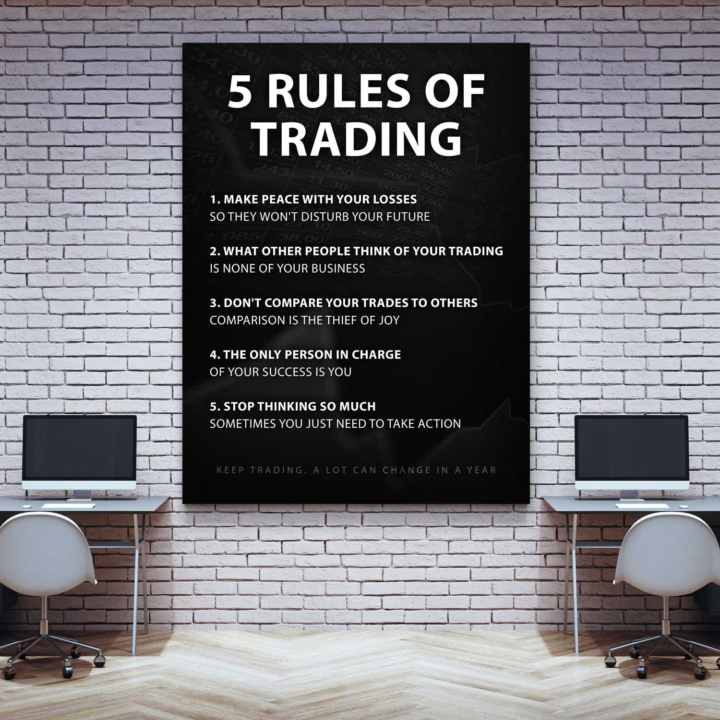
Mine would be: 1. Protect capital first. A great trade means nothing if one bad decision wipes out months of progress. Position size matters more than conviction. 2. Know your exit before you enter. I want to know what proves me right, what proves me wrong, and what profit would make me happy before I click buy. 3. Do not confuse activity with skill. More trades do not automatically mean more returns. Sometimes the best move is literally doing nothing. 🧘♂️ 4. Trade the setup, not the headline. News can create excitement, but price action, valuation, and risk/reward still matter. FOMO is expensive. 😅 5. Keep a “why did I buy this?” note. When a position moves against me, I want to compare reality against my original thesis—not invent a new story to justify holding it. My biggest rule overall: make decisions when calm, not while the chart is flashing red or green. 📉📈
1-10 of 97

@john-meaney-9141
Sales Executive in Healthcare Informatics
Bridging the gap between data and decision-making in healthcare.
Active 2h ago
Joined Jun 24, 2024
ENTJ
Burnaby, BC
Powered by