Activity
Mon
Wed
Fri
Sun
Apr
May
Jun
Jul
Aug
Sep
Oct
Nov
Dec
Jan
Feb
Mar
What is this?
Less
More
Memberships
InnerDevelopment@Work
487 members • Free
The Healing Path with Dr Divi
477 members • Free
18 contributions to InnerDevelopment@Work

10d •
What might modern “beguinages” look like today—co-living communities, cooperative economies, digital communities, or something entirely new?
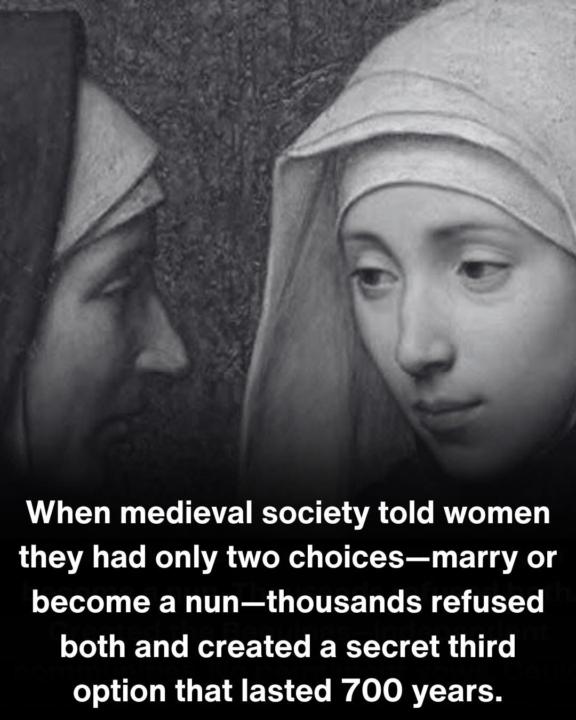
When medieval society told women they had only two choices—marry or become a nun—thousands refused both and created a secret third option that lasted 700 years. Imagine living in a world where your entire future has been decided before you were born. As a woman in 1200s Europe, society offered you exactly two paths: Marry—surrender all legal rights, bear children, obey your husband completely, own nothing in your own name. Or become a nun—take permanent vows, live behind convent walls forever, require a dowry most families couldn't afford. Both demanded the same price: your freedom. Both required lifelong obedience to male authority. But some women looked at these two rigid paths and simply said: "No. We choose neither." They called themselves the Beguines, and they built something revolutionary. Starting in the late 1100s across Belgium, the Netherlands, France, and Germany, women began forming independent communities that fit neither official category. They weren't married. They weren't nuns. They were something entirely new. They built beguinages—small houses arranged around shared courtyards and gardens, like self-contained villages designed by and for women. They prayed together daily, following spiritual practices they created. They worked in skilled trades—weaving intricate cloth, creating lace that wealthy clients paid premium prices for, brewing beer commercially, nursing the sick, teaching children to read. They supported themselves through their own labor. In many regions, they could legally own property and control their own money—something married women absolutely could not do under medieval law. And here's what made them truly revolutionary: they could leave whenever they wanted. No permanent vows. No lifetime commitment. If a Beguine decided to marry, she could leave and marry. If she wanted to return home, she could. Her participation was completely voluntary—a radical concept in medieval Europe where women's choices were almost never voluntary.

0 likes • 8d
Thanks so much for this glimpse into history. I love the 'built a door that wasn't supposed to exist' so typical of women's ingenuity and courage. My meditation this morning showed me doors in front of me that were all locked - unable to open, so this story feels like a perfectly timed personal message. 😊

Feb 12 •
Join Our next Skill Builder: Co-Becoming – February 17th
Hello community👋 We’re excited to invite you to our next Skill Builder session on Feb 17th, 6pm CET, 12pm ET, where we’ll be exploring Co-Becoming at Work in a focused, 30-minute gathering. This session is inspired by @Thomas Jordan's essay Relational Being in a World of Competencies: A Critical Examination of the Inner Development Guide through Aboriginal Ways of Knowing. It invites us to rethink inner development—not as something we build individually, but as something that emerges through our relationships with people, place, and purpose. These weekly sessions are designed to support self-reflection, shared learning, and collective sense-making. Together, we’ll create space to slow down, listen more deeply, and reflect on how we are shaped by—and shape—the systems and relationships we are part of. Skill Builders are a great way to: - Pause and reflect on your leadership and work practice - Learn alongside peers from our community - Strengthen relational and ecological awareness - Connect in a supportive, thoughtful environment Sessions take place every Tuesday, are open to all community members, and are completely free. Whether you’re new to the community or a regular participant, you’re warmly welcome to join us as we explore what it means to grow through relationship, responsibility, and care. We look forward to seeing you there. Sarah & Nadene

1 like • 26d
Hey Nadene, thanks for the mention. Unfortunately most of the times for your events are the middle of the night for me here in Australia (or very late at night!). I have been following along the community chat and really appreciate being able to have some exposure to what you all are doing. My community here in Byron are also having many conversations and workshops about regeneration, collaboration and change-making. So I am taking on board as much as I can from what I glean here back into my community and it is super supportive to have this comprehensive network of such skilled and amazing people as part of our growing consciousness. And thank you so much Thomas for your game-changing work. I am still meandering through the essay and other tools. I am not indigenous, however I find using the their ancient, and simple, ways as a lens for a reality check to be extremely helpful. Much appreciation. 👏
2 likes • 18d
Thanks Nadene. I finished going through Thomas Jordan's essay yesterday and it resonated with me at a deep level. It answers so many questions, and yet offers up yet more questions of how do we / I proceed when there are massive contextual / ontology differences in play. Yes, I have put 3rd March into my calendar - that time / day works well for me - thank you!
Sep '25 •
A Human-first Resilience Framework for the creative industry within the EU
As a founder of this community I’m involved in an EU research project exploring resilience as a lived, daily, and processual practice, which asks how creativity might ground us, connect us, and equip us to imagine — and act on — more humane, inclusive, and future-ready systems. Key areas of exploration: -Learning from those who dare to stand outside the system -Creative thinking for ethical, inclusive systems in the AI age -Resilience as lived, human practice -Creativity, storytelling, and adaptive capacity -Economic and collaborative models for humane, preventive resilience If you’re interested AND have time to get involved.. Raise your hand 🙋🏻 in the comments (this week) and I’ll tell you more.

2 likes • Sep '25
Interested to know more and possibly get involved. It may tie in with other projects I am working on regarding creating more resilient, local and regenerative communities / businesses.
Aug '25 •
Highlights from the Client Value Workshop
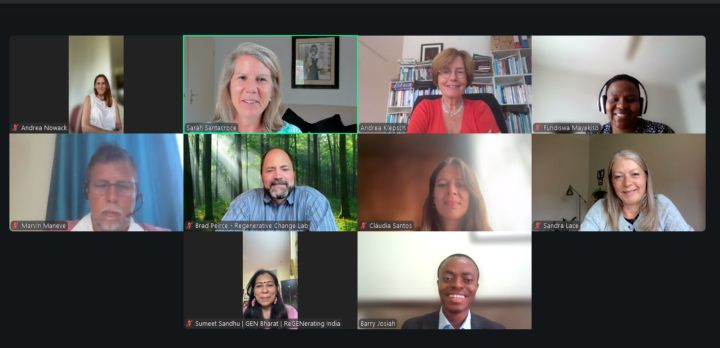
Dear friends, Our Client Value workshop today was such a rich exchange — thank you to everyone who joined from across the globe! A few highlights: - Language matters. We spoke about bridging the gap between what clients want (often external solutions) and what they truly need (the inner development piece). - Pain points vs. outcomes. In breakout rooms, we harvested words clients use to describe their struggles — powerful insights we can all bring back into our work. - The “sell what they want, give them what they need” paradox. We explored how to frame our work in language that draws people in, while still offering the deeper transformation they may not yet see. - The role of internal movements. Team Green in Germany was shared as an inspiring example of how inner advocates can drive lasting organizational change. We’re keen to continue this conversation with all of you and will keep you posted about the 6-week challenge. Here’s to making the invisible value of inner development visible — one conversation at a time. With warmth, Sarah P.S. Don’t forget to join us in our first Decolonization Session with @Rukmini Iyer tomorrow, Aug 28th. >>sign up here P.P.S. I’ve been sharing some of the main takeaways from the docu-series ‘Hope’ as an alternative to ‘The Week’. I’m curious to read your comments
2 likes • Sep '25
Thanks for sharing this video Sarah. I enjoyed the conversation around 'resonating' instead of manipulating. I was pondering a question I have around how to reach group coherence on values, and I love the term brought up here by Barry- 'collective synergy'. I love the idea of different frequencies resonating together to create a beautiful harmony.
Jun '25 •
🌱 How Might We Rekindle a Sense of “Enough” in a World That Constantly Tells Us We Need More?
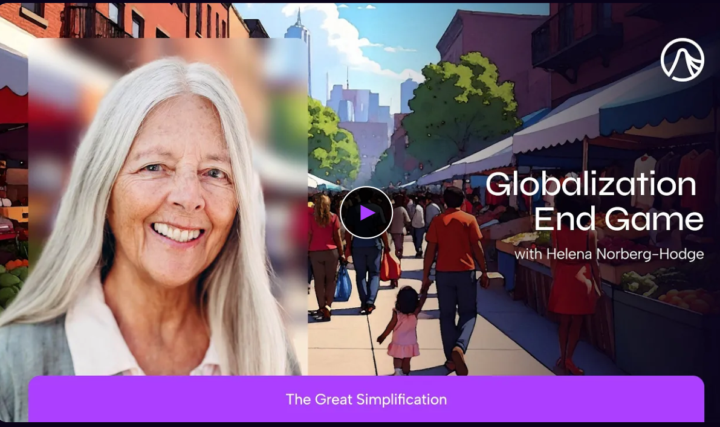
This question speaks directly to our inner development—to how we perceive the world, make choices, and align our actions with what truly matters. It invites us to slow down, reflect on our values, and question the cultural story of endless growth and consumption. I am deeply inspired by a recent episode of The Great Simplification, where Helena Norberg-Hodge, a pioneer in the localization movement, speaks with Nate Hagens about the deeper systemic forces behind our global crises. Together, they explore how economic globalization has contributed to environmental destruction, social disconnection, and cultural loss—and how a shift toward more localized, relational, and regenerative economies might be a vital step forward. At its core, this shift isn’t just political or economic—it’s personal and developmental. It calls on us to cultivate: - Critical thinking – to see through the dominant narratives of progress and growth. - Compassion and empathy – to recognize the lived impact of these systems on people and the planet. - Inner compass and courage – to make different choices, even when they go against the mainstream. - Connectedness – to rediscover our place in local communities, in nature, and in shared purpose. 👉 Helena puts it plainly: “We are being sold a worldview that takes us further and further away from nature and from each other. It’s time to wake up to who is really benefitting—and imagine a different path rooted in reconnection.” 💬 How does this land for you? What does enough mean in your life or work? And what inner capacities do we need to build to help shape more localized, life-supporting systems? 🦉Her DAILY practice of the FIVE R's gave me a ton of energy and optimism. What about You? Let’s open the conversation Sending you all much love, compassion and compelling conversation. https://www.thegreatsimplification.com/episode/181-helena-norberg-hodge Full transcript here: https://www.thegreatsimplification.com/wp-content/uploads/2025/06/TGS-182-Helena-Norberg-Hodge-Transcript.pdf
3 likes • Jun '25
Thanks so much Nadene, I listened with great interest and really resonated with Helena's passion and ideas for moving forward - starting locally. Her face looked familiar to me and when I looked her up I discovered she is actually a local here in Byron Bay Australia (well at least when she is not travelling!) And I have found a few 'local' leads I will follow up for organisations who are putting this work into action IRL in our community. Thanks again! 🙂
1-10 of 18

@heidi-robins-7380
Organisational Development Consultant, Northern Rivers, Australia
Active 2h ago
Joined Oct 17, 2024
Powered by