Activity
Mon
Wed
Fri
Sun
Aug
Sep
Oct
Nov
Dec
Jan
Feb
Mar
Apr
May
Jun
Jul
What is this?
Less
More
Memberships
Castore: Built to Adapt
1.1k members • Free
8 contributions to Castore: Built to Adapt
May 4 •
BPC-157 Dosing: The Complete Picture
BPC-157 is not a “set it and forget it” peptide. The right dose, route, and timing depend on what you are actually trying to fix. Think of it like a contractor showing up at a job site. If you call him before there is any damage, he stands around with nothing to do. If you call him while the crew is already framing the wall, he plugs in immediately and helps the work go faster. That single idea organizes everything below. The Core Mechanism in One Paragraph BPC-157 does not create repair signals out of nothing. It amplifies and shapes signals that are already running because of injury, training stress, or tissue irritation. It works on receptors and pathways (VEGFR2 trafficking, FAK paxillin in connective tissue, eNOS and nitric oxide in blood vessels, EGR-1 with its built-in brake NAB2) that only get loaded when something is actively healing. In quiet, undamaged tissue, those pathways are not engaged, and the peptide has very little to act on. This is why timing matters so much. You want the peptide to arrive when the work crew is already on site. Why Pre-Workout Is the Weakest Window Plasma half-life is under 30 minutes after injection. If you dose before training, most of the peptide is cleared before the microdamage, satellite cell activation, and receptor trafficking from the workout actually begin. It is like dropping ice into a glass before you pour the drink. By the time the drink arrives, the ice is mostly water. Pre-workout dosing for “joint protection during the lift” is a marketing claim that the pharmacokinetics do not support. Why Post-Workout Is the Strong Window Within roughly 15 to 30 minutes of finishing training, the tissues you just stressed are loaded with the exact signals BPC-157 modulates. VEGFR2 is being trafficked, FAK paxillin is engaged in tendons and fibroblasts, satellite cells are activating, cytokines are rising. The peptide arrives while the crew is already framing. Anywhere from 15 to 60 minutes post-training is the practical window. After about two hours you have missed the earliest peak, but it is still better than pre-workout.
1 like • May 5
😍
Nov '25 •
THE HIDDEN LANGUAGE OF YOUR MITOCHONDRIA: HOW CARDIOLIPIN, REDOX PHASE, AND SS-31 TEACH US TO SEE THE CELL DIFFERENTLY
If you’ve ever watched a great coach or a great clinician work, you’ll notice something they don’t stare harder; they see differently. They aren’t simply looking for more data; they’re trying to understand the rhythm beneath the data. Biology, especially mitochondrial biology, is a dance long before it becomes a number on a lab report. This article is about learning to see that dance. To understand how SS-31, methylene blue, ketone esters, and even your training decisions interact with real cellular dynamics, you need to know one thing above all else: Biology doesn’t run on quantity, it runs on phase. This is the part that confuses even very smart people. We’re trained to think that oxidative stress = bad, antioxidants = good, more oxygen = good, more ATP = good. But life is rhythmic, not linear. Your mitochondria aren’t furnaces they’re oscillators. They need to pulse. They need to switch between states. They need to signal, respond, tighten, release, and tighten again. This is why a supplement, a peptide, or a drug can work beautifully in one phase of physiology and completely derail things in another. To understand this, we need to talk about one of the most underrated molecules in all of human physiology: cardiolipin. CARDIOLIPIN: THE CONDUCTOR OF THE MITOCHONDRIAL ORCHESTRA Cardiolipin is a special lipid that lives almost exclusively in the inner mitochondrial membrane. If the mitochondrial membrane were a concert hall, cardiolipin would be the acoustic paneling that allows the orchestra to play in tune. It has four fatty acid tails, which is extremely rare most lipids have two. That design allows it to shape the membrane into cristae, those elegant folds where electron transport happens. These folds aren’t random architecture; they control the spacing, alignment, and speed of electron flow. Without cardiolipin, the ETC complexes would be like a bunch of musicians sitting in the wrong seats. Even more importantly, cardiolipin is both a sensor and a switch. When it is oxidized in the right way, it helps signal adaptation. When it is oxidized in the wrong way, it collapses mitochondrial membrane potential, releases cytochrome c, and pushes the cell toward apoptosis. This is why tools that interact with cardiolipin like SS-31 are profoundly powerful but profoundly phase-dependent. They’re not like taking creatine or magnesium; they actively alter the structural language of the mitochondria.
2 likes • Nov '25
@Drew Wurst 💕
1 like • Nov '25
@Anthony Castore 💖
Nov '25 •
Day 12 – Transcendence: Becoming the Field Itself
Day 12 – Transcendence: Becoming the Field Itself The final step in this progression isn’t about adding anything new; it’s about dissolving the separation between you and the systems you’ve been studying. Up to now, you’ve practiced coherence inside your own body learning how mitochondria, breath, mind, and rhythm all connect. Transcendence is the realization that those boundaries were never real. In biology, every cell lives within a field of communication: electromagnetic, biochemical, and informational. The moment a cell becomes coherent, it organizes the space around it. The same is true for you. When your internal state reaches harmony, you don’t just feel balanced—you become balance. Your presence shapes the field. This is why advanced biology and ancient philosophy meet at the same truth: everything is connected through resonance. When one node vibrates in order, others begin to entrain. A single coherent heartbeat can influence a room. A calm mind can redirect a conversation. A life lived in rhythm can ripple across generations. Transcendence is not an escape from the body; it’s the full expression of embodiment. It’s when your physiology becomes transparent enough for consciousness to move through it without distortion. You stop trying to manage your energy because you are energy self-organizing, self-aware, and endlessly renewing. At this stage, effort gives way to presence. You no longer need to force outcomes; you participate in them. Decision-making becomes intuition, training becomes meditation, conversation becomes transmission. The line between inner practice and outer world disappears. Quantum biology describes coherence fields extending beyond individual cells biophotons coordinating tissues through light. Social neuroscience shows that humans do the same thing through emotion, language, and body rhythm. When you are calm, others’ heart rates and brain waves synchronize with yours. When you live in coherence, you generate order in your environment without needing control.
2 likes • Nov '25
💖💖💖
Aug '25 •
The Ketone Playbook: My Go-To Protocols + Live Q&A
🚀 Ketones = Game Changer. This is the thread where I’ll drop my go-to ketone protocols ⚡️ and YOU can fire away with any questions. 💬 Comment your experiences, hacks, and questions below—let’s build the ultimate ketone resource together. 👀 Webinar coming soon… stay tuned. Practical Dosing Blueprints 1.Pre-Workout Protocol (Performance & Focus) Goal: Elevate ketones, buffer acidosis, support hydration & glucose supply. - Hydration: 500–750ml water + electrolytes (sodium 500–1000mg, potassium 200–400mg). - Bicarbonate: 0.3 g/kg sodium bicarbonate (~20g for 70kg athlete), dissolved in water. Take 90–120 min before session to minimize GI upset. - Trehalose (Carbohydrate): 15–25g as slow-release carb for sustained glycogen supply. - Ketone Ester (D-BHB/1,3-BD): 15–25ml (~7–12g KE) 10–15 min pre-warmup. Effect: Dual-fuel system (glucose + BHB), reduced acidosis, enhanced mental focus . 2.Intra-Workout Endurance Protocol Goal: Sustain metabolic efficiency, prevent bonk, extend time-to-exhaustion. - Every 60 min: Trehalose or isomaltulose: 20–30g (slow carb). Ketone Ester: 10–15ml (~5–7g KE). - Optional: electrolyte top-up (sodium/potassium). Effect: Preserves glycogen, stabilizes glucose, sustains BHB 1–3 mM . 3.Post-Workout Recovery Protocol Goal: Accelerate glycogen resynthesis, repair, and inflammation control. - Protein: 20–30g whey or EAAs. - Carbs: 40–60g high-GI glucose or maltodextrin. - Ketone Ester: 20–30ml (~10–15g KE), taken 30–45 min post-exercise (separate from carb/protein drink for maximal signaling). - Trehalose: Add 10–15g if training volume is very high or glycogen depleted. Effect: 50% faster glycogen replenishment, stronger mTOR activation, reduced inflammation . 4.Sleep Recovery Protocol (Athletes) Goal: Deep recovery, improve next-day performance. - Ketone Ester: 2.5–10ml (~1–5g KE) immediately before bed. - Optional: Magnesium glycinate/threonate for additional relaxation.
1 like • Sep '25
@Lea L Regarding Longevity by healthgevity...Eh...Im not very convinced its worth the money. There is somescience here — particularly for PeptiStrong and Senactiv, which each have a few human trials. AstraGin has absorption studies. PeptiPump is more theoretical. However, the studies are small, short, and most importantly- industry-funded. The longevity/anti-aging angles (NAD+, sirtuins, senescence, NANOG) prettyu theoretical. So maybe not total not total BS — these compounds might help with recovery and possibly muscle maintenance. But the marketing language (reverse aging, autophagy like fasting, senolytic effects) is way more hype. I wouldnt spend money on it at this point but- hey if oyu have lots of money and not pill fatigue- try it and let us know what happens. Id use cheap old HMB instead for this purpose
1 like • Sep '25
ANd if somebody in this group is part of the company- I apologize... but you havent convinced me yet.
Sep '25 •
Olympia University Seminar
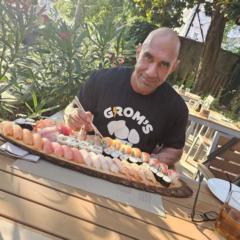
After a long time, I’ll be in the US again as I’m heading to the Olympia. I also got a ticket for Olympia University, and I see that at least two members of the group will be speaking there – @Elizabeth Yurth and @Eric Fete. Can’t wait :) Will anyone else be there?
4 likes • Sep '25
This is always such a fun event! Glad you will be ther @Gasper Grom . Be sure to introduce ryourself. I hope others can join!!
1-8 of 8
Active 66d ago
Joined Aug 1, 2025
Powered by