Activity
Mon
Wed
Fri
Sun
Jul
Aug
Sep
Oct
Nov
Dec
Jan
Feb
Mar
Apr
May
Jun
What is this?
Less
More
Memberships
DIY55 and Classy Friends
2.9k members • Free
Biohacking Peptide Playground
5.3k members • Free
Project Biohacked - Peptides
13k members • Free
Stronger Together Community
3.1k members • Free
Tony Huge Evolution
4k members • Free
Castore: Built to Adapt
1k members • Free
Research Radar
11.8k members • $10/month
Powerhouse Fitness for Women
17.1k members • Free
Healthy to 120 Together
55 members • $99/month
9 contributions to Castore: Built to Adapt

24d •
Help Us Hit 1,000 Members + Unlock a FREE Live Webinar: “The Updated Coach’s Protocol”
We are officially closing in on 1000 members inside the Built To Adapt community and I honestly can’t thank you guys enough for what this has become. What started as a place to have better conversations around cellular medicine, strength training, recovery, performance, and health has turned into one of the most thoughtful communities I’ve ever been part of. Some of the best conversations I’ve had this year have happened inside this group. I’ve watched people completely rethink how they approach recovery, training, supplementation, metabolism, and long-term health. More importantly, I’ve watched people learn how to think instead of just what to think. Truthfully, I think I’ve learned more from this community than I’ve taught. That’s the part I value most. This was never supposed to be me talking at people. It was supposed to be curious people learning together, challenging ideas together, and helping move the field forward together. We built this together. Now I have one favor to ask… We’re getting very close to 1000 members and I would genuinely love to cross that milestone before June. If this community has helped you, challenged you, or made you think differently, please invite ONE person who you think would love deeper conversations around health, performance, training, recovery, and human optimization. Invite a coach.Invite a clinician.Invite a biohacker.Invite someone tired of surface-level health advice. There is absolutely no cost to join. Even when the paid tier launches in June, this free community will always exist and I will continue posting free articles, education, and content here. The biggest benefit to me is simple:More minds.More discussion.More questions.More opportunities for all of us to learn together. My goal is to continue building THE place people can come for clear explanations and actionable insights on how to leverage cellular medicine and strength training to take agency over their health and performance. As a thank you, once we cross 1000 members I’m going to host a completely FREE live webinar:

1 like • 24d
When we invite person to join protocol, are they supposed to mention us as the referral so that we will then get the invite to see "The Updated Coach Protocol?" ie. how does this work?
1 like • 23d
@Anthony Castore Thank you. I'm on it. 😊

Apr 20 •
Terz cycle going great...what about that sweet bottle of SLU that I have?
Ahoy everyone! Just thinking through something. I'm in month two of my first cycle of Terzepitide. Nice even body fat reduction, lower dosing as I am a hyper responder, minimum sides. Will be riding this out for a few more months. I wanted to get some opinions...maybe @Anthony Castore can chime in. I have one bottle of SLU in house. 30 capsules of 100mcg per capsule. How might I use this bottle of SLU to enhance the effects of this Terz cycle? I am wont to stay away from stacking because I don't want to over signal. What are the options here? Wait till I am done with Terz and just run that bottle of SLU? Wait till I am done with Terz and get more SLU and run a greater amount over a longer period of time? Throw the SLU in during my taper-off from Terz...so, a little bit of stacking? Or... Risk wasting the money I spent on the SLU and just throw it in to the middle of the Terz cycle and see what happens...for the sake of science? : ) Thoughts?
3 likes • Apr 24
Ok so this is not going to address any of your above options, but... how I have incorporated SLU is on strength training days. I find it helps as an assist with energy and counter GLP-1 driven fatigue.
Mar 30 •
Glycocalyx: The Missing Layer In Human Performance Part 2
You don’t have a blood flow problem. At least not in the way you’ve been taught to think about it. Most people assume blood flow is just delivery. The heart pumps, blood moves, oxygen gets dropped off, and that is the end of the story. But blood flow is not just delivery. It is communication. Every beat of your heart sends information through your vascular system. The question is not just whether blood is moving. The question is whether your body is interpreting that movement correctly. And that interpretation happens at the glycocalyx. This is where flow becomes signal. If Part 1 introduced the glycocalyx as the interface layer, Part 2 is where you understand what that interface actually does. This layer is not passive. It is constantly sensing, filtering, organizing, and regulating what happens inside your body. If you want a simple way to remember it, come back to this. The glycocalyx controls FLOW. It senses force. It filters in layers. It organizes oxygen delivery. It regulates white blood cell behavior. Everything else builds on that. Start with force. Every time your heart beats, blood pushes against the vessel wall. That force carries information about pressure, velocity, and demand. The glycocalyx detects that force and translates it into signals the body can use. One of the most important outcomes of this process is the production of nitric oxide, which tells the vessel to relax and allows blood to move where it is needed. But nitric oxide is only part of the story. This signaling depends on context, redox balance, and the integrity of the system itself. When the glycocalyx is healthy, these signals are clear and adaptive. When it is disrupted, the same flow can produce distorted or incomplete signals. Blood can still be moving, but it is no longer being understood correctly. Now think about filtration. The glycocalyx acts like a highly selective filter that uses both size and electrical charge to decide what gets through. It is not just blocking things. It is making decisions.
1 like • Mar 30
@Jennifer Labrum I'm with Jennifer! As always, unbelievably fascinating and relevant content.
Mar 16 •
The Dirty Secret of the Peptide World: Why Two Identical Vials Can Be Completely Different Part 5
This series began with a simple goal: bring clarity to one of the most confusing conversations in modern medicine. Peptides have moved from obscure research tools to powerful therapeutic molecules used in metabolic disease, regenerative medicine, neurology, and performance optimization. But as interest in these molecules has exploded, the conversation around sourcing, manufacturing, and testing has become increasingly muddy. Part of that confusion comes from marketing language. Part of it comes from regulatory complexity. And part of it comes from something much more human: fear. When people encounter a rapidly evolving field they often look for simple rules that make the landscape easier to navigate. In the peptide world one of the most common rules repeated by physicians and institutions is the idea that only compounded peptides are safe and that anything outside that pathway should automatically be considered dangerous. Like most dogma, this statement contains a kernel of truth but fails to capture the complexity of reality. The purpose of this final installment is not to attack compounding pharmacies. Many of them perform extremely important work and operate with high standards of sterility and quality control. Compounding exists precisely because traditional pharmaceutical systems cannot always meet the needs of individual patients. In many situations compounding pharmacies provide access to therapies that would otherwise be unavailable. But it is equally important to recognize that compounding is not a magical guarantee of quality. A compounding pharmacy is still a manufacturing environment run by humans, and like any manufacturing environment it is subject to human error, contamination, equipment failures, and process breakdowns. History provides many examples of compounding failures that resulted in contaminated products reaching patients. The regulatory oversight of compounding pharmacies has improved over time, but the idea that the compounding pathway automatically eliminates risk is simply not accurate.
2 likes • Mar 16
Thank you so very much for helping us to make informed, educated decisions. I appreciate the time and effort you contribute to making this happen.

Mar 12 •
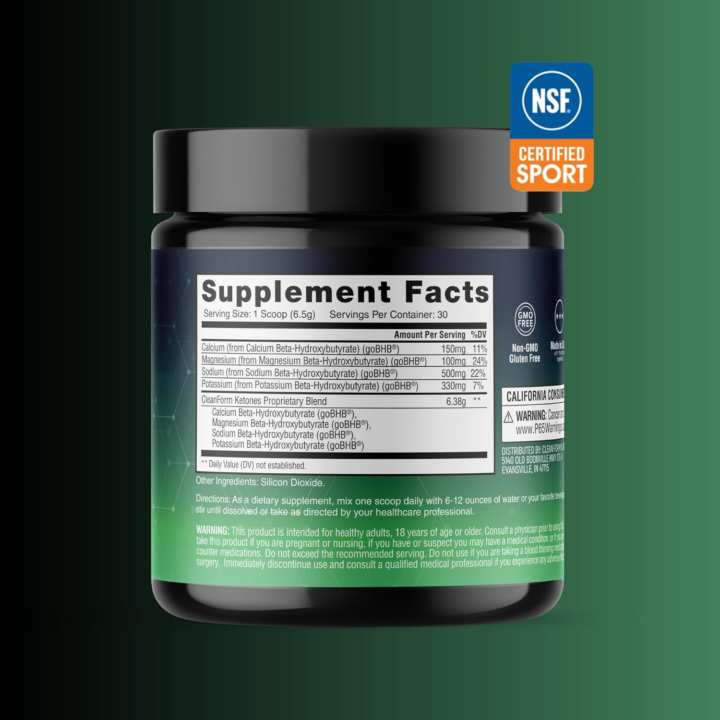
can BHB with electrolytes cause anxiety?
My friend's 72 year old mother had a stroke a year ago and recently tried ketones (not the kind you recommend, but the one pictured) and her aides said it made her difficult and anxious. I'm curious as to why or how this could do that. Do you think she needed a smaller dose to start with or is the electrolytes in this formulation the cause of throwing her off balance?
1 like • Mar 16
@Nick Deck Nick, while I'm sorry that this was your personal experience, your contribution on the topic is invaluable. In-depth, well-rounded, and thorough. Thank you! (I'm sure op really appreciated it...)
1-9 of 9

@e-allison-james-1468
Greetings! At 62, I recognized the pivotal shift in aging biology—and chose to get ahead of it by optimizing my health span.
Active 9m ago
Joined Jan 2, 2026
United States - Nevada
Powered by