Activity
Mon
Wed
Fri
Sun
Aug
Sep
Oct
Nov
Dec
Jan
Feb
Mar
Apr
May
Jun
Jul
What is this?
Less
More
Memberships
Holistic Dynasty
542 members • Free
Peptide Researchers
7.1k members • Free
DDT Method
201 members • $10/m
Endless Evolution w/ Duffin
2.9k members • Free
Castore: Built to Adapt
1.1k members • Free
TPC ARMY
221 members • $200/m
20 contributions to Castore: Built to Adapt

May 16 •
You’re Wasting Your Peptides…And It’s Not the Peptides’ Fault
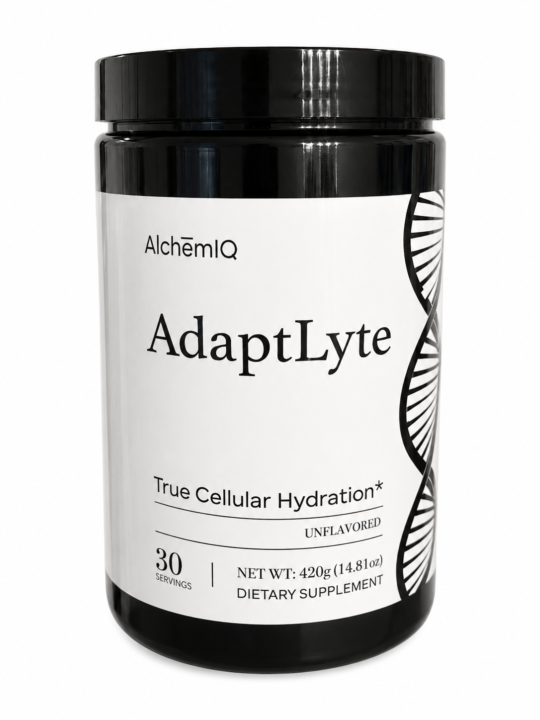
You probably aren't as hydrated as you think. “Drinking water” and “becoming hydrated” are two very different conversations Most people think hydration is solved at the kitchen sink. Fill the bottle. Drink the bottle. Repeat. Maybe toss in some electrolytes if training was hard or the sauna ran long. The internal scorecard says hydrated, the body says something else, and we keep moving. Here is the uncomfortable part. You can drink water all day and still have cells that are under-volumed, undercharged, and under-resourced. The water moves through you. It does not always move into you not where it counts. This article is about where it counts. The Two Compartments Almost Nobody Talks About When you drink water, that water enters the extracellular space first, the bloodstream and the fluid bathing your tissues. That is the easy compartment. It moves fast, it dilutes quickly, and you can pee most of it out within an hour if the terrain is not set up to hold it. The compartment that actually drives performance, recovery, and adaptation is the intracellular space. That is the water inside the cell. Roughly two-thirds of your body water lives there. It is the environment where mitochondria make ATP, where ribosomes build protein, where signaling cascades fire, where peptide messages get translated into actual biological responses. A useful analogy: extracellular water is the rain on the roof. Intracellular water is the rain that actually reaches the roots. You can have a lot of one and very little of the other, and the plant will tell you which one matters. The goal of real hydration is not to soak the roof. The goal is to get water to the roots. Cell Volume Is a Signal, Not a Side Effect This is the piece that reframes everything once you see it. A well-hydrated cell is not just a wetter cell. It is a cell with a different internal pressure and that pressure is interpreted by the body as a signal. The biochemist Dieter Häussinger’s work established that cell swelling, within normal limits, tends to bias the cell toward an anabolic, building, repairing state, while cell shrinkage tends to bias it toward a catabolic, stressed, breakdown state.

1 like • May 18
May I ask how you would compare this against iCell water? I assume you would use this in lieu of?
Apr 12 •
BPC/TB4 and Cancer
I thought this might be right up your alley to discuss @Anthony Castore . I am seeing the topic pick up again about why you should avoid BPC/TB due to possible increase in cancer likelihood. I can't tell if this is all just fear mongering or not. There doesn't appear to be any evidence regarding this outside of referencing a mouse study that was done: ---------------------------------------------------------------------------------------------------------------------------------------------------------- "In most solid tumors studied in mice, including fibrosarcoma, melanoma, non-small cell lung cancer (NSCLC), colon cancer, and glioblastoma, TB4 overexpression promotes tumor growth, metastasis, and angiogenesis." ----------------------------------------------------------------------------------------------------------------------------------------------------------- One person is stating that since BPC up-regulates VEGF, this would be a pathway towards cancer development (below is what they posted). ----------------------------------------------------------------------------------------------------------------------------------------------- VEGF is historically a promoting factor in oncological aspects rather than causative, but this isn't the only concern. VEGF was originally named "vascular permeability factor" for a reason. It opens gaps between endothelial cells, letting plasma proteins and fluid leak into the interstitial space. Off-target stimulation means edema in tissues that don't need increased perfusion. The problem is that VEGF receptors sit on endothelial cells throughout the entire body, not just in the tissue you're trying to help. So if VEGF reaches non-target tissues, several things go wrong. It can produce off-target angiogenesis, meaning new blood vessel growth where you do not want it. That can produce abnormal, fragile, leaky vessels rather than healthy functional ones. VEGF also increases vascular permeability, so tissue can become swollen or edematous. PMID: 35969170, 20400620
1 like • Apr 14
@Anthony Castore appreciate the well laid out response. I know any conversation around cancer can be a difficult one, and it is difficult when it seems like there are two camps out there that want to view this as black and white (i.e. there are zero concerns vs fear mongering).
Oct '25 •
Statement from Anthony Castore and AlchemIQ on the Bioglutide / Biomed Situation
Every industry has defining moments the ones that separate hype from principle and reveal who’s truly here for the long game. This is one of those moments for ours, and I want to be completely transparent about where we stand. Biomed Industries is the company credited with discovering Bioglutide (NA-931) and developing it as a next-generation GLP-based compound. Our raw materials came from the same supplier Biomed reportedly uses. Recently, serious accusations have surfaced against Biomed claims of fraudulent data, lack of publicly verifiable sequence information, and the absence of a disclosed CAS number or molecular structure. The accuser has raised valid scientific concerns that deserve to be addressed. At the same time, these allegations are new, and Biomed has not yet had the opportunity to publicly respond. That’s why we are pausing not panicking. Even in moments like this, our safeguards remain strong. We can fully document purity through HPLC and LC-MS, confirm sterility and endotoxin levels, and provide verified Certificates of Analysis. However, without a public reference structure or sequence, no lab including ours can confirm 100% molecular identity. We can verify that a compound is clean, sterile, and potent, but we can’t compare it to a molecule that’s never been fully published. To give some context, CB4211 is a great example of how innovation often moves faster than public documentation. This compound, developed for mitochondrial health and metabolic optimization, has been prescribed by physicians and compounded by pharmacies despite its structure, sequence, and CAS never being publicly released. That doesn’t make it ineffective or illegitimate it simply illustrates that, just like Bioglutide, the available data can only go so far. In both cases, these products are sourced, tested, and manufactured to the highest standards, with thorough purity and safety testing but without full structural transparency. That means identity and uniqueness are established through trust, testing, and outcomes rather than public disclosure. For all we know, CB4211 could be a more advanced form or reformulated analog of MOTS-c—or perhaps just a more expensive version under a new label. Until formal sequencing or patent releases are made public, no one can say for sure. This doesn’t discredit its value; it simply reminds us that in early-stage biotech, certainty often trails behind discovery. That’s why rigorous testing, ethical sourcing, and open communication about what is known and what isn’t are so vital.
1 like • Nov '25
Has there been any progress yet on determining the legitimacy of Bioglutide? I have a bottle and just figured I would start running (been on for a week, post workout), so hoping to find out what exactly I am taking lol
2 likes • Feb 24
Any update if it was determined that Bioglutide was legit or a scam? @Anthony Castore
Jan 16 •
WHY MIXING PEPTIDES IN THE SAME SYRINGE BREAKS THE RULES OF PHYSICS AND BIOLOGY
Peptides are often treated like supplements you can stack for convenience. One for repair, one for metabolism, one for inflammation. That mindset leads people to assume they can simply mix peptides in the same syringe and inject once. The problem is peptides are not pills. They are fragile, information-carrying molecules whose behavior is governed by physics, chemistry, and biology at the same time. A peptide is not just a chain of amino acids. In solution it exists as a three-dimensional structure held together by weak forces like hydrogen bonds, electrostatic interactions, and hydrophobic effects. These forces are highly sensitive to the environment. Small changes in pH, ionic strength, or solvent conditions can change the peptide’s shape, stability, and behavior. When a peptide is manufactured, it is stabilized in a very specific formulation. That formulation controls pH, charge, ion balance, and solubility so the peptide stays folded correctly and remains biologically active. When you mix two peptides together, you destroy that controlled environment and create a new, untested chemical system. One of the first things that goes wrong is charge balance. Peptides carry electrical charge depending on pH. That charge helps keep molecules from sticking to each other. Mixing peptides can shift pH just enough to reduce repulsion between molecules. When repulsion drops, attraction wins, and peptides begin to stick together. Ionic strength matters too. Mixing solutions often increases ion concentration, which compresses the electrical “buffer” that keeps peptides apart. This allows molecules to drift close enough for hydrophobic regions to interact. Water dislikes exposed hydrophobic surfaces, so peptides clump together to lower free energy. This is basic solution physics. Once aggregation starts, it accelerates. A few misfolded molecules form a nucleus, which seeds further aggregation. Early clumps may be invisible, but they still matter. They reduce the amount of active peptide, alter absorption, and change signaling behavior.
1 like • Jan 16
@Anthony Castore I didn't get a chance to read it yet as i just saw the email, but Hunter Williams did just make a post / video refuting your points on this. I didn't want to post his response here as this isn't his platform
0 likes • Jan 17
@Anthony Castore His response seemed like it was in direct response to your IG post, so just pointing out as I am sure it will make its rounds to you at some point. In terms of stability, one study that was referenced by another person suggested that peptides degradation happens rapidly after reconstitution. This would imply that using a peptide beyond a single use is worthless, but we know that is not the case. MOTSC was the poster child of this, as there had been this idea floating that you needed to use all of it immediately after reconstitution because it degraded and became unstable almost instantly. However, I know several people who had the equipment to look at this and proved that wasn't even remotely true (weeks after reconstitution MOTSC was still almost entirely stable). They have looked at other peptides as well. Jean Francois Trembly was one of these people.

Dec '25 •
Peptide Y2K26
Ok, I feel like I have some pretty good resources into the peptide world. I have a mastermind with a well known lawyer. I’ve asked about what’s up and coming in 2026 and nothing concrete has been stated. YET, open social media and everyone is talking about having to stock up on GLP-1s. Is this valid/legit or is this just classic gate-keeping, fear-based marketing at its best. Seems the only ones pushing this agenda are ones ironically selling research peptides or alternatives. And I even sell research peptides but I will not tell my customers things I can’t substantiate. What am I missing? I know there’s some proposed legislation (i.e. Safe Drug Act) but that hasn’t been passed and isn’t even close from what I’ve been told. The truth is, research companies have always been under scrutiny, so that’s not new, so what is this fear that’s being perpetuated? Thanks!
2 likes • Dec '25
The Big Pharma companies (Eli / Novo) are going full force with the FDA against anyone selling / distributing the GLPs (compounders and research companies).
1-10 of 20