Activity
Mon
Wed
Fri
Sun
Feb
Mar
Apr
May
Jun
Jul
Aug
Sep
Oct
Nov
Dec
Jan
What is this?
Less
More
Memberships
Make $1k-$10k in 30 days
99 members • $10/month
Make $1k-$10k in 30 days
13.9k members • Free
10K Club | Sell With Usama
1k members • Free
Fullstack Editor Club (Lite)
709 members • Free
The Upwork Playbook (Free)
245 members • Free
Upscale (Free)
25.1k members • Free
Road to $100k
120 members • Free
82 contributions to Make $1k-$10k in 30 days

🔥
15d •
Wohooo! Scholarship Approved
Hey my people, @Haroon Khalil has Announced Media Valley Scholarships today: https://www.skool.com/make-1k-5k-in-30-days-8449/media-valley-school-scholarship-announcement-2026-batch-1 Congratulations to at the Girlies who got selected: @Maria Ijaz @Areej Iftikhar @Amber Naz @Komal Ramzan @Soha Ali It's my 46th day and I've learned a lot already, I'm really shocked that how can they provide such Golden Knowledge in totally Free? 📌 My personal experience and steps for you to get this Scholarship: 1. Post learnings to guide everyone in a easy way. 2. Post Daily Journals. 3. Engage through posts and comments meaningfuly 4. Guide everyone selflessly 5. Respect Seniors and Juniors who are teaching you even a single word. 6. Stay consistent and put genuine efforts. It's so easy peasy, you will get it InshAllah. Special Thanks to those who taught me a lot of things in just 46 days: @Haroon Khalil @Aleeza Shahzadi @Asim Irfan Muhammad Abdullah (hmesha ki trha nhin tag kr pai :') @Umer Maqsood @Azhan Ahmed And every single person of this community, you all have been a great support till today and we all will grow more together InshAllah Hey, What things are you gonna apply from today? So you can get this Scholarship or anything else in your life?


1 like • 15d
MashaAllah
⭐
Aug '25 •
🤝Welcome to Media Valley School! Introduce yourself 📢
Salam everyone, Welcome to Media Valley School! I am so happy that you’re here * Please read this post or watch this video till the end to know How to get most out of this community * This community is all about helping you with All stages of life specially with Money making, Healthy Mindset and Healthy Body, Not only these topics we are planning to add more topics like How to find Love of your life and get married, have kids and raise Beautiful human beings and make this world a better place together. 𝗛𝗘𝗥𝗘'𝗦 𝗪𝗛𝗔𝗧 𝗬𝗢𝗨 𝗡𝗘𝗘𝗗 𝗧𝗢 𝗞𝗡𝗢𝗪: 1. The Goal Our goal is simple – to help you with Money Making, Growing your mind and character and taking care of your body. 2. The Community - This is a space for like-minded people to connect, share ideas, and support each other. Stay active and engage! 3. The Classroom - Find valuable resources and lessons inside the classroom to help you take action and start seeing results. If you need video resources on a specific topic then you can post in the community and we will provide those resources to you. 4. The Calendar - We host Weekly / Monthly workshops and Q&A calls in the community. Check the calendar so you never miss out Important Events! ______________________________________________________________________________________________________ 𝗖𝗢𝗠𝗠𝗨𝗡𝗜𝗧𝗬 𝗥𝗨𝗟𝗘𝗦: 1. Be positive – Disagreements are fine, but keep it constructive and respectful. We need your help to make this community THE BEST COMMUNITY so help us by giving us feedback in a positive way. 2. Make an effort – Post in the right category, stay on-topic, and add value. 3. No promotions – No self-promoting, ads, or links to your content. Violating this will get you banned. 4. No DM-ing other members to sell anything or to invite them to another community/group. Please note that scammers will use chats and other groups to communicate with you as we cannot track their activity there. 5. No low-quality posts/spam. Let's work together to make this community a valuable space for everyone.
1 like • 15d
@Raheel Anjum exactly
1 like • 15d
@Dr Shumaila Muslim yea you can watch course line by line your all faqs already answered
⭐
15d •
Media Valley School Scholarship Announcement - 2026 Batch 1
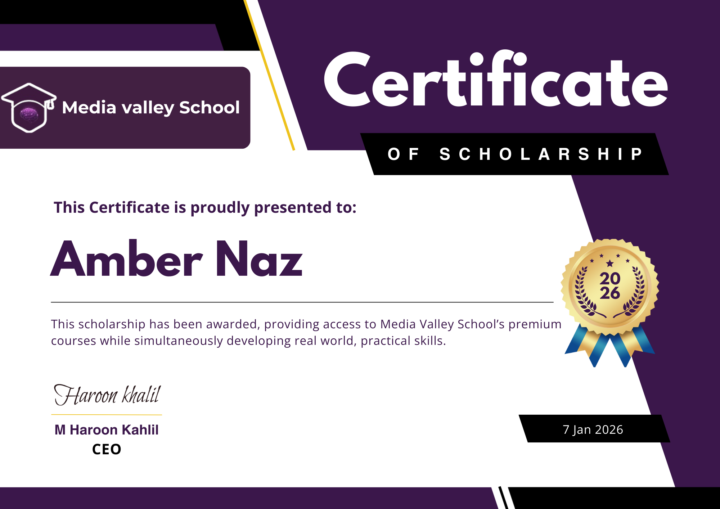
We’re excited to finally share the results of the Media Valley School Scholarship 2026 Batch 1. This scholarship was created to support students who are serious about learning, improving their skills, and working on things that actually matter in the real world. After reviewing all applications, we’re happy to announce the students who have been selected. 🌟 Selected Scholarship Members @Amber Naz @Maria Ijaz @Soha Ali @Areej Iftikhar @Komal Ramzan Congratulations to each of you 🎉 Being selected means we see your potential and your willingness to grow. This is not just about access to courses it’s about learning through practice, guidance, and real experience. 🚀 What’s Next? Here’s what happens now First, you’ll be added to the official Media Valley School scholarship WhatsApp group. Once everyone joins, we’ll arrange a meeting where we’ll walk you through everything and get started together. From there, we’ll begin working closely with you focusing on practical skills, real tasks, and consistent improvement, step by step Inshallah. https://chat.whatsapp.com/KSrg5hqRl6sH0pBYXdk3sO Note: Your scholarship certificate is attached with this post. Please download it and keep it safe for your records. Welcome to Media Valley School. @Asim Irfan @Azhan Ahmed
3 likes • 15d
Congrats To all of you! @Amber Naz @Maria Ijaz @Soha Ali @Areej Iftikhar @Komal Ramza

17d •
UPWORKS Problems for BEGINNERS!
Problems: 1. No Work For Portfolio! Solutions: 1. Say Instead of giving Portfolio! "I can send you anyone’s portfolio by downloading it, you can’t see my soft and hard skills, until I work for you, Send me your footages for trial then we can move further if you will like my work" OR "I understand the importance of a portfolio. However, to ensure transparency and relevance, I’d be happy to do a short trial edit using your actual footage. This way, you can directly evaluate my editing style, attention to detail, and how well it fits your content before moving forward."
1 like • 17d
Exactly Man!

17d •
𝘿𝙖𝙮: 40 (4. 𝙟𝙖𝙣. 2026)
🎯 𝙏𝘼𝙍𝙂𝙀𝙏: 3𝙆$ /𝙈𝙊𝙉𝙏𝙃 𝙎𝙏𝘼𝙍𝙏𝙄𝙉𝙂 𝙍𝙀𝙐𝙀𝙉𝙐𝙀 (𝙎𝙏𝘼𝘽𝙄𝙇𝙄𝙕𝙄𝙉𝙂 & 𝙎𝘾𝘼𝙇𝙄𝙉𝙂) ┏━━━━━━━━━━━━━━━━━━━━━━━━━━━━┓ ┃ 💠 𝘾𝙤𝙣𝙨𝙞𝙨𝙩𝙚𝙣𝙘𝙮 & 𝙂𝙧𝙤𝙬𝙩𝙝 𝙅𝙤𝙪𝙧𝙣𝙚𝙮 💠 ┃ ┗━━━━━━━━━━━━━━━━━━━━━━━━━━━━┛ ✨ 𝙎𝙚𝙡𝙛-𝙇𝙤𝙫𝙚 𝙈𝙤𝙢𝙚𝙣𝙩: I am celebrating my 40-day milestone of unwavering dedication; my growth is a reflection of my inner strength. 📈 【 12:00 PM - 01:00 PM 】 - 🔳 Subah main taqreeban 12 bajay uthi. - 🔳 Sab se pehle apna breakfast banaya, phir ami ke liye tea ˗ˏˋ☕ˎˊ˗ aur cat ke liye khana prepare kiya. 🍞 - 🔳 Taqreeban 1 bajay tak ye sab kaam aur breakfast complete hua. 💼 【 01:00 PM - 04:00 PM 】 - 🔳 Us ke baad main ne ghar ke kaam kiye - 🔳 Free hokr Make $1k-$10k in 30 day Community mein active rahi, notifications check kiye aur - 🔳 @Azhan Ahmed aur @Kazim Hussain ne mujhe journal mazeed behtar aur sahi tareeqay se likhne ki recommendations din. 🎓 【 4:00 - 7:00 PM 】 - 🔳 chai pi and dinner prepare kiya. 📝 【 07:00 PM - 09:00 PM 】 - 🔳 Dinner ke baad SMM ki Class #5 attend ki, jahan naye concepts seekhe aur assignment mila. - 🔳 9 bajay free hone ke baad un SMM class 4 k notes ko likhe jo pehle reh gaye thay. 🎬 【 09:00 PM - 12:00 AM 】 - 🔳 Assignment #4 aur notes complete kar liye hain, bas post karna baqi hai. - 🔳 dummy practice ki. - 🔳 9 se 10 bajay tak dinner kiya aur saath mein drama enjoy kiya. 𓌉◯𓇋 - 🔳 12 bajay tak SMM ki school activities aur pending lectures ko dekhe - 💡 【 𝙇𝙖𝙩𝙚 𝙉𝙞𝙜𝙝𝙩 𝙍𝙚𝙛𝙡𝙚𝙘𝙩𝙞𝙤𝙣 】 - 🔳 Lecture 5 ke notes aur Assignment #5 taiyar hain. - 🔳 Dummy bidding ko lekar thori pareshani hai kyunke main isay perfection ke saath seekhna chahti hoon. - 🔳 MVS group mein message kiya to @Hira fayyaz Khan ( bht pyari bandi hai ) ne kafi support kiya aur mil kar confusion solve karne ka kaha. - @Bareera Haseen Ud Din ka b msg aya same situation mai wo b hai sath practice ka us ne b kaha
1 like • 17d
Glad To See Journal Masallah
1-10 of 82
@asad-hussain-2227
Video Editor | Motion Graphics | Saas Videos | Top 3% Video Editor | KSERVICESMEDIA
Active 3d ago
Joined Nov 1, 2025
Karachi Pakistan