Activity
Mon
Wed
Fri
Sun
Feb
Mar
Apr
May
Jun
Jul
Aug
Sep
Oct
Nov
Dec
Jan
What is this?
Less
More
Memberships
FunnelHub Community
2.2k members • Free
AI MicroSaaS Launchpad
1.3k members • Free
CREATE
1.6k members • Free
Collab to Profit Academy ™
32 members • Free
Selling Online / Prime Mover
35.4k members • Free
Conversation Domination
1.9k members • Free
The AI Advantage
70.4k members • Free
OfferLab
9.5k members • Free
7 contributions to Selling Online / Prime Mover

2d •
Why Selling More Isn’t the Same as Growing
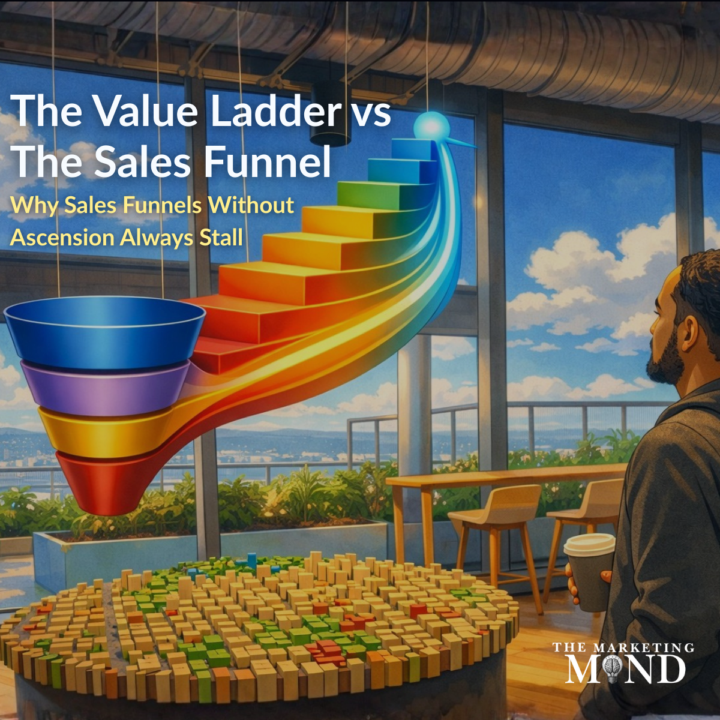
A lot of people selling online feel stuck even when sales are coming in. They’re converting. They’re delivering. But growth feels fragile. Here’s why. Most businesses are built around funnels only. Funnels answer: “How does someone buy?” But growth depends on something else: “Why do they stay?” That’s the role of the value ladder. Funnels create decisions. Value ladders create direction. Without direction, customers buy once and drift. With direction, every purchase becomes a step forward. This is where value ladders are often misunderstood. Ascension isn’t pressure. It’s clarity. It’s helping someone understand what problem they’re now ready to solve next, based on who they’re becoming. Strong ladders: • Follow the customer’s internal readiness • Build trust before asking for commitment • Turn transactions into relationships When ladders are designed intentionally, selling stops feeling pushy. It starts feeling aligned. I’ve attached my LinkedIn Newsletter Fueling The Marketing Mind Episode 15 (which was released today) as a PDF below because we can't share external links here. In the episode I walk through this distinction in depth and explain why ladders should be designed before funnels if you want sustainable growth. One question to reflect on: 👉🏾 After someone completes one of your funnels, is their next step obvious… or unclear?
1 like • 2d
I really wanted to share this post to provide some value for those that are selling products, services and solutions online and want to ensure their funnels are aligned with where their customers would like to go next. I'm always open to feedback, so please let me know if you found this post valuable and if you think I should continue sharing the raw PDFs of my LinkedIn newsletter episodes as well.
0 likes • 2h
@Javen Crawfis well usually I've done a good amount of the "understanding your market" work already, so I know my audience's pain points, desires and needs. Then I've built customer avatars (personas) for my market. With that locked in, I try to really think about it from my customer's perspective, not what I want to sell them but what they would naturally need next based on the initial problem I just solved. So in the most simple way I go from: Lead magnet → low-ticket (self-liquidating offer) → mid-ticket → continuity offer (optional but great) → high-ticket And I map out what the natural progression is by putting myself in their shoes and constantly asking "what makes sense for someone like me next?" I learned from Russell that you don't have to have the whole funnel built out to start, you can really start with one mid-tier offer and build the rest later. Which is good because sometimes it can be daunting to try to build everything first and sometimes it doesn't make sense to do that if you aren't sure that's what they need. So I also try at the end of a funnel (if I only have one offer and no further upsell) to pivot them to taking a deep dive survey where I'm really asking them what they're biggest challenge is and what they are interested in learning next (and offer them to join a wait list for exclusive early access to what comes next). I know I may have went a bit deeper than your original question, sorry 😊

🔥
24d •
What book changed how you think forever(business or otherwise)?
I'm sure all of us here have read Russell's books and have our minds blown. So I'm curious as to what book from any other author, broke your beliefs for the better when you read it?
0 likes • 1d
@Olivia Alice I've been in the group for over a month now but yes I've been on my digital marketing journey for quite awhile, from before we called it digital marketing tbh (it just used to be Internet marketing). My story involves lots of ups and downs, twists and turns, it's been an experience. I've been working to rebuild my digital marketing consultancy business more recently. I'm a big believer that entrepreneurship is a massive vehicle for change and the digital landscape is the best way to drive that vehicle to your destination. It's great to hear you've made good money from it. What niche/industry do you serve?
Dec '25 •
Why Competing Online Feels Harder Than It Should (And How to Make It Stop)
If you’ve ever felt like: - Everyone is saying the same thing - Every offer sounds interchangeable - Price keeps becoming the deciding factor You’re not doing anything wrong. You’re just operating inside a crowded category. I shared this in Episode 12 of my Fueling The Marketing Mind newsletter on LinkedIn, and it’s a shift that completely reframes how you grow online: You don’t win by competing better. You win by making competition irrelevant. - The Real Reason Most People Blend In Most sellers try to stand out by: - Tweaking messaging - Adding features - Copying what’s working elsewhere But buyers don’t compare offers line by line. They compare belief. They ask: - “Does this feel right for me?” - “Do I trust this person understands my situation?” - “Can I see myself becoming who this promises?” When everything feels familiar, buyers default to indecision. That’s why Category of One positioning matters. - Standing Alone On Purpose Category of One positioning isn’t about branding theatrics. It’s about alignment. Alignment between: - Who you are - What you’ve lived - What you help others become When that alignment is clear: - Selling feels calmer - Price resistance fades - Decisions happen faster Not because you convinced harder… but because recognition replaced persuasion. - AI Doesn’t Create Positioning — It Amplifies It I know a lot of people are using AI to assist with their marketing now. AI can scale clarity. It can also scale confusion. If your identity and positioning are weak, AI spreads that weakness faster. If they’re grounded, AI becomes a powerful amplifier of what already makes you different. The people who are successful with AI won’t be the loudest. They’ll be the clearest about who they are before they ever open the tool. I’ve attached the raw final draft of Episode 12 directly from my Google Docs as a PDF below so you can read the full breakdown (I've also included AI prompts you can use to create your own Category of One).
2
0


🔥
Dec '25 •
What's Your Relationship With Selling?
What is your relationship like with selling? I see so many people who feel like selling is a bad thing. They feel like it's deceptive and if they sell people might think they're trying to take advantage of them. A lot of people even see it as disgusting. I get it. I had my own hang-ups around sales for a long time. It didn't seem natural. It seemed imposing and I didn't want to be "pushy." But... What if selling is the key to helping more people than you ever thought possible? Most of the time we need someone to help us get out of our own way. That's what sales does. It helps us get out of our own way. When we approach sales from the perspective of service to others it isn't sleezy or bad. It changes lives. Sales isn't bad, it isn't dishonest or "pushy" when done right. When done right it helps the people who need you get what they need. What is the one thing holding you back from embracing sales?
2 likes • Dec '25
Everything you've said in this piece is spot on. My perspective on sales may be different because I've always enjoyed it. Selling came very natural to me because I've always been a connector. I was that friend that wanted one friend to meet another friend because I knew they would get along. Sales feels good when both parties involved are getting what they want. When you can create that win-win situation seamlessly, you know you've done you're job. And just to reiterate, sales is about service. Because marketing is about service and selling is a function of marketing. Service to the audience that is interested, has a need or a desire for what you're offering. If you believe the product to be valuable and beneficial, dare I say you have a duty to sell it. Sales gets a bad rep but selling is actually good for the world.
1 like • Dec '25
@David Aldred the pre-show training offers a lot of value on its own. I hope you enjoy it and the training in January.
Dec '25 •
Why Some Offers Sell Instantly (And Others Feel Like a Grind)
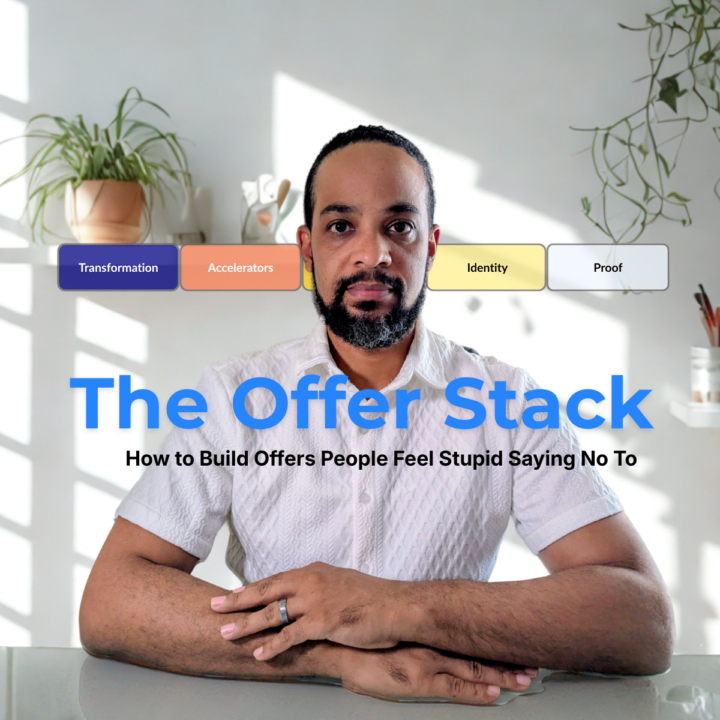
Ever notice how some offers feel effortless to sell... while others require endless explaining, convincing, and follow-ups? That gap usually isn’t about traffic, copy, or pricing. It’s about offer structure. I just released Episode 11 of my Fueling The Marketing Mind newsletter on LinkedIn, and it dives into something every online seller eventually bumps into: People don’t hesitate because they need more information. They hesitate because they don’t feel confident in the decision. That’s where a well-built offer stack changes everything. If it's okay, I'd love to share the high-level overview with you here... "The 5 Layers of a High-Converting Offer Stack" High-converting offers aren’t louder. They’re clearer. Here’s the structure behind offers that feel easy to say yes to: 1. Core Transformation What problem is fully resolved after success? If this isn’t compelling, nothing else matters. 2. Accelerators Elements that make results feel faster or easier. Use templates, systems, guided workflows, AI support. 3. Risk Reducers Anything that neutralizes fear before it turns into hesitation. Use guarantees, clarity, support, transparency. 4. Identity Enhancers People buy into who they are becoming. This layer creates pride, belonging, and momentum. 5. Proof & Signals Visible reassurance that this works. Use stories, results, authority, social validation. When these layers align, selling stops feeling pushy. The structure does the heavy lifting. "Designing Your Own Offer Stack" If you sell online and want cleaner conversions, try this: - Start with the end result, not the deliverables - Identify the fears slowing decisions - Stack only what resolves those fears - Cut anything that creates confusion - Price in a way that signals seriousness and follow-through Great offers don’t pressure people into buying. They help people recognize that moving forward already makes sense. We aren’t allowed to share external links here, but I still wanted you to get a chance to read the full breakdown and I'm interested in your feedback. So I’ve attached Episode 11 as a PDF below.
0 likes • Dec '25
@Lina Artunduaga relatively new here but I've been diving into all the valuable information and connecting with some good people since I've been here. What about you?
0 likes • Dec '25
@Gabriela Victory you're welcome. Thanks for taking the time to read it.
1-7 of 7

@alexander-day-5089
Passionate about helping entrepreneurs, startups, and small businesses maximize growth through innovative digital marketing strategies.
Active 2h ago
Joined Dec 9, 2025
ENTJ
Jamaica <-> Florida
Powered by