
Write something

35m •
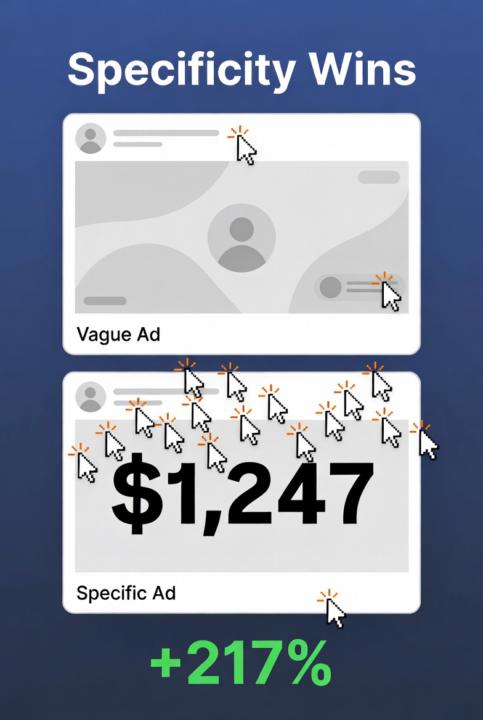
Putting a number in the headline lifted click-through 217%
A small headline change with an outsized effect: include exact numbers. Test #1: - A: "The first ever public library of tested marketing strategies online." - B: "10 patented strategic guides. 1,500+ proven tests. Free access." - B won by 88%. Test #2: - A: "Local Tax Preparation – Quality Tax Preparation Services." - B: "Local Tax Preparation – $45,325 Saved in January." - B won by 217%. Vague claims slide right past people. A specific number stops the scroll because it reads as real, measured, and credible. "$45,325 saved" is impossible to ignore. "Quality service" is impossible to remember. Anywhere you've written a fuzzy benefit, see if there's a number hiding behind it. Not "save money," but how much. Not "fast," but how fast. What's one vague line in your funnel you could swap for a hard number today?

18h •
Compete on Value, Not Guesswork.
The market is shifting fast, and outdated strategies will cost you dearly. Those who dominate are making data-driven moves, not guessing. If you want to transition from chasing small wins to commanding five-figure contracts, you need to implement systems that scale. The framework to do exactly that is ready. Cheers, Reetesh -
0
0


11d •
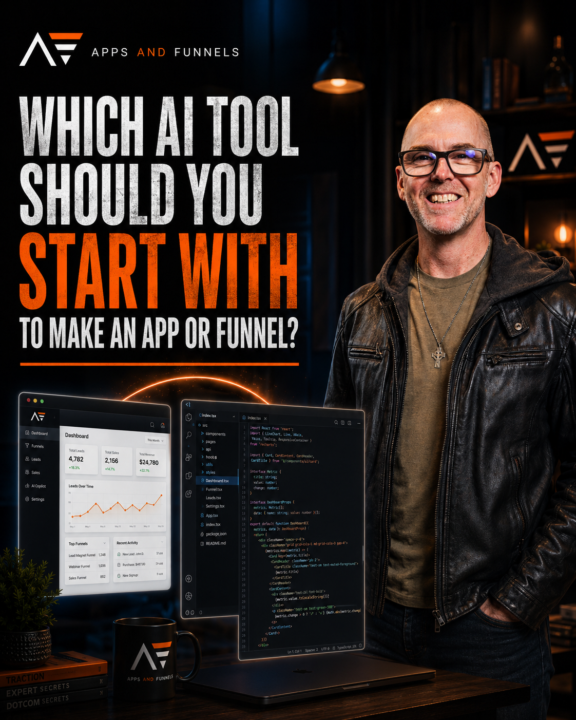
Which AI coding tool should you use? It comes down to one question.
Every week someone asks in the Facebook group.. "I want to build an app with AI. What do I use?" Good question. There are a lot of choices. New ones show up all the time. Here's the simple version. There are two kinds of tools. The first kind lives in your browser. Lovable, Replit, Bolt, Base44. You open a website, type what you want, and an app shows up. Nothing to download. Nothing to set up. The second kind runs on your computer. Claude Code, Codex. You still just type what you want. But the files it makes go right onto your computer. Start with the browser kind first. If you don't know which one to pick, pick Lovable. Open it like any other website. Type what you want. You can see your app working in a few minutes. It's the easiest way to prove to yourself that this stuff is real. Once you've done that.. switch to building on your computer. Here's why. First, the files are yours right away. They're already sitting on your computer. You don't have to go find them somewhere else. Second, you can swap tools whenever you want. The files don't care which AI made them. If something better comes out next week, you just use that instead. Third.. you're probably already paying for it. If you pay for Claude, Claude Code is already included. If you pay for ChatGPT, Codex is already included. No extra cost. Which one should you use? Whichever one you're already paying for. 🚀 James
22h •
Dream Client Avatar Test: The One-Sentence Exercise Most Online Business Owners Skip
Ask someone to describe their dream client and watch what happens. There's a pause. "Um, I guess.. someone like.." I've seen this happen in rooms full of people who've built real businesses. Their confidence drops the second you ask them to get specific. That pause tells you something. Most people have an avatar doc sitting somewhere. A slide from an old course. One line in their bio. They know it's not very good. They've known for a while. It just never felt important enough to fix. Here's a fast way to test yours. Finish this sentence: "They are the (kind of person) who (their situation right now)." Not their job title. Not their industry. The kind of person they are, and what's going on in their life right now. Here's an example. "They are the busy coach who built something a real business, but is exhausted from all of the one-on-one work." Try it for your own dream client. If it sounds like a job description, it needs more work. If it sounds like the first line of a story, you're close. That one sentence is the start of something bigger. I use a full process to build it out completely, with clients, before we ever touch a funnel page. 🚀 - James
1
0

6d •
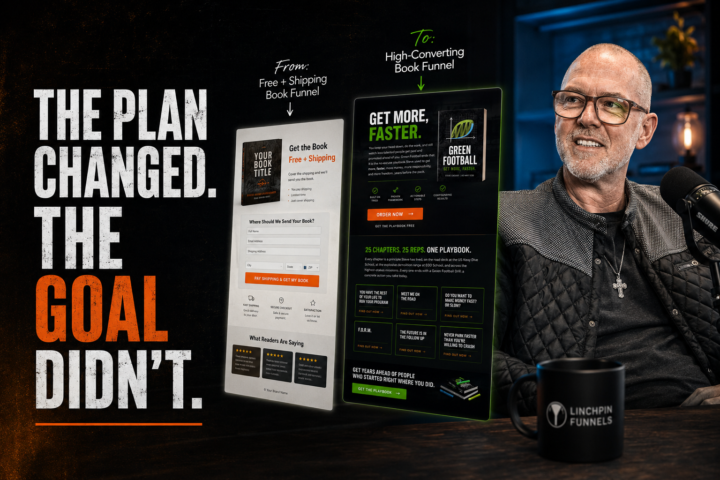
What Happens When Your Plan Changes Days Before Launch
We had a book funnel built for my buddy Steve Cassidy's launch. Free-plus-shipping, the whole thing mapped out. Days before launch, the plan changed. Route everything through Amazon instead, to build momentum on the algorithm before the public launch date. That meant scrapping the funnel and rebuilding it in a few days. Single page, sends people to Amazon, they come back after buying to unlock the digital playbook as their bonus. I didn't love losing the work we'd already done. But the goal was never "ship the funnel we planned." The goal was Steve's book doing well. So we rebuilt toward that instead of defending what we'd already built. Tuesday night I got this text from Steve: "We did it! Number one in two categories." #1 in Self-Employment. #1 in Small Business Sales & Selling. Top 10 in Small Business overall. He also told me I made it easy on him. Coming from a guy who spent years as a Navy EOD tech and built a defense company across 13 countries, that landed. If your plan changes on you close to a deadline, that's not the project falling apart. That's just what it looks like sometimes. Stay firm on the goal and flexible in the approach. Keep shipping funnels. 🚀 - James
1-30 of 4,952

skool.com/prime-mover
Discover the secrets of how to Sell Online and step into your calling as a Prime Mover with Russell Brunson!
Leaderboard (30-day)
1
+131
2

🔥
+116
3

+105
4
+91
5

+72
Powered by