
Write something

4d •
THC doesn’t create your state — it amplifies it.
When you’re stressed, your sympathetic nervous system (SNS) is active. This increases: • cortisol • heart rate • amygdala activation • internal tension • shallow breathing A 2017 Harvard study showed that stress changes the way THC interacts with CB1 receptors, making sensations feel sharper, faster, and more overwhelming. When you're calm, parasympathetic activity (rest & digest) dominates — so THC feels: • smoother • grounding • more predictable • more enjoyable THC interacts with your state, not just your brain. How does cannabis feel in your body when you're stressed vs calm?
4d •
WELCOME TO THE DAILY DOSE
This is your daily learning ritual. Every day we break down one concept connected to: • cannabis • the endocannabinoid system • the nervous system • breathwork • sleep • stress • performance • recovery • mental health • Whole-body wellness Each lesson is: • science-backed • simple to understand • directly connected to your life • designed to help you use cannabis intentionally • meant to give you at least one practical insight you can apply today This is how we build a healthier relationship with cannabis — through education, awareness, and consistency. Welcome to the Daily Dose. Take it in. Apply it. Live higher.
8
0
6d •
TERPENES — THE MISSING LAYER OF YOUR CANNABIS EXPERIENCE
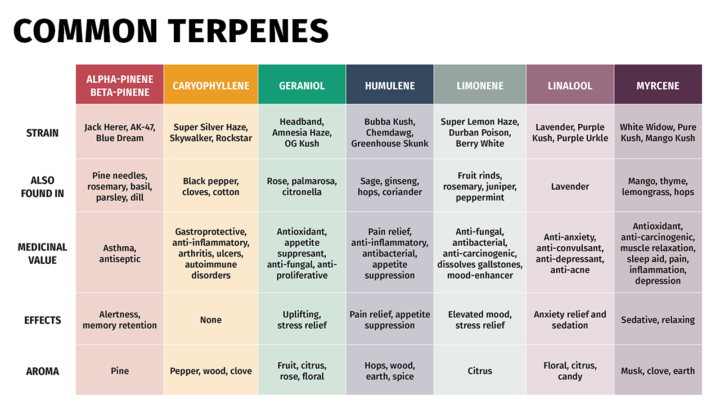
Most people think weed hits different because of the strain name or the THC percentage. But there’s another layer nobody talks about enough: Terpenes. They’re the natural compounds that give cannabis its smell — citrusy, earthy, piney, sweet — but they also shape how the experience feels. And you’ve already felt this, even if you didn’t know the reason. Ever notice how sometimes cannabis makes you: • more clear • more calm • more present • more social • or more anxious? A lot of that comes down to the terpene profile, not the THC. Here’s how to think about it — simple: Limonene = the “lighten up” terpene.Citrus smell. Mood lift. Cleaner, happier energy. Linalool = the “exhale” terpene.Lavender vibe. Softens tension, great for anxious bodies. Myrcene = the “slow down” terpene.Earthy. Makes the high feel heavier, deeper, more full-body. Pinene = the “clear mind” terpene.Pine smell. Helps you breathe deeper and stay present. Caryophyllene = the “body relief” terpene.Peppery. Helps with stress, inflammation, muscle tightness. This is why two products with the same THC can feel completely different. It’s not random — your body is responding to different terpene instructions. Here’s the part most people never realize: When your nervous system is already stressed or overwhelmed,your body can’t use terpenes the same way. The experience feels inconsistent. This is why we focus on regulation first, cannabis second. So today’s practice is simple: Next time you take a hit or an edible, pause for 5 seconds and ask yourself: “What did this shift in me?“ My energy? My breathing? My mood? My body tension? My thoughts? You’ll start to see patterns. You’ll start learning what actually works for your system. And cannabis stops feeling unpredictable — because now you understand the language. Comment: Which terpene profile usually feels best in your body — energetic, calming, or grounding?
7d •
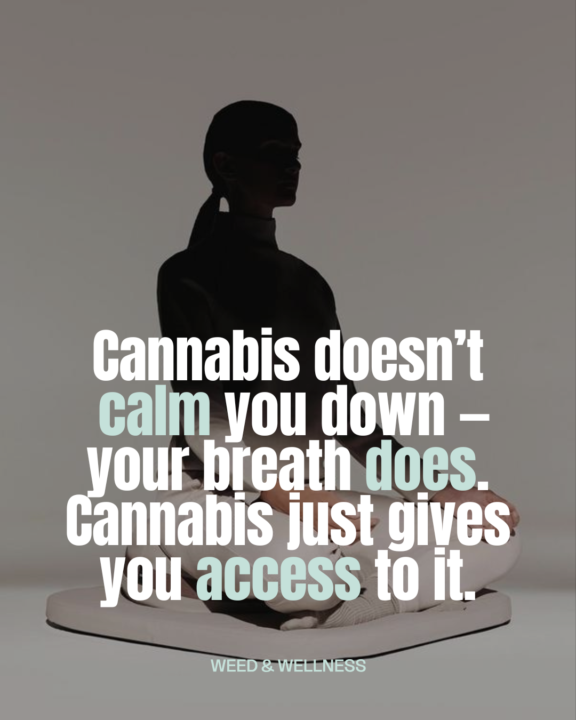
Most people think cannabis calms them down. That’s not actually what’s happening.
Most people think cannabis “calms them down.”Physiologically, that’s not accurate. Cannabis does not create calm. It shifts the internal environment so your breath is able to regulate you — something it couldn’t do when your system was overloaded. Here’s how it works: When you consume cannabis (especially low-dose THC or CBD-dominant products), your endocannabinoid systembecomes activated. The ECS is one of the primary regulators of your autonomic nervous system — the system responsible for breath speed, heart rate, emotional reactivity, and stress responses. CB1 receptors in the brainstem and limbic system begin signaling in a way that pulls your body out of sympathetic drive (fight-or-flight) and into parasympathetic tone (rest-and-regulate). This shift naturally slows respiration, lengthens exhalation, and increases vagal nerve activity. This is why your breath becomes deeper and slower even if you’re not trying. It’s not the “high.” It’s the nervous system unlocking the brakes. When your vagus nerve activates, your brain receives a signal of safety — heart rate decreases, breath smooths out, internal tension drops, and cognitive noise quiets. That’s when you finally feel clarity, presence, emotional steadiness, and control. And here’s the most important part: Cannabis doesn’t replace the breath. It restores your access to the breath. That’s why intentional breathing while using cannabis amplifies the effect dramatically. Your inhale brings awareness. Your exhale brings regulation. Cannabis makes both possible at a deeper level. This combination improves: baseline stress thresholds emotional regulation focus recovery sleep quality nervous system flexibility resilience during daily stressors When people think cannabis “relaxes them,” this is what’s actually happening: the ECS is regulating the parts of the brain and body that were preventing calm, and the breath finishes the job.
9d •
How Cannabis Reduces Mental Noise and Helps You Focus
Most people think cannabis ruins your focus. The truth is more nuanced. Cannabis doesn’t magically make you concentrate — it reduces the mental noise that blocks your ability to focus in the first place. Your brain has a network called the Default Mode Network, or DMN. This network is responsible for mind-wandering, overthinking, rumination, self-talk, and all the background noise that makes it hard to stay present. When the DMN is overactive, your attention is constantly pulled away from the moment. This is what makes people feel scattered, distracted, or overwhelmed. Research shows that low-dose THC decreases activity in certain DMN regions. That means less mental chatter, less looping, and more space to actually think clearly. CBD also plays a part by calming emotional interference and helping the prefrontal cortex regulate attention under stress. Together, THC and CBD can create a quieter internal environment where you can actually focus. This is why you might feel more present, more in your body, or more engaged with a task after a mindful micro-dose. It’s not that cannabis gives you focus — it takes away the noise that steals it. But dosage is everything. High doses overstimulate the brain and make the DMN unpredictable. That’s when people experience spiraling thoughts or slower cognition. Low doses support clarity. High doses distort it. Intentional use is the difference. If cannabis has ever helped you get out of your head and into your work, breath, body, or creativity, you’ve already felt this shift. That wasn’t “being high.” That was your brain quieting down enough for you to hear yourself. Has cannabis ever helped you clear mental noise or focus better? Tell us how it felt.
1-9 of 9

skool.com/weed-wellness-lab-8604
Sleep deeper, recover faster, and stress less — using cannabis with intention to live higher every day.
Leaderboard (30-day)
1

+15
2

+9
3

+9
4

+8
5

+7
Powered by