
Write something
Mar 24 •
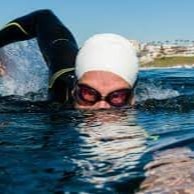
Here is the Swim Metrics Matrix pdf briefing on pace from the Poll 2 weeks ago.
Stop Training Your "Vanity" Pace. Start Training "Under Fire." Most triathletes are "Pool Fast." They can hold a great pace in a calm, 25m lane with a wall push every 15 seconds. But put them in a 70.3 washing machine—with heavy chop, spiked heart rates, and no walls—and that pace evaporates. 📉 Here is the Swim Metrics Matrix PDF Briefing from our poll 2 weeks ago. This is how we bridge the gap between being a "lane swimmer" and an "open water hunter." 🧠 The Shift: Vanity vs. Stealth We’re deleting the metrics that lie to you and focusing on the ones that matter when the "fire" is on: - ❌ DELETE: SWOLF. In open water, a low SWOLF often means you are "stalling" and over-gliding. If you glide in the chop, the water wins. - ❌ DELETE: Wrist HR. It’s too laggy. By the time your watch says you're redlining, you’ve already blown up. Use RPE (1-10) instead ⚡ The "Stealth" Metrics to Track: 1. The "Under Fire" Pace (CSS + 2): This is your pace when you’re fatigued or in heavy chop. We look for a variance of less than 2 seconds between your first and last rep. 2. The Stroke Rate "Floor": When you get tired, your stroke rate drops. If your pace slips, you need to find your "floor" and kick that rate up by 3-5 SPM to maintain momentum 3. Recovery Density: If you can hold pace on 20s rest, but it breaks at 10s, you’ve found your "Technical Ceiling" 🔥 YOUR CHALLENGE THIS WEEK: Check out the "Holding Pace Under Fire" Session on page 3 of the PDF. - Start with a 50m Sprint (110% effort) to simulate the beach start. - Immediately settle into a 400m at Goal Race Pace. - The Metric: If your pace drops more than 5 seconds, your Stroke Rhythm is the weakness, not your fitness. Download the PDF below, take it to the pool, and let's see those numbers. Post your swim set results from this specific set included in your briefing: 5 x 300m (Broken into 100s) 1. 100m: Paddles & Pull (Your benchmark). 2. 100m: FC @ 85% Pace Control (Stay within 3-5s of benchmark). 3. 100m: 2 x 50m (25m Fly / 25m FC Sprint)
1
0
Jan 22 •
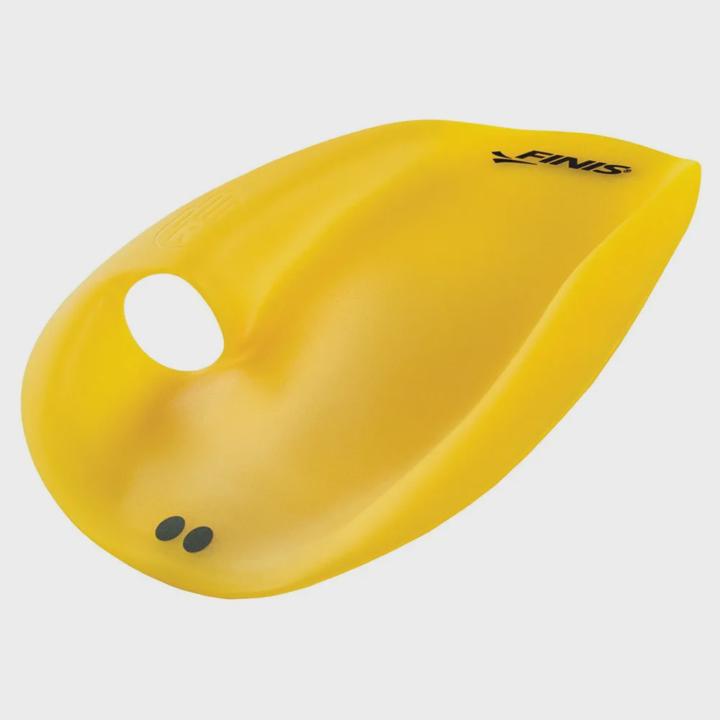
Which paddles are best for correcting different parts of my front crawl stroke?
Understanding which paddles address specific faults in your front crawl can save energy and improve race performance. Our new blog explains the mechanics behind each paddle and offers practical guidance for coaches and serious swimmers. Read more: https://wix.to/lnrp72T hashtag#Swimming hashtag#Coaching hashtag#Performance hashtag#FrontCrawl
Dec '25 •
How to improve your swim pacing and swim efficiency with Swolf sets - Part 2
How did you get on with the Swolf session from the last blog? So in the last blog we wrote about analysing and improving your swim efficiency with a Swolf swim set. This should have you thinking ‘how can I hold my pace and swim faster’. In this blog we'll be delving deeper into how you can swim more efficiently. Maybe you're thinking, well if my swim stroke falls apart a bit when I'm swimming faster, then how do I correct it, and more importantly know what to correct? For example: If your arms are too straight in the catch and pull phase, or you have a crossover of the mid line of your body with your hands, you bend your knees to kick, or over rotate your hips to one side and not the other, or breathe from your chest and not your diaphragm, then there are areas you would want to focus on and improve. Try doing the following set as a variation on the swolf one. Swim golf set 6 x 50 metres Front Crawl with 20 seconds rest Count your strokes and time the 50m. Add the 2 together. Try and hold the cumulative number of strokes and time over the course of the 6 x 50 m FC One of the ways we measure this is by using a Swim golf session regularly as above every 4 weeks, as a benchmark for syour swim efficiency. The adage "If you're not assessing you're guessing" rings true here. This should also be coupled with the following areas too: 1. Stroke rate 2. Stroke count (or distance per stroke) 3. Technique and how much water you're pushing behind yourself 4. Pacing and the law of diminishing returns These can all merge into a grey area all together, and become a bit confusing, so we're keeping them to the above headings and talking about them separately below: 1. Stroke rate We know that for many swimmers, and particularly beginners, when your stroke rate is below 60 per minute, you won't have constant motion through the water. It will be more of a stop / start, since you'll be gliding too far on each stroke, and effectively speeding up and slowing down on each stroke. If you're stroke count is between 40 and 50 you'll be doing this for sure, and probably swimming with straight arms underwater.
0
0
Dec '25 •
SWOLF and Swim metrics - what are they?
SWOLF and Swim metrics - what are they? This is Week 8 of our front crawl technique correction series: Swolf and swim efficiency If you're not measuring or assessing you're guessing! The following swim metrics are a good idea to have on your watch: 1. Interval Swolf 2. Average swolf 3. Pace per 100m 4. Distance 5. Stroke count per length 6. Stroke rate 7. Average pace 8. Lap last pace 9. Elapsed time 10. Last lap distance 11. Interval time 12. Interval strokes / length 13. Average strokes / length Swolf is for reference the number of strokes per length added to the time. The aim is to reduce the overall number over a set interval distance. A goal for stroke count per 50 metres is 45 - 55. A guide for stroke rate per minute is 55-65 (both arms), your watch will probably record just one arm ie the watch side. For more information and to continue reading about this check out our recent blog post article here: https://www.speedyswimming.co.uk/single-post/if-you-re-not-assessing-you-re-guessing-how-to-use-swim-metrics-to-measure-and-monitor Here are a couple of articles from my blog if you want to read more... https://www.speedyswimming.co.uk/single-post/2017/06/26/what-is-swolf-and-how-will-it-make-your-front-crawl-swimming-more-efficient https://www.speedyswimming.co.uk/single-post/2018/11/30/do-you-want-to-increase-your-distance-per-stroke-and-learn-how-to-use-a-high-and-earlier https://www.speedyswimming.co.uk/single-post/2019/11/21/improving-your-distance-per-stroke-part-2
0
0
Nov '25 •
💦 Improve Your Front Crawl Catch! 💦
Struggling to get more pull and efficiency in your freestyle? It’s all in the catch! In this video, we break down: ✅ How to position your hand and forearm ✅ The key feel for a stronger pull ✅ Common mistakes to avoid Perfect for triathletes and swimmers looking to swim smoother, faster, and more efficiently. 📹 Watch now and take your catch to the next level!
1-6 of 6
powered by
Suggested communities
Powered by