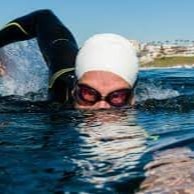
Oct '25 • 🏊♂️ Swim Training Zone
🏊♂️ Master Your Front Crawl: Step-by-Step Technique
Want to swim faster, smoother, and more efficiently?
Let’s break down your stroke from top to bottom:
Gliding & Stretching – Each stroke should include a full second of glide to reduce bubbles and drag.
Hip-Driven Rotation – Power comes from your hips, not your shoulders. Rotate on a long axis from head to feet for maximum efficiency.
Arm & Hand Mechanics – Pull with your forearm, finish with your palm at 90° to your hip, and focus on a clean underwater path.
Kicking Technique – Keep knees straight and legs tight to lift your body higher in the water and stay streamlined.
Breathing Made Easy – Start inhaling when your hand is in line with your shoulder. Breathe big from the diaphragm, in through the mouth & nose, out the same way.
Small tweaks to your technique = faster, stronger, more effortless swimming.
💡 Want personalised feedback? Book a swim video analysis session and see exactly what to fix to unlock your best stroke yet! https://www.speedyswimming.co.uk/5-week-accelerator-programme
Transcript:
We're going to look at gliding, breathing. Going to talk you through kicking and body rotation from your hips.
We want to rotate on a long axis from your hips. So your arm stretch comes through. So as soon as your hand starts to move backwards, you rotate on a long axis from your head to your feet. I'm just going to talk you through your swim stroke.
We're going to go through gliding, reaching, breathing, a little bit of kicking, do different angles, and you know what your arm should be doing underwater. So when you're basically as you're coming through is your hands want to reach and glide for one second every stroke, and that helps eliminate any bubbles in your stroke.
Okay? So you can see, I'm now I'm going to start rotating from my hips. So you should be rotating on a long axis from your head to your feet. You know, drive the movement and the motion from your hips.
So, your head and shoulders really want to try and stay still, but they will turn with the rest of your body as your hips turn, but they're not driving this. Your hips are. Okay. So, we're coming through like this and there. Okay. Now, if we slide onto your arms, we want to come through.
So, you can see I'm now twisting in. And you're looking to generate the movement and the power through the stroke with your forearm as it comes back. And you should finish with your palm at 90° to your hip. Kicking wise, imagine my arms and your legs.
So you basically want to try and think about pretty much locking your knees out. You know, a lot of people kick like this. Okay. So they bend their legs too much, and they're trying to go that way. And the leg kick by bending is pulling them in the opposite direction and down.
So it affects your body position. So when you swim, you don't want your body position to be like this. You want to be much, much higher up in the waters. that reduces drag and resistance and makes you a lot more streamlined. And then the body rotation is literally looking at a 45° angle, which makes you much more streamlined. Lifts you higher up on the water. Aim for a good recovery with hand entry by your forehead if you can reach forward and stretch. And you can see I'm rotating as that arm comes back.
So we're coming through there, and your breathing in point ideally wants to start when your hand and your elbow are in line with your shoulder. Okay. So what this ensures is that you have the maximum time to actually breathe in. Yeah. Okay.
So when you start breathing in here, you've got all of this time you should stay on your side breathing in, breathing and breathing until your hand goes back in here. All right.
What a lot of people aren't aware of is that they don't start breathing in until their hands are here and then very quickly their face goes back under the water. Yeah. So they've got a really, really small amount of time, which window to breathe in. So even if they can breathe out a lot under water, you know, you you won't you're still going to build up CO2 in your lungs. Yeah.
Which over time slows you down, makes things a lot harder, affects, you know, your pace, builds lactic acid, you know. Okay. So, when you're actually breathing, I'm going to show you how to breathe. So, like my inhale wants to start here.
It's quite big from your diaphragm, using your mouth and your nose. Breathing in through your mouth and your nose. And breathe out through your mouth and your nose. Okay. Right. Thumb all the way down to the thigh. Hand entry here. reach and stretch, and glide. So coming through there. So, this hand stays in front and glides.
1
1 comment
🏊♂️ Master Your Front Crawl: Step-by-Step Technique
powered by
skool.com/stealth-triathlon-squad-7035
Coaching for 70.3 and Ironman triathletes who want smarter training, consistent long-course prep, and confident race-day execution.
Suggested communities
Powered by