
Pinned

⭐
21h •
If You’re Serious About Leveling Up, Read This...
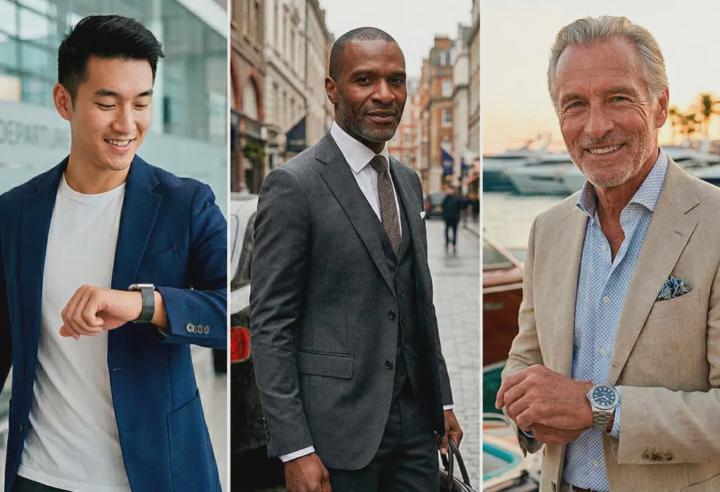
Most men want to level up. Few actually commit. If you’re here, you already know style isn’t about clothing. It's about: • Respect• Confidence• Income• Presence• Authority Premium is where the real transformation happens. Click here to join us https://www.skool.com/rmrs/plans Here’s what changes when you upgrade: ✔ You get direct access to me in LIVE Inner Circle Q&As ✔ You follow a step-by-step roadmap (The Style System) — no guessing ✔ You join monthly challenges that push you into action ✔ You get white-glove DM support so you buy the RIGHT pieces ✔ You save real money with insider discounts ✔ You get access to live events and in-person proximity If you’re serious about becoming the best-dressed man in the room — click to join us here https://www.skool.com/rmrs/plans Your image affects your income. Your presence affects your power. The question is simple: Are you watching… or are you leveling up?
Pinned
⭐
8d •
Mar 3rd - LIVE Call w/ Gentleman’s Gazette Founder
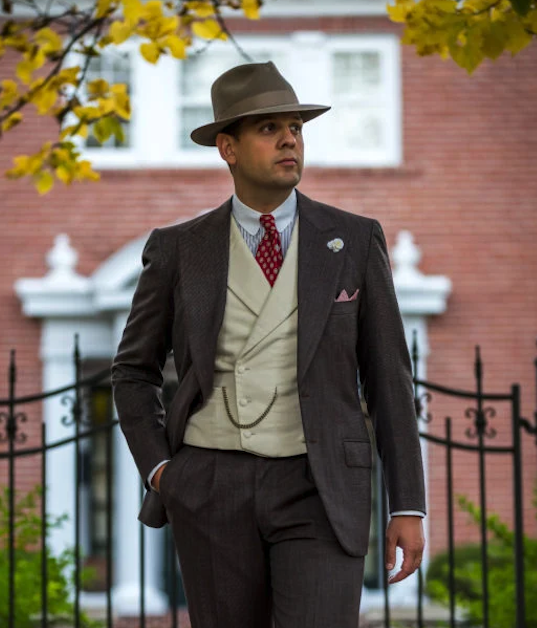
On Tuesday, March 3rd from 10AM to 11AM, we're bringing in the man himself — Sven Raphael Schneider, founder of Gentleman's Gazette - for a private, no-BS live Q&A. No fashion fluff. No influencer nonsense. Just one of the most respected voices in classic men's style, answering your questions directly. Here's what we're getting into: - The real rules of timeless style - how to look sharp in actual life, not just a photoshoot. - The small details (fit, fabric, proportion, restraint) that instantly signal taste and authority. - The classic style traps that make good guys look like they're wearing a costume. - How to build a wardrobe where everything actually works together. - When to honor tradition — and when to break it with intention. - And Sven's philosophy on why how you dress is a form of respect — for yourself and everyone in the room. If you want that quiet, effortless "this guy clearly knows what he's doing" energy - this is the call! ✅ Premium & VIP members: You're already in. See you there! 👀 Free members: This is your sign. Click here to upgrade your membership before March 3rd and don't miss it!

🔥
2h •
OOTD-CW - 3 March 2026
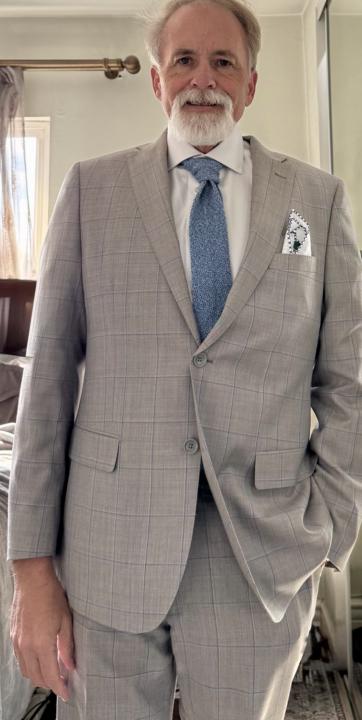
Critiques welcome! It's been three very hectic days lately, and thus no ability to post the OOTDs. Still busy, but got most of this done last night. I am wearing suspenders for the first time since high school prom... which was a bit ago! I am loving them. Since they are Kirby Allison made in England, would I therefore call then braces or do I need to be British to use that lexicon? Today's outfit • Suit — SJ‑013, SL‑022 (Mantoni): A light‑gray Mantoni windowpane suit in breathable lightweight wool, with a crisp navy–light‑blue pane that plays exceptionally well on camera. High‑rise trousers with brace buttons create a clean, elongated line when paired with suspenders. • Shirt — DS‑040 (Charles Tyrwhitt): A non‑iron white twill dress shirt with French cuffs and a classic point collar—sleek, structured, and perfect for business‑formal VC presence. The smooth twill and slightly fitted cut provide a modern, polished foundation beneath the suit. • Undershirt — US‑002 (Ralph Lauren): A soft white cotton undershirt that remains invisible under DS‑040’s opaque twill. Comfortable for all‑day wear and ideal for maintaining a sharp neckline on video. • Tie — NT‑023 (Fort Belvedere): A light‑blue and navy Cri de la Soie mottled silk knit tie from Fort Belvedere, woven in the distinctive crunchy Swiss silk that gives the blade its spring, texture, and cool visual depth. The square‑end silhouette and 2.5" width create a modern, continental profile that works beautifully with business‑casual tailoring and lightly patterned shirts. • Suspenders — SB‑001 (Kirby Allison): Navy silk braces with subtle white dots and black leather loops, creating a harmonious dialogue with the tie’s pattern. They deliver a refined, vertical silhouette and eliminate the break created by a belt. • Pocket Square — PS‑009 (Fort Belvedere): White linen with a blue X‑stitch border, folded cleanly in a crisp TV fold. The restrained detailing keeps the focus on your face during VC meetings while adding a subtle note of elegance.

🔥
5h •
Tuesday and seeing customers
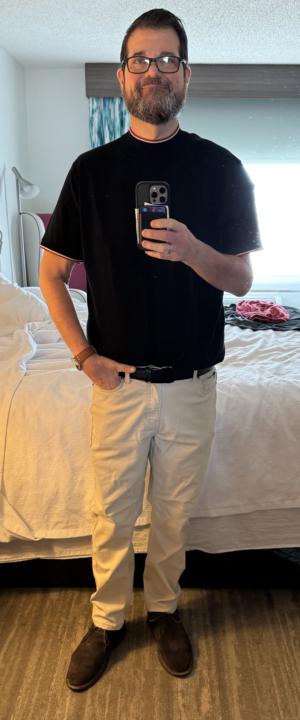
Well I’m back in Florida, @Justin Tillery we need to talk about next week, and out seeing customers. It’s supposed to hit 77 in Panama City today, so short sleeves are in the mix. The shirt, Murano The pants, DKNY The boots, Thursday Chukka The scent, Xerjoff Erba Pura The watch, Stührling The hair, by me Make it a good day.
🔥
6h •
Your Life Is What You Tolerate
Tolerance isn't always noble. Give it to the wrong people... ...and they'll turn it into your grave. That includes yourself. Quit tolerating bullshit. In your relationships... In your standards... In your health... In your finances... In anything. Tolerating anything less than excellence is the same thing as saying "yes" to mediocrity. Never forget that. ~ Andy Frisella
1-30 of 28,014

skool.com/rmrs
Leverage style to earn more money and build unshakeable confidence. This is a community for professional men serious about self-improvement.
Leaderboard (30-day)
1

🔥
+5706
2

🔥
+4322
3
🔥
+3979
4

🔥
+3780
5
🔥
+3492
Powered by