
Pinned

Jan 18 •
🗽 START HERE: How to join our Group Calls!
We built this community for people who want to connect, debate, and strategize, not just scroll. The real action happens in our group calls, where we argue ideas in good faith and tackle the week's biggest global events. Here is how you can participate: 🔥 1. Open Calls These are our public town halls. Open to everyone. Whether you want to take the stage to challenge a point or just listen in, this is the "public square." 💎2. Premium Calls For members who want to go deeper. These calls are exclusive to our supporters and offer a space for more focused discussion and priority access. 👑 3. VIP Calls Reserved for our top-tier members. These are intimate, mastermind-style sessions where you get direct Q&A access with special guests and deep dives into high-level strategy. - 📅 Check the Schedule & Join Here: https://www.skool.com/libertypolitics/calendar - 💎👑 Become a Premium or VIP Member: https://www.skool.com/libertypolitics/plans Heads up: We believe these conversations are worth sharing! Our group calls are recorded and may be posted to our social media channels. By joining the stage, you’re helping us bring these important discussions to a larger audience. By participating in group calls and voice discussions, you consent to being recorded. You can read our community rules here: https://www.skool.com/libertypolitics/-/rules Moderation decisions and bans by mods are made with Armin's approval. 👋 New to the group? Say hello! We want to get to know you. Drop a comment below to introduce yourself. Tell us where you're from and what you like to do for fun (outside arguing politics!). Welcome to the community!

1h •
New but faithful supporter from behind the scenes.
Hello everyone. I am a new member here. Ive been watching Iran Revolution Live on youtube almost everyday since january. I live in America and have gotten involved in the pro Iran rallies in the city of Chicago which has a beautiful Iranian community. Ive been sharing the livestream and trying my best to spread awareness of the Iranian revolution. Javid Shah!🦁☀️

8h •
If Israel was like Morocco
There would be lot less political theatrics I reckon. Important context: 'Palestine' as a socio-political entity was somewhat acknowledged in the mid-60's (primarily as PLO), and about a decade later the Saharawis of Western Sahara presented their flag of liberation for their armed struggle against Morocco (and lesser extent Mauritania),, ,, their flag was explicitly copied from the 'Palestinian' flag, distinguishable only by a Berber symbol superimposed at the flag's center. What we have here is a my preferred (unsolicited) 'what should Israel have done?". I often take the approach of asserting that Israel is for most part at fault, for almost everything regarding 'Palestine', because they didn't, and still don't do like the Moroccans. Then I can proceed speaking earnestly without entertaining any form of political theatrics, praising the actions of Morocco, because I genuinely believe they deserve the praise, and Israel deserves the subsequent ridicule. My providence here, is sharing the joy of sincerely bashing Israel alongside Israel-haters, lifting the weight off my shoulders as I speak my mind,,, ,,, with the concomitant bonus of effortlessly mind-fucking those whining non-Muslims, who be vicariously projecting their own emotional based idealism, like the commie-larping jihadi-simping bitches that they are. ,,, yes, my name is my game, if this is of use to you, you are most welcome 😈 https://www.youtube.com/watch?v=7uWC440Zjg0

2h •
CHINA’S SEVEN NATION FAILURE
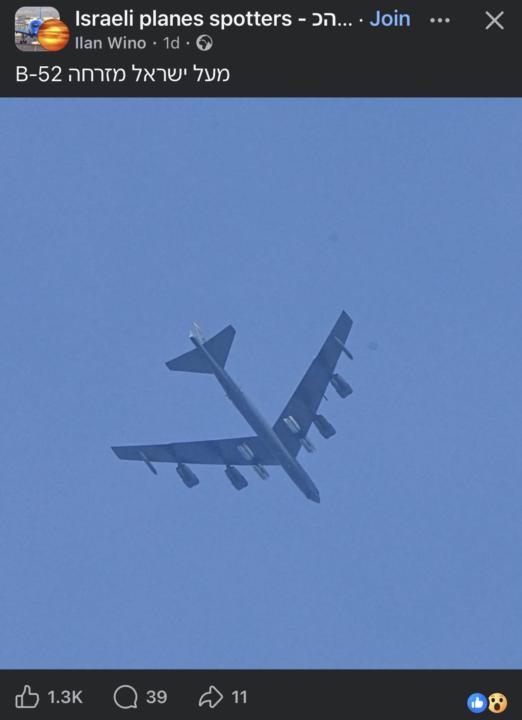
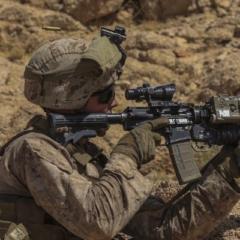
Seven nations (Syria, Iran, Venezuela, Ukraine, Pakistan, Myanmar, and Thailand) have reportedly experienced significant underperformance or outright failures with Chinese-exported weapons systems across air, missile, drone, radar, and ground domains. These cases span repeated Israeli strikes, U.S. precision operations, India-Pakistan border clashes, Myanmar's civil war, and Thailand-Cambodia frontier engagements, revealing recurring patterns of technical unreliability, electronic-warfare vulnerability, structural and mechanical breakdowns, and poor sustainment under real combat or high-stress conditions despite aggressive marketing by Chinese state firms as advanced, combat-proven solutions. Syria JY-27 radar. JYL-1 radar. Type 120 radar. Older Chinese Type 59/69 tanks (historical inventory). Details Imagery and reports identified these CETC-family Chinese radars (especially JY-27 as a long-range VHF "anti-stealth" set) at Syrian EW/air-defense sites. Syria relied on them amid Russian systems proving inadequate against repeated Israeli strikes; a JY-27 near Damascus was hit in a 2019 strike, with broader evidence of vulnerabilities to jamming, suppression, and precision attacks. Older Type 59/69 tanks (Chinese exports from the 1970s–80s) suffered chronic mechanical breakdowns, poor spare-parts availability, engine failures, and inadequate armor/fire-control in combat conditions. Admissions of Guilt CETC (38th Research Institute for JY-27A, ECRIEE-linked for JYL-1) marketed these at Zhuhai expos as long-range, mobile, jam-resistant, and effective against low-observable targets. State promotion emphasized "stealth-killer" capabilities. Early NORINCO-era exports of Type 59/69 were promoted as modernized Soviet-style tanks with reliable performance. Iran HY-2 Silkworm anti-ship missiles. C-801 anti-ship missiles. C-802 anti-ship missiles. M-7 / CSS-8 ballistic missiles. Chinese-sourced parts feeding Iranian military drone production. HQ-9B SAM systems (reported in later contexts).
2
0
1-30 of 2,839
skool.com/libertypolitics
Talk politics with others who care, in live calls and community posts. Share your views, ask questions, or just listen in.
Leaderboard (30-day)
1

+424
2

+296
3

+206
4
+172
5

+172
Powered by