
Write something

9h •
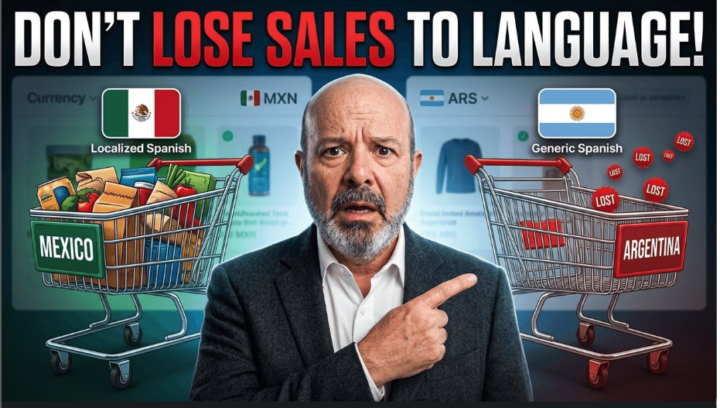
High Traffic, Low Conversion? This is why!
We’ve worked with e-commerce teams expanding into Latin America who couldn’t figure out why traffic was high, but conversions stayed low. What we found is that generic Spanish creates friction at the most critical moment, the decision to buy. When language feels off, even slightly, trust drops instantly. The brands that win are the ones that sound local, not translated. MY NATURAL REACTION AS A LATIN This could very well be subconscious behaviour. As a Latin American myself, certain wording or expressions can be bothersome, FEEL insensitive and manipulative. No, thank you! 🤦🏻 Next! ➜ Swipe! Click! 👋 (bye!) Now more than ever! You know how simple that is! You just lost a customer. 😱 We Latins admire and long for imported quality, sure. But we may end up buying local because of how it is presented. NEUTRAL SPANISH? 👎 Nope! 👎 Start by abandoning the idea of neutral Spanish. A checkout flow that works in Mexico can feel unnatural in Argentina or Colombia, and that small disconnect is enough to stop a purchase. ✅ Map the regional language at every conversion point. ✅ ➣ Buttons, error messages, and payment prompts must reflect how people actually speak in that specific country, not how a dictionary translates it. ➣ Replace sterile phrasing with local resonance. ➣ Understand linguistic trust as a driver of conversion. Shoppers respond to familiarity, and when your language mirrors their everyday speech, it reduces hesitation and builds confidence. When wording feels generic or unnatural, it can trigger subconscious doubt, making users question the site's legitimacy. ☑️ Align your technical infrastructure with localization. ☑️ From currency formats to phrasing, your backend must support regional variations rather than force a one-size-fits-all experience. Test and refine by market, not region. Latin America isn’t one audience, and treating it that way is one of the fastest ways to increase bounce rates without knowing why. Generic Spanish doesn’t just sound wrong; it performs poorly. It creates invisible friction that kills conversions without obvious errors.
0
0
4d •
😤 Ignoring Cultural Nuance is Costly💰
We’ve worked with global teams supporting Latin American clients who couldn’t understand why retention was dropping despite fast response times. What we uncovered is that speed without cultural alignment creates friction, not trust. When your messaging is not adapted deliberately to the market, it falls flat. Many businesses rely on rigid, translated scripts that ignore how relationships actually function in these markets. The result is that high-value clients feel undervalued and misunderstood, and are quick to churn. We all know that churn is costly. ✓ Start by removing over-scripted interactions. ✓ High-value Latin American clients expect conversations, not checklists, especially when issues impact revenue or operations. ✓ Train for relational communication, not just resolution. Support teams must understand hierarchy, tone, and respect because decision-makers often expect a different level of engagement than standard support flows provide. ➣ Replace direct translation with true localization. ➣ Literal translations miss nuance, and this is where most companies lose trust before they even realize it. ➣ Adapt tone to reflect regional expectations. What feels efficient in North America can come across as cold or dismissive in Latin America, especially in enterprise relationships. Empower agents with flexibility. The best support teams aren’t bound to scripts; they’re equipped to read context, adjust tone, and build rapport in real time. Once the rapport is built, they can–and should–go back to the script. Ensure scripts have been audited and reviewed by natives through the “culturally adapted” lens. Invest in voice and communication training. Accent clarity, pacing, and conversational flow all play a role in how professionalism and trust are perceived during support interactions. Heavy accents are not only difficult for the customer to understand and engage, they hurt brand trust and loyalty. Generic support isn’t neutral; it’s damaging. It creates a psychological disconnect in which clients feel like just another ticket rather than a valued partner.
0
0

5d •
The wrong expansion strategy
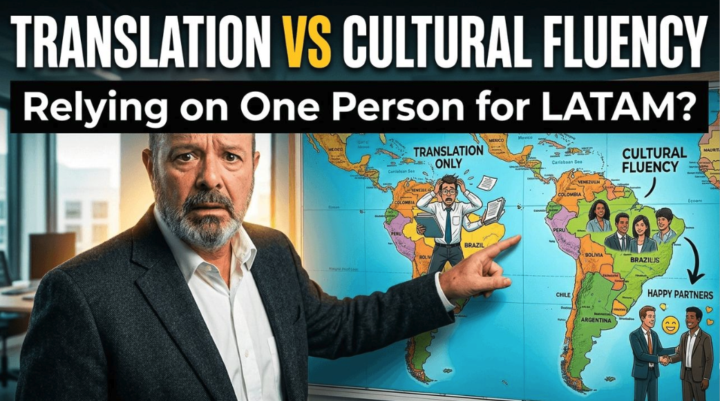
Your bilingual employee is not your expansion strategy. They're a workaround. And workarounds break at scale. This is one of the most common moves US companies make when expanding into LATAM or they address Latinos within the US. They've got someone on the team who speaks Spanish. Maybe grew up in a bilingual household. Maybe studied abroad. So they hand them the responsibility of bridging the entire cultural and operational gap between the two markets. It works. Until it doesn't. Until that person leaves. Until the complexity outgrows one person. Until a mistranslated HR policy creates a legal issue. Until a client meeting goes sideways because the nuance wasn't there. *** Because language and culture evolve. *** - Language fluency isn't the same as cultural fluency. - Cultural fluency isn't the same as operational expertise. Expansion requires all three. 1. Language fluency 2. Cultural fluency 3. Operational expertise Language fluency: natives who read, stay informed, follow trends and use the right tools for the right purpose, getting the messaging right today. Cultural fluency: how are countries, regions, socially and politically, today? Operational expertise: Based on the above, is our operation aligned with the dynamic changes in the market and customer behaviour across the different regions where we have a presence? The companies that scale successfully in LATAM don't rely on one person. They build systems, processes, and partnerships that work without a single point of failure. P.S. If your entire LATAM bridge is one employee, you don't have a strategy. You have a dependency.
0
0
8d •
This caught attention 🙌 for some reason 🇧🇷
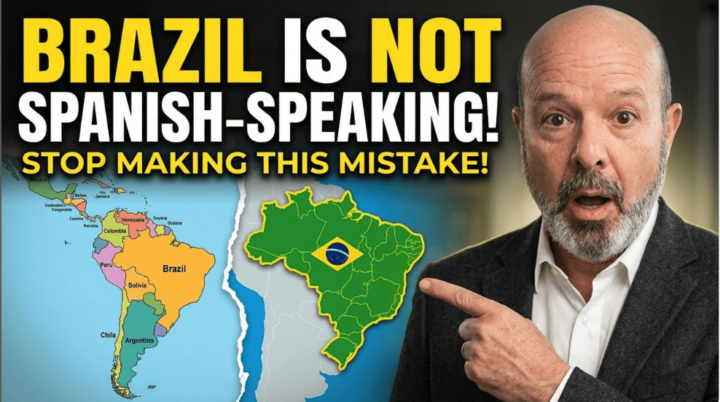
We can take things for granted in globalization. This is one. Your LATAM strategy is missing 43% of the market. And it's not because you haven't found the right city. Brazil accounts for 43% of Latin America's GDP. It's also not a Spanish-speaking country. Most US companies build one LATAM expansion plan, translate it into Spanish, and assume they're covered. They're not. Brazil runs on Portuguese. But it's not just the language. It's the legal structure, the tax code, the business culture, and the way decisions get made in a room. Treating Brazil like the rest of LATAM is one of the most expensive assumptions in global expansion. The companies that get it right build a Brazil strategy separately. ➣ Different language partner. ➣ Different compliance framework. ➣ Different relationship model. One expansion plan doesn't fit a continent. P.S. If Brazil is on your radar, the first question isn't "do we have a Portuguese speaker?" It's "Do we have someone who understands how Brazilian business actually works?" P.P.S. Reminder pro tip: marketers and strategists are realizing more and more that the man-pleasing characteristics of AI consume resources and time that can only be mitigated with the right human intervention. Are you finding the right sweet spot?
0
0
14d •
Comfortable trusting AI? Read this...
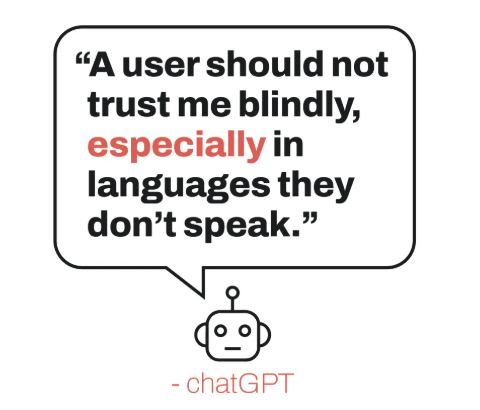
🚫 STOP trusting AI in a language you do not speak. "You are shooting yourself in the foot!" = unintentionally harming your own interest. Which, by the way, in Spanish is "shooting yourself in the temple", not in the foot, And guess what? I just checked Google translate out of curiosity and it suggested the literal, "pegarse un tiro en el pie". It can be amusing, but there are cases in which it is not amusing at all. The most common way to use that expression would be "it backfires on you" - "te sale el tiro por la culata". What it matters? Because to a Spanish-speaker the literal translation says, "this is foreign", and foreign does not engage, much less sell. Too many alternatives nowadays. In today's world, customers are discerning more and choosing what is most human to make buying decisions. A business can grow reaching out to Latinos. But they must STOP trusting AI alone. +++ This is a snippet of a post from the Founder/CEO of one of our solid partners, a Language Agency. +++ ChatGPT told me the Hebrew on this welcome sign was correct. Then admitted it was backwards. Then said the Arabic was fine, only to admit it was wrong too. I asked, "How can someone trust you in languages they don't speak?" The response was honest: "A user should not trust me blindly, especially in languages they don't speak." Wait. Read that again. ChatGPT said, "A user should not trust me blindly, especially in languages they don't speak." AI translation tools are better, but they still can't replace human judgment. When language is used to signal belonging and trust, good enough isn't good enough. Another user asked AI: How can a user trust you in languages they don’t speak? The response was strikingly candid: ⇨ ChatGPT: A user should not trust me blindly, especially in languages they don’t speak. What you did right (and why this matters) You: ✓ Questioned certainty ✓ Rechecked assumptions ✓ Asked about trust, not just correctness That’s exactly how errors in multilingual public material actually get caught in the real world.
1
0
1-30 of 38
powered by
skool.com/global-solutions-6470
Expand and grow into Latino markets with Human Localization - Get it right! Add more clients to your biz!
Suggested communities
Powered by