Activity
Mon
Wed
Fri
Sun
May
Jun
Jul
Aug
Sep
Oct
Nov
Dec
Jan
Feb
Mar
Apr
What is this?
Less
More
Owned by Rody
Expand and grow into Latino markets with Human Localization - Get it right! Add more clients to your biz!
Memberships
AI AUTOMATION INSIDERS
3.8k members • Free
LinkedIn Skool 📈
745 members • Free
Lead Gen Insiders 🧲
1.8k members • $1,497
Lead Gen Secrets 🤫
23k members • Free
Skoolers
194.6k members • Free
32 contributions to Reach Latinos confidently

11h •
The wrong expansion strategy
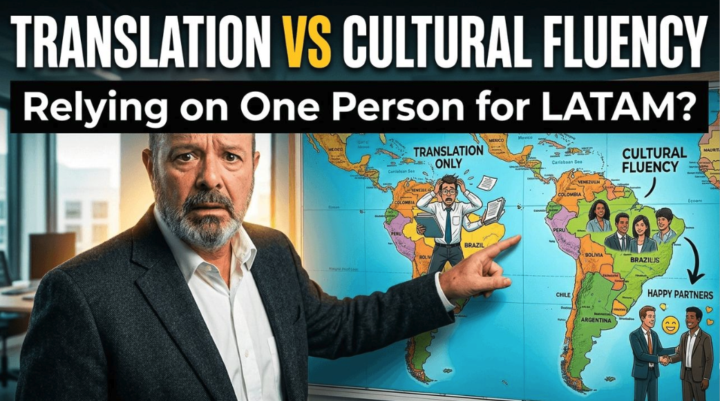
Your bilingual employee is not your expansion strategy. They're a workaround. And workarounds break at scale. This is one of the most common moves US companies make when expanding into LATAM or they address Latinos within the US. They've got someone on the team who speaks Spanish. Maybe grew up in a bilingual household. Maybe studied abroad. So they hand them the responsibility of bridging the entire cultural and operational gap between the two markets. It works. Until it doesn't. Until that person leaves. Until the complexity outgrows one person. Until a mistranslated HR policy creates a legal issue. Until a client meeting goes sideways because the nuance wasn't there. *** Because language and culture evolve. *** - Language fluency isn't the same as cultural fluency. - Cultural fluency isn't the same as operational expertise. Expansion requires all three. 1. Language fluency 2. Cultural fluency 3. Operational expertise Language fluency: natives who read, stay informed, follow trends and use the right tools for the right purpose, getting the messaging right today. Cultural fluency: how are countries, regions, socially and politically, today? Operational expertise: Based on the above, is our operation aligned with the dynamic changes in the market and customer behaviour across the different regions where we have a presence? The companies that scale successfully in LATAM don't rely on one person. They build systems, processes, and partnerships that work without a single point of failure. P.S. If your entire LATAM bridge is one employee, you don't have a strategy. You have a dependency.
0
0
3d •
This caught attention 🙌 for some reason 🇧🇷
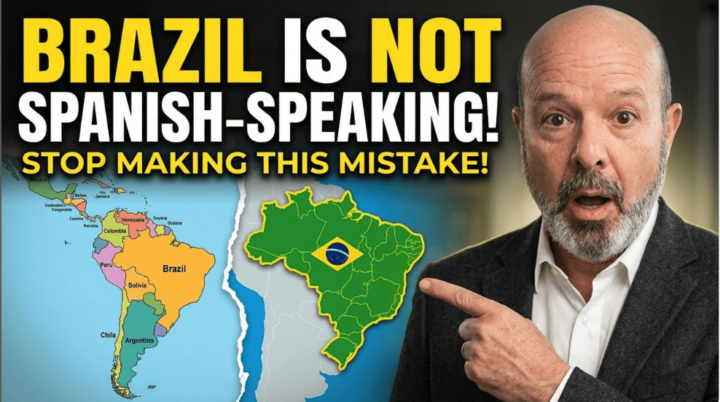
We can take things for granted in globalization. This is one. Your LATAM strategy is missing 43% of the market. And it's not because you haven't found the right city. Brazil accounts for 43% of Latin America's GDP. It's also not a Spanish-speaking country. Most US companies build one LATAM expansion plan, translate it into Spanish, and assume they're covered. They're not. Brazil runs on Portuguese. But it's not just the language. It's the legal structure, the tax code, the business culture, and the way decisions get made in a room. Treating Brazil like the rest of LATAM is one of the most expensive assumptions in global expansion. The companies that get it right build a Brazil strategy separately. ➣ Different language partner. ➣ Different compliance framework. ➣ Different relationship model. One expansion plan doesn't fit a continent. P.S. If Brazil is on your radar, the first question isn't "do we have a Portuguese speaker?" It's "Do we have someone who understands how Brazilian business actually works?" P.P.S. Reminder pro tip: marketers and strategists are realizing more and more that the man-pleasing characteristics of AI consume resources and time that can only be mitigated with the right human intervention. Are you finding the right sweet spot?
0
0
9d •
Comfortable trusting AI? Read this...
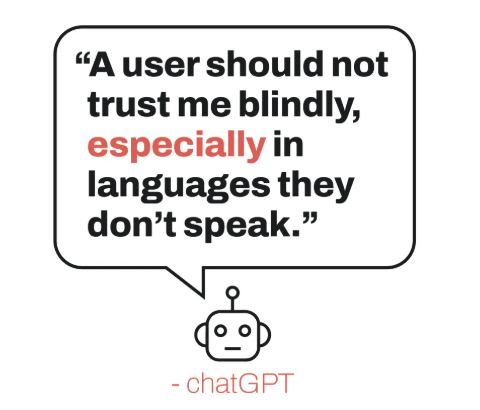
🚫 STOP trusting AI in a language you do not speak. "You are shooting yourself in the foot!" = unintentionally harming your own interest. Which, by the way, in Spanish is "shooting yourself in the temple", not in the foot, And guess what? I just checked Google translate out of curiosity and it suggested the literal, "pegarse un tiro en el pie". It can be amusing, but there are cases in which it is not amusing at all. The most common way to use that expression would be "it backfires on you" - "te sale el tiro por la culata". What it matters? Because to a Spanish-speaker the literal translation says, "this is foreign", and foreign does not engage, much less sell. Too many alternatives nowadays. In today's world, customers are discerning more and choosing what is most human to make buying decisions. A business can grow reaching out to Latinos. But they must STOP trusting AI alone. +++ This is a snippet of a post from the Founder/CEO of one of our solid partners, a Language Agency. +++ ChatGPT told me the Hebrew on this welcome sign was correct. Then admitted it was backwards. Then said the Arabic was fine, only to admit it was wrong too. I asked, "How can someone trust you in languages they don't speak?" The response was honest: "A user should not trust me blindly, especially in languages they don't speak." Wait. Read that again. ChatGPT said, "A user should not trust me blindly, especially in languages they don't speak." AI translation tools are better, but they still can't replace human judgment. When language is used to signal belonging and trust, good enough isn't good enough. Another user asked AI: How can a user trust you in languages they don’t speak? The response was strikingly candid: ⇨ ChatGPT: A user should not trust me blindly, especially in languages they don’t speak. What you did right (and why this matters) You: ✓ Questioned certainty ✓ Rechecked assumptions ✓ Asked about trust, not just correctness That’s exactly how errors in multilingual public material actually get caught in the real world.
1
0
11d •
Emotional alignment is the challenge
Are you struggling to connect with audiences in Latin America? This video reveals why language translation isn't enough and highlights the importance of emotional alignment in marketing strategies. We cover: - The concept of emotional vs logical messaging - Key cultural differences that influence consumer decisions - Effective examples from successful campaigns like Yamaha Pro Audio Transform your approach to marketing in Latin American markets by understanding how to align your messaging with local emotions. 🌴 The Latino market is an opportunity. 💰 $4 trillion dollars of purchasing power in the US alone. 🙋🏻♂️ 20% of the US population. US population = 68+ million (as of mid 2025) World population = 636 million (Spanish speakers) - 213M (Portuguese Brasil) Have you tried reaching out to Latinos in the US or entering Latin American markets? Curious to determine if this would be the right tool for your growth? Drop "CURIOUS" in the comments and I will send you a helpful Guide on how to protect your brand.
14d •
No distinction = Less results
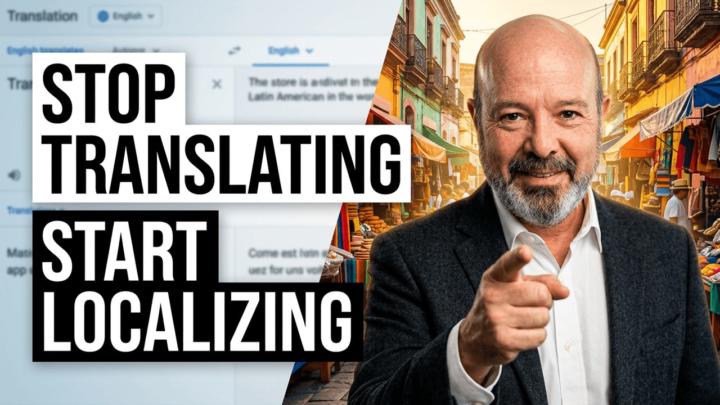
Most companies entering Latin America believe they’ve localized… when they’ve only translated. And that’s where performance drops. Translation ensures your message is understood. But understanding does not drive revenue. Connection does. Localization is what creates that connection. We’ve worked with global companies that had strong products, strong operations, and solid market entry plans, but their messaging did not convert. Why? Because it did not resonate locally. Resonate = to produce a strong, clear sound that lasts, or to have a powerful effect, feeling, or personal connection with someone. Strong, clear words do this, not when you translate them, when you adapt them to the audience. You probably work hard to get them right, and the run through an AI tool and expect the same powerful result? You answer... OPPORTUNITY FOR GROWTH The opportunity in Latin America is massive, with thousands of international firms already operating across the region and millions of consumers ready to engage. But success depends on relevance. The need also varies according to the Industry. Streaming platforms, for example, understand this perfectly. They do not recreate content for each country. They localize how it is presented. Trailers, headlines, and emotional hooks are all adapted to match local psychology. Because what drives a click in Mexico will not necessarily work in Argentina or Colombia. Hospitality, Food and Beverages, Fashion... another story. These require more attention to detail depending on the audiences they want to attract. At LGS, we help companies move beyond literal translation and into true localization by aligning messaging, tone, and customer experience with each market. Because the real ROI is not in being understood. It is in being desired.
0
0
1-10 of 32

@rody-correa-avila-6235
Advice to engage Latino audiences and expand your business.
Active 10h ago
Joined Aug 21, 2025