

🚀
7h •
Stop trying to scale multifamily alone
Here's what quietly kills most multifamily investors. They try to build the whole thing solo. Analyzing deals alone. Making offers alone. Second-guessing every move alone. The investors who scale fastest aren't smarter than the ones who don't. They're just in better rooms. ✅ Rooms where deals get discussed out loud. ✅ Where operators share what actually worked and what didn't. ✅ Where partnerships form because the right people are in the same conversation. That's what the Multifamily Investors Club is. Not a webinar you watch and forget. A live virtual room for serious multifamily investors — real conversations on deal structure, capital, partnerships, portfolio growth. 🏢 Thursday July 23rd, 7pm Eastern If you're ready to stop scaling alone, this is the room. Grab your ticket here
5d •
Anderson Advisors Tax and Asset Protection Webinar
Hello Everyone! I wanted to post this here so that you all can take advantage of an upcoming webinar. Anderson Advisors is having a Tax and Asset Protection Webinar for Real Estate Investors on this Saturday the 11th and next week on the 18th. The information is INCREDIBLE! I went to this webinar 3 years ago, and it blew me away! In a sentence I never thought I would say, I spent most of a Saturday in a seminar on tax and asset protection, and I enjoyed it - I was definitely NOT bored! LOL! I have read Clint and Toby's books and they are the real deal - they know their stuff! Some of you may not be ready yet, as they do talk about proper LLC structuring. But they only do this once a year as far as I can tell so you will need to catch this now. Full disclosure - I am not working with them, nor am I getting anything to promote this. And I cleared this with Paul before I posted this. I just want to make you aware of this so that if you are interested you can check it out. https://andersonadvisors.com/tax-and-asset-protection-webinar-lvla/?utm_campaign=Tax%20and%20Asset%20Protection%20Workshop&utm_source=YouTube&utm_medium=cpc&utm_content=TAP-YT-LandTrustWithLLC-Top3Reasons-TOBY-0110-HZ-TAP750LVL&utm_term=TAP_DMT_VAC_RM_YTSB_ClintCoonsSubsL180D&utm_id=22834320187&mls=Online%20Marketing&ocs=701VI00000GYEhAYAX&gad_source=2&gad_campaignid=22834320187&gclid=CjwKCAjwu53SBhAhEiwAJzSLNsccdeTKH3g4z_fAA5gCnJwU-mgtgSZOK0Lz1O-MTRNW_TxWNqE4mRoC61oQAvD_BwE
🚀
4d •
LIVE Virtual Workshop | TONIGHT | 7 pm EST
Picture the version of your life where this is true. You own a commercial asset. Cash flow lands in your account every month. The whole thing takes a few hours of oversight — not your evenings, not your weekends, not your peace of mind. That's not luck. That's structure. And it's exactly what I'm walking through live Monday inside the Evergreen Income Method. This isn't a deal-chasing webinar. It's not a landlord pep talk. It's the blueprint for building income that keeps paying long after the work is done. 🏢 The Evergreen Income Method — Live Virtual Workshop 📅 Monday, July 13th, at 7pm Eastern If you've been grinding through residential rentals at $200 a month per door — or sitting on cash you don't know how to deploy — this is the room you want to be in. Grab your spot HERE
🚀
11d •
You've been sold the wrong story about commercial real estate
"You don't need any money to get started." "Just find a good enough deal and the capital shows up." "Anyone can close commercial deals overnight." That's not how serious commercial investing works. Commercial real estate takes capital. That part isn't optional. What is optional — and what nobody teaches you — is whose capital it has to be. The real skill in this business isn't finding cash you don't have. It's understanding how capital actually moves. 👉 How the stack gets built. 👉 How partnerships get structured. 👉 How investors get paid in a way that makes them want to fund the next one. That's the work. And most people never learn it because they're too busy chasing the "no money down" fantasy. I'm running a live virtual workshop called The Capital Stack Formula on Monday, July 6th, at 7 pm EST. We're going to break down exactly how the capital comes together on real commercial deals. The pieces. The players. The order it goes in. If you're serious about getting into bigger deals — and tired of being sold the easy-button version — this is the room you want to be in. Grab your seat here

1-30 of 280
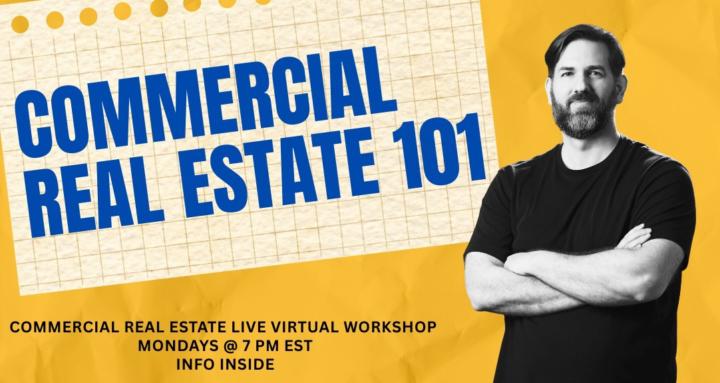
skool.com/commercial-real-estate-101
Skip the houses. 🏠
Buy apartments, RV parks & self storage.
Commercial real estate made simple.
Leaderboard (30-day)
1

+44
2

+34
3

+33
4

+26
5

+25
Powered by