
Pinned

👑
⭐
4d •
Welcome to Clief Notes. Here's where to start.
1. Go check out 📚Navigating The Course to see how to get around and what's here. 2. Start with The Foundation. Concepts, folder architecture, prompting framework. Everything else builds on this. 3. Check in at the bottom of each lesson. Polls, discussion posts, other members working through the same stuff. Use them. 4. When you're ready to build real things join in on our Biweekly competitions and win some real cash. ⭐ Competitions Mega Thread 5. If you are wanting to dive into the masterminds, grab all the past templates, artifacts and resources. Upgrade and head into the The Vault for Premium and The Drawing Room (VIP) for VIP 6. Post your work. Ask questions. Help others when you can. What are you here to build?
Pinned
👑
⭐
1d •
📣 New: one onboarding session, every week
I want to meet new members earlier, not months after you join. Right now a lot of people join the paid tiers and figure things out on their own. That's slower for you and it means I don't get to know you until you've already won a competition or posted in the Vault a few times. Further our Afternoon and High Tea calls 🫖 High Tea 9: The Graph the first bit of each call has been ALOT of intros and I think that eats away valuable time (not that getting to know you is not valuable) that members who have been around for a while look forward to during our live sessions. So starting this week, every new VIP and Premium member gets a standing invite to a short session with me and the mods. Calendar · Clief Notes 🕑 Wednesdays, 2pm 🎯 Open to new VIP and Premium members We'll cover: 🔑 Getting into Discord 🧭 Finding your way around 🤝 Getting the most out of other members 🏆 How to win the competitions ❓ Quick questions at the end (and feedback on what you really want out of value and such, helps me decicde if I need to add or change anything in the community) 30 minutes. One goal: you walk out knowing the community and I know your name.

6d •
Video Generation Workflow 🎬
👋For the last 2 months, I've been heads-down exploring ai image & video generation as my new personal project. I was shock by the capabilities of current ai image/video space. But every ai creators face a common pain point.. this sh*t is hard. Haha. Thats why all youre seeing are ai slops. Then about 1 month ago, I sent the kids to my relative for few weeks and lock myself in a room and went nerd out to build a tool that lets me take an idea and turn it into a profession cinematic video. I recorded it working on a real project and wanted to share what it actually does — and why I'm pouring everything into it. The idea in a nutshell: Instead of guessing what makes a video great, my tool studies one: → I give it an original video as a study case (here's the one I used: [youtube]) → It analyzes that video and pulls out its DNA — the small details in every component that make it work: the shots, the pacing, the sound, the transitions, the feel. → Then it reverse-engineers that DNA into something completely new and my own — and carries it all the way through, even into the editing, mostly automatically. The Unfolded short film bellow received the same DNA treatment, as you will see, the context is similar ..however, it produced a very unique animation perspective using origami. Every user who analyzes a film makes the library richer for the next one. That's a network effect — the rare thing that actually compounds. GitHub for film DNA: fork a look, make it yours, push it back. I have tried to use it to branch off ideas from Game of Thrones series. It is very complex to keep track of all the different kingdoms, characters, props, and story development. But i think i got it figured out. Theres no one size fit all approach for different type of contents. Horror dna cant get mix up with cartoon 😂. But this is the closest thing to a “reusable” end to end video generation. Correct me if im wrong but there isnt a product out there that can solve this yet. This is a foundation to a full content creation pipeline - you re using a proven video as a reference for your own video. Once you figured out your winning format, automate it to create video daily/weekly is the easy part.

May 26 •
ICM using CODEX
Just started to use codex - does anyone have a conversion and example i could use as the basis of further learning and developing ?

1d •
When is it the right time?
Hi everyone, I am wondering if anyone who is already running an AI agency or doing AI consultancy work could share their story. I am unsure when it is the right time to offer my 'expertise'. I don't feel like I add enough value to be asking high prices for services. I kind of feel like an impostor. What made you comfortable with selling your services in this field, and what advice would you give to someone who is just starting? I have to add that I just finished my bachelor's, and I decided not to continue my studies to spend more time becoming proficient in using AI so that I can sell my services to companies. However, I do not have corporate experience, so I cannot start creating workflows unless I create them for others.
1-30 of 2,288
skool.com/cliefnotes
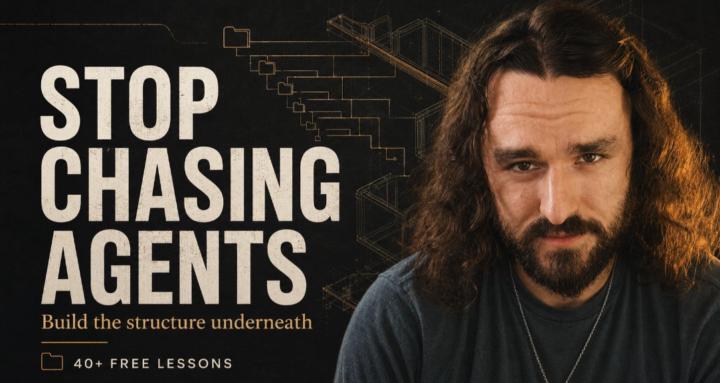
What we give away free beats most paid courses. Build durable AI systems with a Marine vet and Edinburgh researcher. 40+ lessons, growing.
Leaderboard (30-day)
1

🔥
+1712
2

🔥
+1604
3

+1487
4

+904
5

+584
Powered by