
Write something

2d •
How do you "take back" consent?
Like when you go to court on a criminal case and the only reason they really had jurisdiction is because you didn't know any better and plead not guilty... How do you cancel that unknowning agreement made(after a suspended imposition of sentence that came from a plea deal you made while you were under duress & we're intoxicated when you made it)? Is that possible?

17d •
🔎 Detrimental Reliance: What It Means & How to Use It Against Corrupt Judges
Detrimental reliance happens when you rely on someone in authority to act fairly and follow the rules — and you get harmed because they didn’t. In law, it means: 👉 You reasonably believed the judge (or authority) would behave according to law, fairness, and due process… 👉 You relied on that belief during your case… 👉 And because the judge violated those standards, you suffered harm, loss, or prejudice. It is rooted in equity — meaning the court must act honorably if it expects YOU to honor its rulings. 🧠 Why It Matters in Judicial Misconduct Cases Most people walk into court believing: - The judge will be neutral - The judge will follow procedure - The judge will listen to evidence - The judge will not insult, bully, or shame them That expectation is reasonable. Judges swear an oath to do exactly that. So when a judge behaves like a wayward, rude, biased, or hostile authority figure, you can argue: “I relied on the court’s duty of fairness and that reliance led to harm because the judge abandoned neutrality.” This is detrimental reliance. ⚖️ How to Use Detrimental Reliance in Your Case...You can raise detrimental reliance in: 1. Judicial Misconduct Complaints Point out that you relied on the judge’s oath and legal duty to conduct themselves with fairness and impartiality — and that the misconduct caused: - Loss of rights - Skewed rulings - Financial harm - Reputation damage - Emotional/psychological injury - Procedural injustice 2. Motions to Vacate or Reconsider Show that the entire ruling is tainted because you relied on a “fair tribunal” that didn’t exist. A biased judge = constitutional defect. 3. Appeals Appeals LOVE this argument.Judges cannot violate your reliance on fundamental fairness. If they do, the ruling is often reversible error. 4. Civil Rights Lawsuits (42 USC § 1983) If the misconduct rises to a constitutional violation, detrimental reliance strengthens your argument that: - You expected due process - You were denied due process - You suffered actual harm because of that denial

17d •
Under criminal investigation, attempted forced sale of home
I just got a call from my ex-wife’s attorney’s office informing me of an incoming ex parte to force the sale of my home. Let’s see how this plays out, I’m prepared to have the judge, her attorney, and clerk arrested for crimes committed in open court. I let them slide on day 1 of 3 of their attempted biased divorce and custody trial. Next time I won’t be so gracious. If the bailiff refuses to make the arrest, they too, will be pulled into tax court for prosecution.

8d •
Happy Giving Thanks Day Blessings Every Day
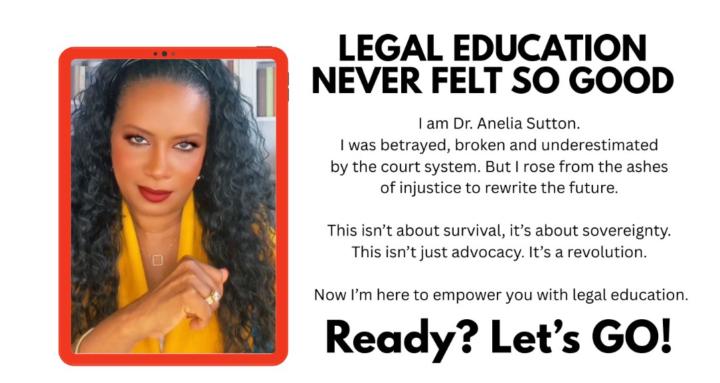
On this Happy Giving Thanks Day 2025, I am grateful for Dr Anelia Sutton’s sharing, educating, supporting, and serving each community member as a willing and caring mentor here on SKOOL and elsewhere, which is allowing us to be aware, alert and able to thrive despite injustices in our nations justice system. We are each blessed. I will keep our Founder Dr Anelia and each one of our Community Teammates on my Blessings List today and beyond. 🧡🙏🏾🧡 Enjoy all the good things and see the good in all things.

6d •
Still on the Path...
Hi, My sincerest apologies! I've been on quite a long journey seeking truth and correct processes to empower my daughter, not harm her. I've found some amazing stuff and proof it works. The 1st thing I did upon request from my daughter was complete a POA and file it into her case. Mind you the Discovery was asked for on 9/22, but the POA document was delivered sealed to me at the courthouse during another family members trial. I just happened to be on my dob and I had just been thrown out of the courtroom for..."Making faces that could potentially sway the Jurors" The same Bailiff that threw me out was handed the sealed envelop to give to me. Should have seen the look on his face. Anyway the POA somehow prompted the Pub Def to finally visit my daughter after ghosting her for 2 months. She was told to tell me the POA was unnecessary and can't be used in the case. Well, I say this "The phrase "fraud vitiates everything it touches" is a legal maxim that means any contract, judgment, or transaction tainted by fraud is void and has no legal effect . This principle holds that fraud is a fundamental defect that invalidates the entire process, not just the fraudulent part. While a court will not set aside a judgment for issues that were already considered in the trial, it will grant relief if fraud prevented a party from presenting their case fully. ...Still on my journey
2
0
1-30 of 187
skool.com/aneliasutton
Learn legal power moves, share wins, and rise together as unstoppable warriors.
Leaderboard (30-day)
1
+22
2
+19
3

+14
4
+11
5

+8
Powered by