
Pinned

💎
⭐
30m •
🚀New Video: I Turned Claude Opus 4.8 Into My Entire AI Operating System
In this video I show you how I turned Claude Opus 4.8 into my full AI operating system that runs my businesses, holds all my context, and replaces the constant tab switching between apps. I walk through the Four C's I use to build it (context, connections, capabilities, cadence), the mindset shift of working out of Claude Code by default, how I organize files and skills, and the bike method for safely giving agents more autonomy. By the end you'll know exactly how to set up your own AI OS and the trap to avoid when you start handing it real keys. GITHUB REPO
Pinned
💎
⭐
2d •
If you've ever felt "AI Overwhelm", please read this.
Every single person following AI right now is overwhelmed. Including me. I make videos about this stuff for a living and I still feel the pressure. New model drops. New framework. New feature update. It feels like every single day. But after hearing a ton of you guys bring up "AI overwhelm" week after week, I realized this: → There's a HUGE difference between knowing the "what" and knowing the "how." Staying aware does not mean testing everything. Most new tools and features only need the "what." You see the title. You understand what it does. You move on. The "how" is reserved for the stuff that solves a problem you actually have right now. So when something new drops, I ask myself one question: Does this solve a specific pain point I'm currently dealing with? If yes, I test it in a real scenario. I test it against something that actually matters to me. If no, I save the link. I mentally file it away. And I keep walking. Because here's the thing. Your north star is probably very different from mine. Part of my job is to experiment, form opinions, and share what I think is useful. So naturally I test a lot of stuff. But if your north star is building a business or getting better at your craft, then every shiny new tool might just be a distraction. The number one mistake I see people make is they try to learn everything. They watch every video. They test every tool. They jump to the next thing before the last thing even had a chance to work. And if I've contributed to your overwhelm with my daily uploads, I apologize. hehe. But a lot of people think that this ties directly into how you measure your day. Productivity is not how many hours you worked. It's how many meaningful outputs you created that actually moved the needle towards your north star. Someone can work 12 hours one day and feel insanely productive, but they were just watching tutorials and playing around with new tools. Meanwhile someone else sits down for 5 hours, ships the one thing that actually matters, and makes more progress.
Pinned

🔥
7d •
🏆 Weekly Wins Recap | May 16 – May 22
From first client wins and live workflows to AI voice agents, portfolio momentum, and production-level fixes - this week inside AIS+ showed what happens when builders keep stacking reps consistently. 🚀 Standout Wins of the Week inside AIS+ 👉 @Michael Garcia closed his first major deal with a wholesale real estate automation engine handling property sourcing, Claude-based deal scoring, and investor pipeline management. 👉 @Luca Giovinazzo delivered his first full client project live — including 11 n8n workflows, CRM systems, Telegram bots, inventory tracking, booking systems, and KPI dashboards for an auto detailing business. 👉 @Paulo Calpatura built a fully automated AI voice receptionist using Vapi, n8n, Claude, Google Maps, Google Calendar, Google Sheets, and ElevenLabs. 👉 Bo Gonzales presented two AI builds internally, stood out in front of 79 employees, and ended up in a 30-minute AI strategy conversation with his CEO. 👉 @Shatadru Majumdar joined just 7 days ago and already completed multiple AIS+ modules while shipping a customer-support workflow using n8n + Claude. 🎥 Super Win Spotlight | @Griffin Maklansky Griffin joined AIS+ after getting laid off and within a month and a half, landed a new AI-focused role. What started it all? Watching Nate’s “Master 95% of Claude Code in 36 Minutes” video and realizing how quickly AI could turn ideas into real products. Since joining, Griffin has: - Built his own personal website to stand out while job hunting - Started learning AI automation seriously despite having no traditional dev background - Used Nate’s templates and systems to level up his Claude workflows - Connected with builders inside the community and started taking real conversations around opportunities - Went from laid off to employed again with a strong salary in under 45 days


Apr 26 •
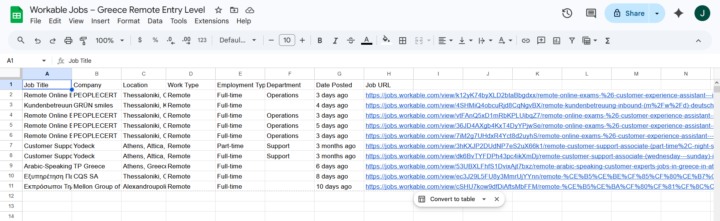
Day 2 Built
Hi everyone, this is my day 2 built. I was able to successfully scrape 10 jobs from a website. One thing I learned was that you can tell Claude to save everything globally so that it can just fetch it when I start another project. I can use the web scraping tool on a client if we were to ever have our first meeting, so that I would know about his business and I could expand on what he might need and where I can help the client.

8m •
🎬 Claude Can Now "Read" Your Reference Videos
Anthropic’s Claude just got a massive upgrade for creators. With the new Higgsfield MCP (Model Context Protocol) integration, Claude can now analyze a reference video, break down its exact structural DNA, and help you generate new assets directly inside the same chat window This isn't just basic video description—it’s full visual reverse-engineering 🔄 The Workflow Shift - The Old Way: Watch a reference video, manually take notes on camera pacing, write prompts from scratch, jump to an external generator, and hope the outputs stitch together cleanly. - The New Way: Paste your reference video straight into the chat. Claude analyzes the rhythm, shot composition, and visual grammar, and the Higgsfield Supercomputer outputs your new matched assets instantly 🧠 Moving from "Prompting" to "Directing" Instead of gambling on random generation tokens, this integration introduces a directorial logic to AI video production. For creators, filmmakers, and marketing teams, a reference video is no longer just passive inspiration. It becomes highly operational material to instantly map out matching scenes, product variations, or social campaigns You are no longer just asking an AI to "make a cool clip." You are telling it to understand why a specific clip works and replicate its underlying pacing and language ⚠️ The Reality Check Analyzing a reference doesn't mean cloning it. The value here isn't in low-effort, lazy replication—it’s in structural translation. The creative direction, intent, and narrative choices still completely rely on you to make the final output stand out We are officially moving past the era of guessing with random text prompts. The future of AI video is turning any reference file into an active, operational creative map

1-30 of 17,819
skool.com/ai-automation-society
Learn to get paid for AI solutions, regardless of your background.
Leaderboard (30-day)
1

🔥
+7069
2

🔥
+4696
3

+3799
4

🔥
+2594
5

+1271
Powered by