Activity
Mon
Wed
Fri
Sun
Sep
Oct
Nov
Dec
Jan
Feb
Mar
Apr
May
Jun
Jul
Aug
What is this?
Less
More
Sawinery Woodworking Guild
2.1k members • Free
25 contributions to Sawinery Woodworking Guild

3d •
Dust Collector or Collector w/Cyclone
I'm looking for an economical solution for my 2-car garage. This will be mainly for my larger tools (e.g., table saw, jointer, planner ext.) Currently looking at a Laguna DC15 (1100 CFM) $699 with no cyclone and the Bauer collector and cyclone $699. Any thoughts or suggestions are appreciated.

1 like • 2d
Always get a cyclone. It will separate large from small chips. If you are looking for economical. Just get a 5 g bucket dust deputy and a 16 g shop vac. You can just move to machine you need. Did that for 30 years until I got my Jet.
1 like • 2d
Here's a pic. Still use it just for the sawstop.

7d •
Creature comforts incoming
I’m upgrading the garage lighting. Previously I bought shop lights and put them up on the walls. I didn’t realize how much heat these things put out. I didn’t mind it in the winter but now I’m cooking. To further remedy that situation I’m adding a Mr. cool 18,000 BTU mini split.

0 likes • 2d
I have LED strip lights and they produce virtually no heat. Not sure what you're using. Also, on mini split, consider putting in a filter box above the split location where the air intake is. Will save you cleaning the units filters. Simple to make, there are YT videos showing how.
Jun 3 •
Happy to have found this
Good morning. Name is Vick and I've been looking for a community for some time. Happy to be here. My grandfather was a construction worker and I used to help him out when I was a kid. That's right: child labor! 🤣 I don't think anyone else in the family has taken up woodworking so I am the first. My father said to me "Learn to do one thing extremely well. For everything else you can pay." Well, I got tired of paying for shoddy work. Bought a new house 13 years ago and have been learning and modding ever since.
0 likes • Jul 9
Hi Victor! Share what you've learned. What's a current project?
0 likes • Jul 10
Wow, what a dramatic change! Live the cabinetry, lighting, and the glass. You did a wonderful job. What I mean by what you have learned: I like to challenge myself to create new things, new jigs, new methods. It's how I built my skill set over 45 years of woodworking.

Oct '25 •
Live and learn from your elders
Hi everybody. Newbje here. Anybody else want to say hello. Feel free.🤩
0 likes • Jul 9
Hi Tony! Welcome to the forum! What's your interest in woodworking?

Jun 26 •
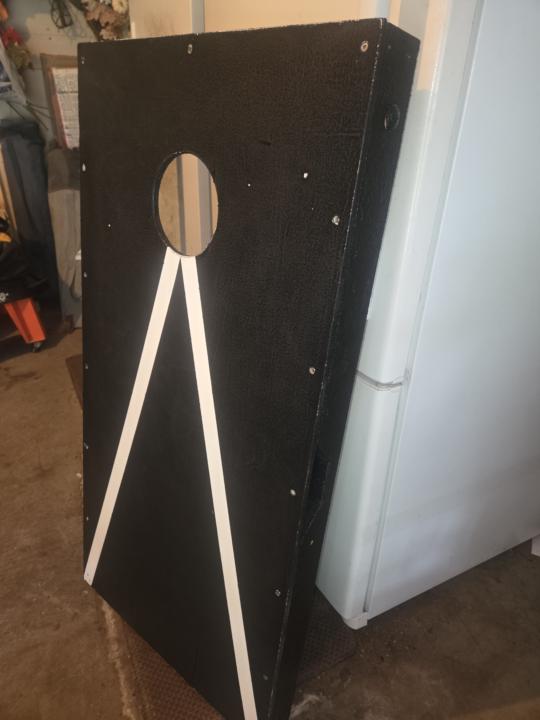
Corn Hole Boards
Heres some tournament spec cornhole boards I made. Sealed the frame with truck bed liner and put 6 coats of paint and 3 coats of laquor on the tops to smooth them out.
1 like • Jun 29
Looks very nice and weather resistant!
1-10 of 25

Active 1d ago
Joined Sep 18, 2025
Powered by