Activity
Mon
Wed
Fri
Sun
Aug
Sep
Oct
Nov
Dec
Jan
Feb
Mar
Apr
May
Jun
Jul
What is this?
Less
More
Owned by Shaun Beastman
Train martial arts online: forms, weapons, breath, discipline. 30 years on the mat. Full video library inside. Beginners welcome.
Memberships
Tantra Nectar
29.4k members • Free
Dance Spice Studio
10 members • $24/month
Noomatics
1.3k members • Free
Song Architect
36 members • Free
Song Writing Hub
89 members • Free
Qi Gong & Martial Art As Yoga
44 members • Free
More Black Belts
137 members • Free
Skoolers
165.6k members • Free
HO
Health Offense
33 members • Free
25 contributions to Qi Gong & Martial Art As Yoga

8d •
New Content in the Classroom
@Shaun Beastman Anderson helped me realize the first posting of this series was broken- Thanks man! Hopefully this one will work a little better. This is the first posture of the Ding Shyr set of fixed posture circle walking- a foundational internal energy cultivation technique of BaGuaZhang. Let me know what you think! Classroom- https://www.skool.com/internal-martial-art-as-yoga-2836/classroom this series- https://www.skool.com/internal-martial-art-as-yoga-2836/classroom/9d6f6653?md=ea3c3406de4147549bbbf6e37a190b5c


0 likes • 7d
Great job! Looks great!! 👍🏻
1 like • 7d
@Thomas Seidl lol. 😂 glad you finally got it! I’d love to collaborate! Feel free to dm ideas, we can go from there. 🙇🏼
12d •
Italian Garden TaiQiGong
Doing some QiGong movement taken from the TaiJI (Tai Chi) form - this was on my recent trip to Italy, in the lovely Tuscan countryside. I will be incorporating this video into the next TaiJiGong offering in the classrooms. This is about Single Whip again, with a side of Snake Creeps Down. Let me know what you think! Post your practice! (or follow along with this one.)

0 likes • 11d
I love this. I can’t wait to get some time to practice.
0 likes • 11d
@Thomas Seidl 🔥
30d •
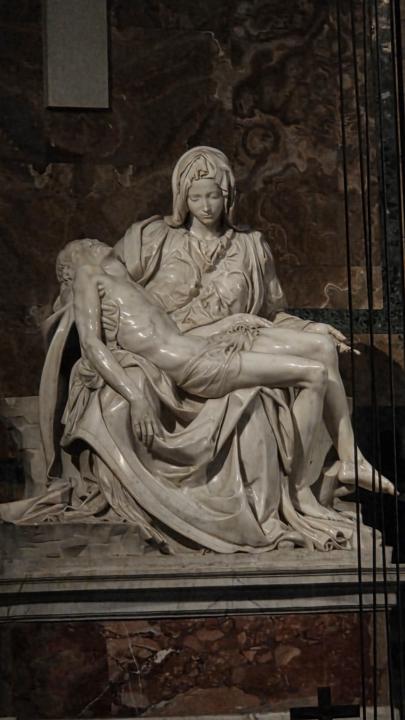
Truth is Beauty
I was fortunate enough to visit my favorite piece of sculpture and witness first hand the incredible genius of Michaelangelo. He was 24 years old when he carved the Pieta out of a single block of marble. it is exquisite. If kungfu is a skill acquired, his kungfu is very, very strong. As a visual artist, I bow deeply before his vision of the grace and love of Mary and Jesus. What is your favorite piece of Art? Let us know in the comments.
1 like • 30d
@Thomas Seidl when I went to Saint Peter‘s Basilica I had no idea that it was the tomb of the popes for the past 2000 years. I was totally overstimulated and in awe …and, unless you really have an appreciation or know what you’re looking for, it’s easy to overlook so many amazing priceless works of human talent, ingenuity, perseverance, and perfection. Thank you for sharing.💯🥋
1 like • 29d
@Thomas Seidl 😂 enjoy my friend!
Jun 11 •
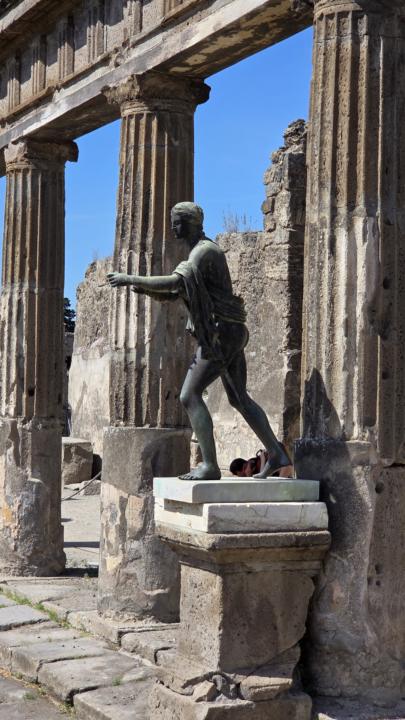
Pompeii
The ancient world reflects so much how humans feel like they have changed so much, but at the core we still pursue the same things. Whether desire or higher awareness, Asian, GreccoRoman, or anywhere we have lived, there is more that makes us similar than different. What do YOU think, and where is your favorite travel?
0 likes • Jun 11
Probably before high school
0 likes • Jun 11
@Thomas Seidl beautiful! Enjoy! As a matter of fact, I think I was in Rome in June also and it was hot as hell lol we did about three days of walking in one day. I ended up with a rash.😂
Jun 7 •
Leaving for Italy!
Traveling to pick up my daughter, who has been solo traveling around Europe for two months. It will be a great experience, and I will return with new ideas, inspirations and content. I will be checking back in as I go, and I hope the new classroom content gets some traction and gives some of you something interesting to work on. 'Til then, Buon Giorno e Arrivederci!
1 like • Jun 7
Have fun , be safe! 🙇🏼
1-10 of 25

@shaun-anderson-2558
Chief Instructor, Martial Arts USA. Founder, The Lotus Vault. 30+ years on the mat. Forms, weapons, Hapkido, breath. Strength is built, not born.
Active 2h ago
Joined Mar 28, 2026
ENFP
Orange County CA