Activity
Mon
Wed
Fri
Sun
Jun
Jul
Aug
Sep
Oct
Nov
Dec
Jan
Feb
Mar
Apr
What is this?
Less
More
Memberships
Task Force Finance
406 members • Free
Financial Fitness Challenges
13 members • Free
The Wealth Builders Collective
23 members • Free
Finance with Mark
88 members • Free
Skool of Finance
594 members • Free
Optimized Living
3k members • Free
The AI Advantage
120.4k members • Free
Financial Management Academy
77 members • Free
Financial Analysis in Business
334 members • Free
24 contributions to The Energy Data Scientist

Mar 10 •
Uncomfortable truths for Workplace
I see many students who want to stay home and so they ask for remote work all the time. Also I see many who go to work and do not dress well. Here is the truth for the job: Truth1: Go 3-4 times every week to the office so others see you. Your presence is very important. Smile and be professional. This plays a role for your promotion. If you stay home most of the time, you will not be promoted and people will forget you. Truth2: Do not use AI a lot at workplace because every computer has trackers and gives your managers a distribution of time (with plots) of how much you used AI and for how long. There is a software (hidden) that summarises your activity on the computer at work. So be careful : if they see that you cannot write code, and all you do is copy-paste from Chat GPT the code, they will fire you sooner or later. Silently one day they will fire you and they will not tell you why most likely. Be careful. Also you can use it on your phone, but it is time consuming.. Ofcourse they have AI tools but you must write code yourself. Truth3: If you go to non-code positions, it is more stressful and more competitive than code positions. Often, you get lower salary also. Because people in energy are scared of coding, and do not like it. So you get an advantage if you can code , understand code etc. Not super . Just basic things. Eg understand Python . Understand ML. etc Truth4: Do not share personal stories with co-workers. They are competing with you for promotion so they want you to fail ... Be careful. Do not share sensitive things. Truth5: Becareful of your social media presence. Managers spy on you e.g. they have fake profiles and are your friends. They will find your second, third etc profiles. They can find your anonymous X profile where you troll people . They have the ability to find you because they have software tools that you do not know . Truth6: yes the online courses here are all you need. But please fix your CV. Align it with energy companies. Do not just design your CV yourself. Get feedback here. Most CVs look rubbish. Try work on your CV carefully.

0 likes • Mar 12
Globaly this happens yes. It is global policy.
Feb 23 •
Future Energy Conference: Key Topics
I was at a conference about future energy technologies, which will be commercialised by 2100: a) Fusion: Nuclear fusion will have matured into a commercially viable, near-limitless source of clean baseload power. Commercial nuclear fusion could provide virtually limitless, clean baseline power by replicating the physical processes that power the sun. This breakthrough would effectively eliminate our reliance on fossil fuels and permanently stabilize the global energy grid. b) Batteries lasting years: Advanced, ultra-dense energy storage, potentially utilizing next-generation solid-state or quantum battery architectures, could allow personal electronics to run for years on a single charge. This leap will eliminate daily charging anxiety entirely and drastically reduce global battery waste. c) Multi-foldable phones: Thanks to hyper-flexible materials like graphene, communication devices will become as pliable as paper, allowing us to roll, wrap, or fold them into any shape. This will effectively blur the lines between smartphones, smartwatches, and smart clothing, making screens an ambient part of our wardrobe. d) Renewables everywhere: Massive leaps in grid-scale energy storage will eliminate the intermittency of solar and wind, allowing us to capture and store vast amounts of surplus energy. This will enable a fully decentralized, globally connected grid powered almost exclusively by renewable sources, regardless of weather conditions. e) High-endurance drones: Powered by those same next-generation batteries, autonomous drone fleets could stay airborne for weeks at a time over cities. These persistent aerial networks will handle everything from instant logistics and heavy human transport (air taxis) to continuous emergency response and environmental monitoring. f) Autonomous, Self-Charging EVs: Electric vehicles will become fully autonomous mobile power banks that wirelessly charge themselves while driving over smart, electrified roads. When parked, they will automatically sync with the local grid via advanced vehicle-to-grid (V2G) technology to power homes and balance neighborhood energy loads.
2 likes • Feb 23
Also: Autonomous Smart Grids: Artificial intelligence will fully orchestrate the global electricity network, seamlessly balancing two-way energy flows between millions of decentralized solar panels, wind farms, and home batteries in real-time. These self-healing, hyper-connected grids will be able to instantly detect anomalies and reroute power around damaged infrastructure, virtually eliminating blackouts and maximizing the efficiency of every single watt produced.
Feb 6 •
Round2 Interview Question
In the interview , for a company (energy investments / commodities) a panel of 3 interviewers asked me the following during a discussion . Panel: Let's talk about some important Python details. It's ok if you don't remember things. Just an approximate answer will be fine for us. So, in Python, what is the difference between a List comprehension and a Generator expression. In a few words... Correct answer: A generator expression is like a list comprehension, except that it doesn't store the list in memory. Panel: Give some example . Write here in the tablet. Answer: list comprehension: simulated_returns = [price * volatility for price in historical_data] portfolio_value = sum(simulated_returns) generator: simulated_returns = (price * volatility for price in historical_data) portfolio_value = sum(simulated_returns)
0 likes • Feb 6
also a generator IS an iterator. In Python, all generators are iterators.
0 likes • Feb 6
@Dr. Spyros Giannelos i recall, every generator is an iterator, but it's a special kind that calculates values "just in time" rather than storing them.
Jan 30 •
Energy Transition : Adding instead of Replacing
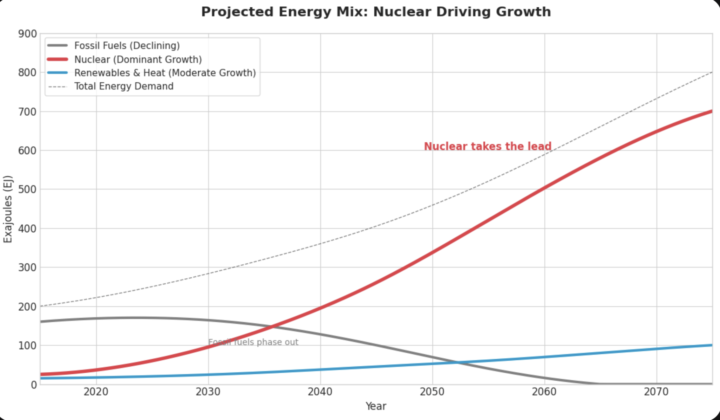
Below is part of some consultancy work I completed recently and sharing a few key ideas: Renewable energy is growing but fossil fuels are still growing too, so the system is adding rather than replacing. Oil and gas will remain important for a long time, so new investment in fossil‑fuel supply and infrastructure (pipelines, power plants, refineries, and other big long‑lasting equipment) will still be needed. If clean energy supply grows faster than total demand for long enough, clean energy first covers new demand and then starts replacing fossil fuels. If clean energy supply keeps outgrowing demand by a few percentage points for decades, fossil fuels will eventually be squeezed out. Real replacement of fossil fuels, not just adding clean energy, is not guaranteed. Most likely we will see 'addition' and co-existence of fuels. This is because the demand is keep rising more and more eg due to AI etc. See the plot .
0 likes • Jan 30
Yes, so the visual phase-out of fossil fuels by 2065 in the chart is definitely an acceptable scenario
0 likes • Jan 30
@Reza Hashemi Yes. It was saying that if the "Nuclear Takes the Lead" scenario occurs, it would represent a massive shift in global regulatory and construction trends.
Dec '25 •
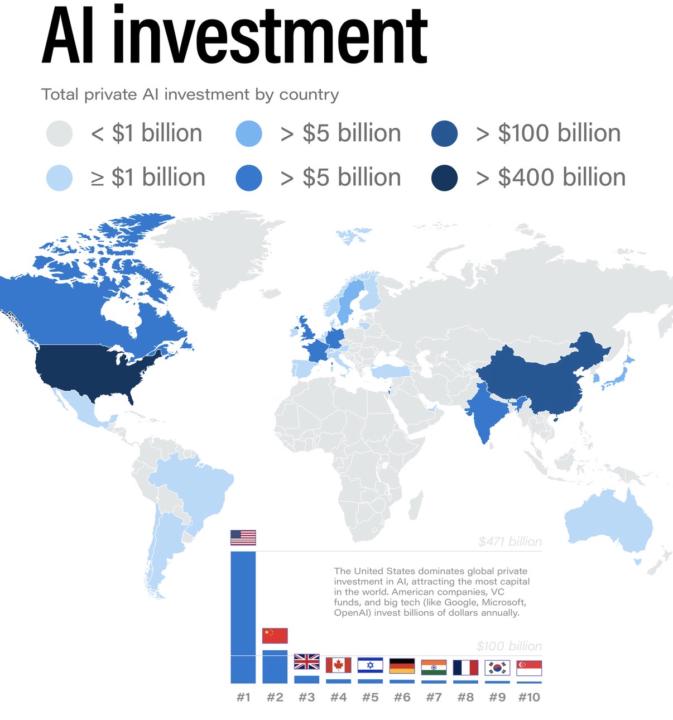
AI Infrastructure: Massive Investments
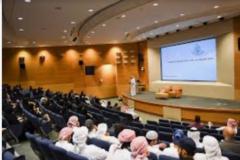
Massive investments in AI infrastructure. See attached image. a) How will this affect investments in the Energy Sector ? b) How will this affect demand for data scientists/ Software Engineers in Energy Sector? c) What salary ranges in the Energy Sector do we expect e.g. increase/ decrease etc? d) Which regions do you foresee maximum growth ?
0 likes • Dec '25
Biggest companies in the world are ENERGY companies: Saudi Aramco , TESLA , etc. This says a lot...
1-10 of 24
@mia-a-7350
Experienced with ConocoPhillips / production & operations , energy
Active 3d ago
Joined Sep 29, 2025
INFJ
Houston area