Activity
Mon
Wed
Fri
Sun
Sep
Oct
Nov
Dec
Jan
Feb
Mar
Apr
May
Jun
Jul
Aug
What is this?
Less
More
Owned by Marama
Move from guessing to grounded knowing. Restore ancestral food intelligence, make botanical remedies, and build healing autonomy from seed to table.
Notes on food sovereignty, seasonal rhythms, herbalism, and the ancestral skills modern life forgot.
Memberships
The Heart Song of Creation
12 members • Free
The Banner Grange #627
8 members • Free
6 contributions to Learn Substack🔥
🔥
Jun 4 •
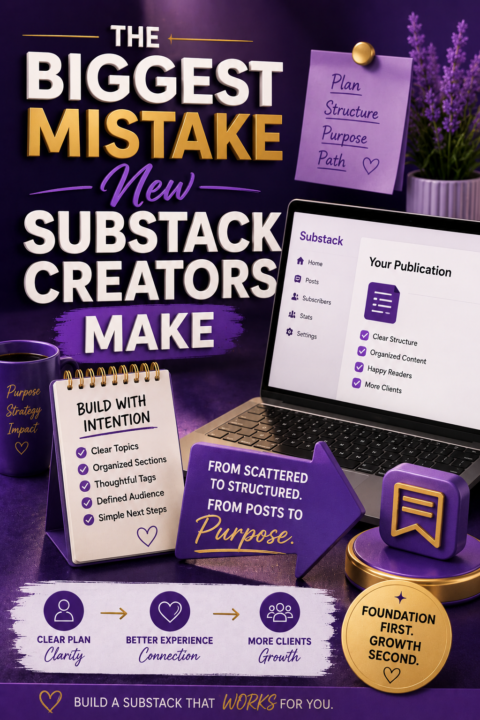
🚨🫣Biggest Mistake Content Creators Make On Substack
The biggest mistake new Substack creators make isn't posting too little. It's publishing before they have a plan. A few posts become ten. Ten become fifty. Then one day they look around and realize: 👉 Their content feels scattered. 👉 Readers don't know where to start. 👉 Growth feels slow. 👉 Clients aren't showing up. The problem isn't usually the content. The problem is the foundation underneath it. A clear structure, organized content, and a simple subscriber journey make everything easier. Before you create your next post, ask yourself: 💭 What is this publication actually designed to do? 👇 I'd love to hear your answer. Why did you start your Substack in the first place? 💜 The full lesson, The Biggest Mistake New Substack Creators Make, #📚The Biggest Mistake New Substack Creators Make is now available inside the Substack Foundations classroom.
🔥
2 likes • Jun 11
To go more into my philiosophy on natural living, and lead people to my Skool
🔥
Jun 5 •
What's Your Substack?
Are you already up and running on Substack? Be sure to leave your link below New to Substack? I encourage you to join us over in Substack- The You World Order - we are way more active over there. The next Substack Setup Intensive happens on June 10th for our premium members (or you may purchase it a la carte for unlimited access) Most of all let's see what you're doing!!

🔥
3 likes • Jun 11
Here is mine https://naturwiseliving.substack.com/
🔥
May 14 •
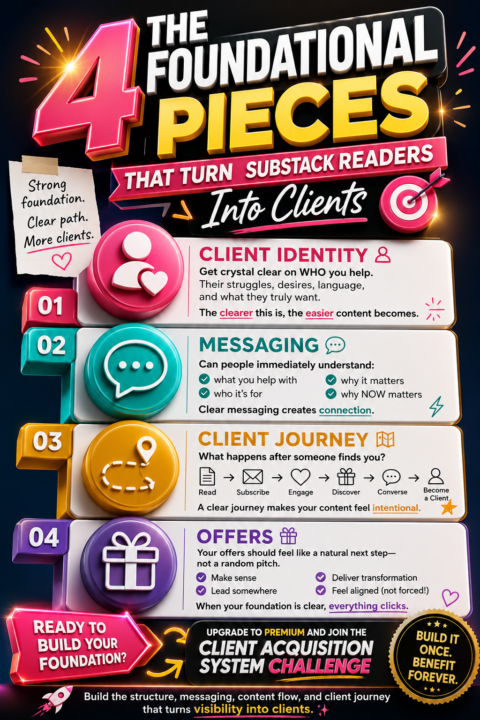
🔥 Stop Posting Randomly: Build a Client Journey Instead
🔥 Most coaches don’t actually have a visibility problem. They have a FOUNDATION problem. Substack (and honestly all content marketing) gets WAY easier when the pieces underneath your content are clear. Otherwise? You end up posting random things… creating random offers… talking to random people… …and wondering why nothing consistently converts. 😵💫 A strong foundation makes your content feel connected instead of chaotic. Here are the foundational pieces most people skip 👇 ✨ CLIENT IDENTITY Who are you actually speaking to? Not “everyone.” Not “people who need healing.” Not “women in business.” What specific person are you helping? What are they struggling with right now? What do they secretly want? What language do THEY use? The clearer this gets, the easier content becomes. 🎯 💬 MESSAGING Can people immediately understand: ✔ what you help with ✔ who it’s for ✔ why it matters ✔ why NOW matters Confused messaging creates invisible offers. Clear messaging creates connection. ⚡ 🛤️ CLIENT JOURNEY This is the part almost everyone skips. What happens after someone finds you? Do they: ➡ read a post ➡ subscribe ➡ get welcomed in ➡ discover an offer ➡ start a conversation ➡ become a client Or do they just… wander around your Substack confused? 👀 A client journey makes your content feel intentional instead of random. 🎁 OFFERS Your offers should feel like a natural next step. Not a surprise pitch out of nowhere. When your foundation is clear: ✨ your offers make sense ✨ your content leads somewhere ✨ your audience understands the transformation ✨ sales feel more aligned and less forced This is why foundations matter SO much on Substack. The platform works beautifully when all the pieces connect together. 🌿 🔥 That’s exactly what we’re building inside the Client Acquisition System Challenge. If your content feels scattered, inconsistent, or disconnected from actual clients and sales… Upgrade to Premium and come build the foundation with us. 🚀
Poll
6 members have voted
🔥
2 likes • May 15
@Jill Hart Thank you.
🔥
Jan 31 •
💜👉 START HERE: Welcome to Learn Substack!
If you think you need a bigger audience... You probably don't. Most coaches and creators don't have a visibility problem. They have a foundation problem. Their publication isn't set up to turn readers into subscribers, subscribers into relationships, and relationships into paying clients. That's what this community is here to help you build. Whether you're brand new to Substack or you've been publishing for months, we'll help you create a publication that becomes an asset for your business instead of another place to post content. Step 1: Introduce Yourself 👋 Create your first post and tell us: ✨ Where you're from ✨ Who you help (or hope to help) ✨ Share your Substack if you have one ✨ What's your biggest challenge right now? We grow faster when we know each other. Step 2: Choose Your Starting Path 🛤️ 🚀 I already have a Substack Join today's Daily Notes Boost and start building relationships while getting more visibility. (Learn Substack🔥 · Share Your Substack Notes) 🌱 I'm brand new Begin with the Quick Start Guide. #Get Help ... 🎯 I want to make sure everything is set up correctly Join the Substack Setup Intensive where we'll build your publication together so every piece works toward attracting subscribers, clients, and opportunities. #🎯START HERE Step 3: Build Your Foundations 🏗️ Before chasing more visibility... Make sure your visibility has somewhere to go. Inside the classroom you'll learn how to build: ✅ A publication people trust ✅ A homepage that converts ✅ Welcome emails ✅ Subscriber journeys ✅ Paid subscriber strategy ✅ Client pathways Step 4: Join the Conversation 💬 The fastest-growing Substack publications aren't built by posting more. They're built by building more relationships. Join the Daily Notes Boost.
Poll
33 members have voted

🔥
4 likes • Apr 16
Hi, I am using Substack, but just writing, haven't really delved into all the aspects. Thanks for creating this learning space https://naturwiseliving.substack.com/
🔥
Mar 14 •
How to Write an SEO-Friendly Substack Post That Gets Discovered
Many creators publish thoughtful posts on Substack but still struggle to be found. Search plays a bigger role than most people realize. Substack posts can appear in Google results, inside Substack search, and in topic feeds. A well-structured post can continue bringing readers to you long after the day it was published. That means one well-optimized article can become a long-term visibility asset. Today’s Notes Boost Challenge will help you do exactly that. Create one SEO-friendly Substack post using the simple structure below. Step 1. Choose a Phrase People Actually Search Start with a simple search phrase that your ideal reader might type into Google. Examples: • How to Start a Podcast on Substack • Substack Marketing for Coaches • Grow a Substack Newsletter • Substack Tips for Spiritual Entrepreneurs This phrase becomes the focus keyword for your post. Use it in: • your title • your subtitle • your first paragraph This helps search engines understand what your article is about. Step 2. Use Headings to Structure the Article Headings help both readers and search engines understand your content. They also make your post easier to skim on mobile. Use H2 headings to break your article into clear sections. Examples: Step 1. Choose a Search Phrase Step 2. Use Headings to Structure the Article Step 3. Add Supporting Keywords Think of headings as signposts guiding readers through the article. Step 3. Add Supporting Keywords Naturally You do not need to repeat your keyword constantly. Just include a few related phrases naturally as you write. Example for a Substack podcast article: • Substack podcast setup • growing a podcast audience • monetizing a Substack podcast • Substack podcast tips This reinforces the topic without making the article feel forced. Step 4. Add an Image With a Clear Name and Caption Images can help your article appear in search results too. Before uploading your image, rename the file using your keyword. Example: substack-seo-tips-for-coaches.jpg
🔥
2 likes • Mar 17
Thank you @Jill Hart I am finally getting caught up from moving and looking forward to watching your videos
1-6 of 6
🔥
@marama-elizabeth
Helping seekers reconnect with nature, healing & spirit through courses in herbalism, permaculture & frequency, no homestead necessary.
Active 2h ago
Joined Feb 8, 2026
Grass Valley, CA