Activity
Mon
Wed
Fri
Sun
Sep
Oct
Nov
Dec
Jan
Feb
Mar
Apr
May
Jun
Jul
What is this?
Less
More
Memberships
The Training Stimulus
556 members • Free
ARCA Inner Circle
11 members • Free
The Better Coach Network
63 members • Free
Ruth Performance Lab
347 members • Free
5 contributions to Ruth Performance Lab

Apr 3 •
Post QF Focus?
I’m curious about what everyone’s focus is post QF? Athletes: if you’re not moving on to semifinals - what is your plan for the “off season”? Will you compete this year in some in-person events? Dabble in Hyrox? ATHX? Xenom?! (The name 😂) Coaches: what are you preparing your athletes for? What is the primary training focus for your clients as you shift into the off season?

1 like • Apr 6
as a coach No competitive athletes under my wing at the minute. as an athlete, prep for marbella championships online qualifiers

1 like • Mar 8
14:31 --- this turned into very much a DB workout, I'd thought you'd enjoy my little google sheet. it might not make much sense hahaha Redo on monday just to see if I could go faster which I think I canx
Mar 4 •
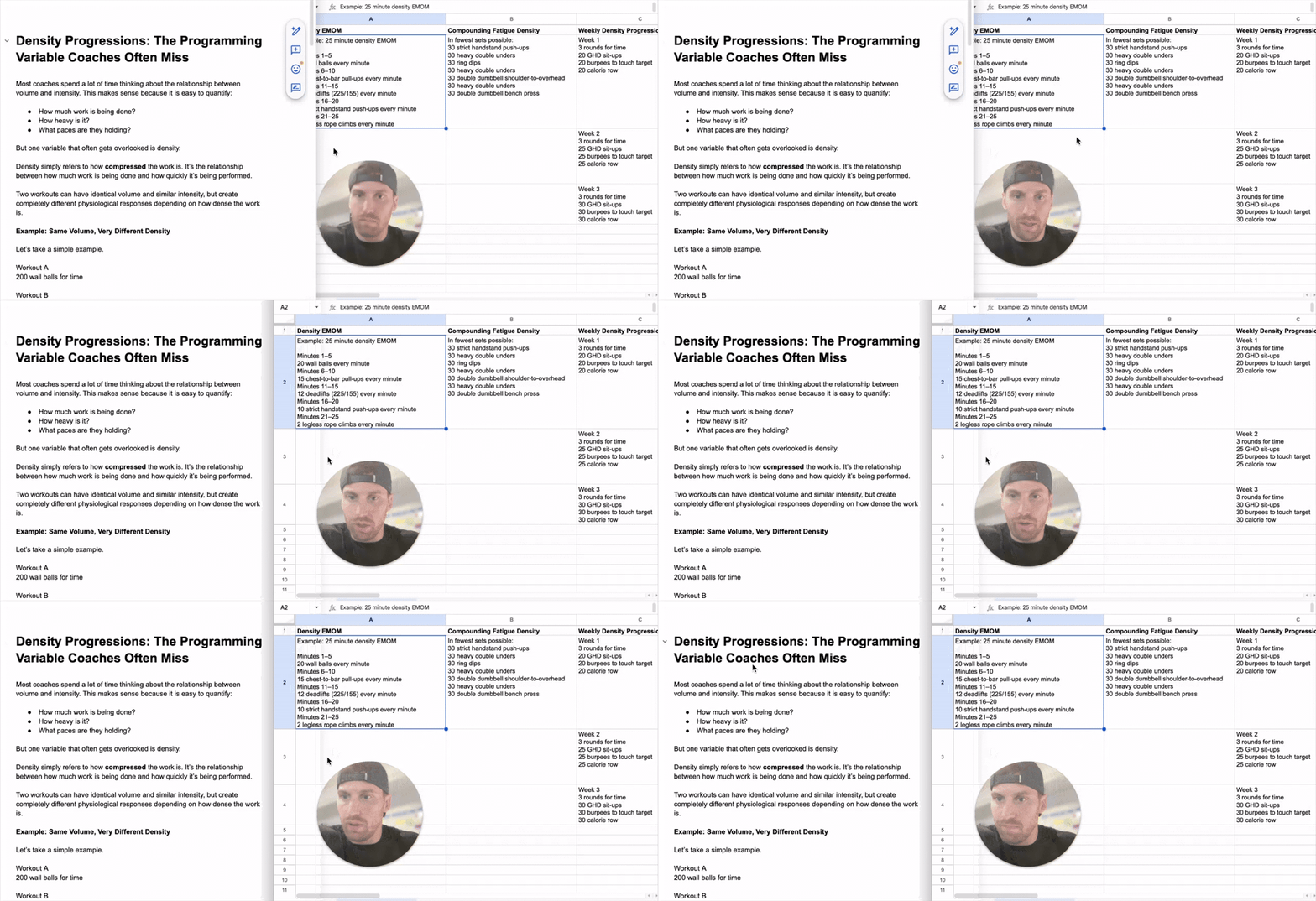
Density Progressions: The Missing Programming Variable
Density Progressions: The Programming Variable Coaches Often Miss Most coaches spend a lot of time thinking about the relationship between volume and intensity. This makes sense because it is easy to quantify: - How much work is being done? - How heavy is it? - What paces are they holding? But one variable that often gets overlooked is density. Density simply refers to how compressed the work is. It’s the relationship between how much work is being done and how quickly it’s being performed. Two workouts can have identical volume and similar intensity, but create completely different physiological responses depending on how dense the work is. Example: Same Volume, Very Different Density Let’s take a simple example. Workout A 200 wall balls for time Workout B 10 wall balls every minute on the minute for 20 minutes In both cases, the athlete is doing 200 wall balls. But the experience and the physiological response are completely different. In the “for time” version, the work is much more dense. Fatigue accumulates continuously. Metabolites build up. Intramuscular pressure increases. Perfusion drops. Tension under fatigue increases as the athlete tries to maintain movement speed. All of this creates a much more stressful internal physiological environment. You get: • More accumulated fatigue • Less metabolite clearance • More ischemia inside the working muscles • More tension being produced while the muscle is already fatigued That combination dramatically increases the amount of muscular damage and soreness that athletes experience. In the EMOM version, every minute includes a built-in rest period. That rest allows partial clearance of metabolites, restoration of blood flow, and recovery of force production. The volume is the same, but the density is much lower, so the physiological cost is very different. Why Density Matters in CrossFit Density becomes even more important when we consider the nature of the sport. CrossFit workouts tend to be very dense especially formats like:
2 likes • Mar 5
For rotating EMOMs to build density would a good practice be to do rotating movements that use similar muscle groups without having to use the same movements? such as wall ball minute 1 DB lunges minute 2 Box step overs minute 3 They are all along the lines squating patterns but without using the same movement, I'm thinking this could be a good strategy off season as could allow to build volume without doing the same movement
Jan 28 •
Anyone using the WurQ Workout Tracking System?
Is anyone playing around with the new WurQ tracking stuff? I've been using it for 3 weeks and I think this COULD be a game changer for competitors training in the sport. I've been doing this for 15 years at this point have have learned from every session I've done so far about my rep speed, where I rest, which movements are actually driving HR metrics... this is really really cool. Also working on a database of movement speeds across every movement I've done so far -- at some point we'll be able to do athlete profiling to take assessments a step further than just knowing splits to knowing actual movement speeds, which movements we need to develop speed vs endurance, etc. If you're using this, let me know and I'd love to know what you're learning from it.
0 likes • Jan 30
I've seen this product and listened to your findings with Ryne on the stimulus matter and thought that it was incredibly interesting and would love to absolutely play around with it. Do you think this would change the way that maybe you program? maybe prescribing like heart rate zones but instead rep zones. for example do 20 burpees at 5sec per rep or something along those lines?
Dec '25 •
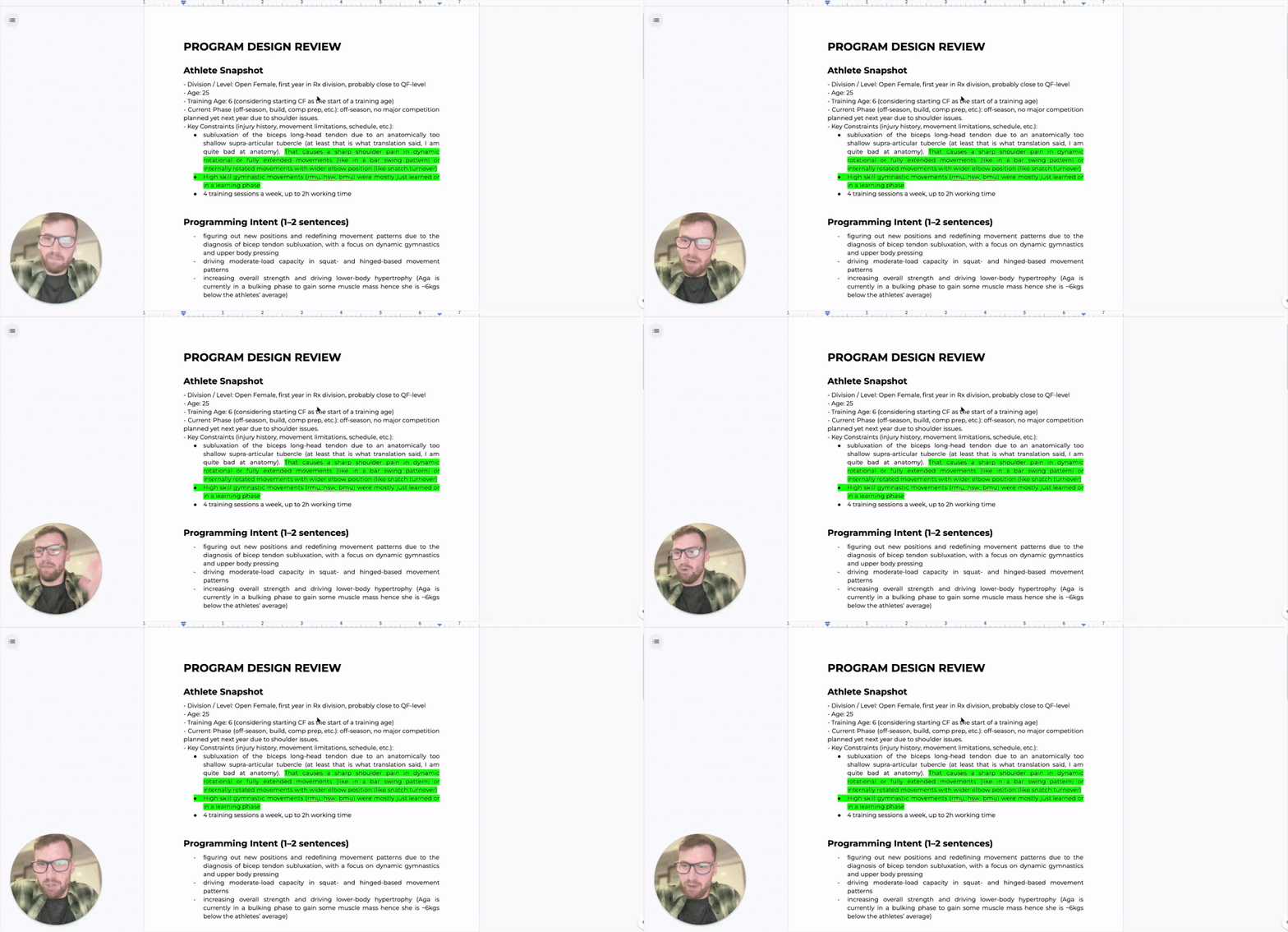
Program Design Review #1 is LIVE
First, thanks to @Jan Lenczuk for being willing to submit a real athlete’s program and open it up for discussion. It takes some guts to put your work out there. The intent behind these reviews is simply to give back to the coaching community. I’ve been coaching for a long time, and this is a way to share how I actually think through program design when I’m working with real constraints, not ideal scenarios. In this review, I walk through a full training week for Aga (Jan's client), a first-year RX athlete dealing with a shoulder issue, limited weekly training time, and long-term development goals. I start with athlete context and intent, then move into strength and hypertrophy decisions, gymnastics progressions, conditioning structure, and where I’d make adjustments or ask different questions. This is for coaches who want to improve how they think about programming, not just copy templates. If you have feedback on the format or ideas for making these more useful, let me know!
1 like • Jan 18
Incredible video. so much knowledge and value
1-5 of 5