Activity
Mon
Wed
Fri
Sun
Aug
Sep
Oct
Nov
Dec
Jan
Feb
Mar
Apr
May
Jun
Jul
What is this?
Less
More
Memberships
Research Career Club
714 members • Free
23 contributions to Research Career Club

10d •
[sneak peak!] Papers alone won’t get you this level of visibility
This will be officially announced tomorrow, but I couldn’t help myself to share it with you all. This is too big to keep a secret anymore. I’m in Top 10 Most Read Thought Leaders of the Year in Green Tech by Illuminem - world’s largest sustainability network. It wasn’t my papers that got me this recognition. It’s what I do with the insights outside academic circles. Needed this win now!
![[sneak peak!] Papers alone won’t get you this level of visibility](https://assets.skool.com/f/f3ac5b67e84e4d9fb02abf454267ecb0/232faaeca258435eafcc75da06af2ecebc7c979391b54e78b05725912efc4a7e-md.png)
0 likes • 9d
Big congratulations; you earned this by making research matter beyond academia. I celebrate with you.
16d •
[Recording + workbook] How I publish 5+ papers a year
Hiya all, Just a reminder that I run this session tomorrow - there are still a few places left to join me live via Google Meet (https://office.motivatedacademic.com/academic-development). If you cannot do so or prefer to watch it on YouTube, I've embedded the live link in this post. Either way, see you tomorrow!
1 like • 15d
Thank you for knowledge shared today.
27d •
Sometimes you may feel lost (but your work is mysterious and important!)
Have you ever sat at your desk, staring at your screen, unsure whether what you’re doing even matters? I have. And I bet you have too. Here’s something nobody tells you when you start your research journey: feeling lost is not a sign you’re failing. It’s a sign you’re doing real research. Think about it. If the answer were already obvious, someone else would have found it. The confusion, the dead ends, the “what am I even doing here?” moments — that’s the territory of discovery. You’re not lost. You’re exploring somewhere nobody has been before.

1 like • 26d
A powerful reminder for every researcher: uncertainty is not failure, it’s a sign that discovery is happening. Thank you for sharing.
Mar 11 •
Stop waiting for the research community to discover your paper.
It’s time to be proactive in sharing your work. Here’s what you don’t need: 1. Endless hours spent waiting for citations that may never come. 2. Anxiety over whether your research will even reach the right audience. 3. Believing that simply publishing your paper is enough - newsflash, it’s not! 4. Assuming that social media is just for fun when it can be a powerful tool for academic outreach. Here’s what you do need: → A strategy for sharing your findings across various platforms. → Active participation in discussions relevant to your field. → A network of peers who support and amplify each other’s work. → Consistent engagement with the academic community through blogs, social media, and webinars. Stop hoping that your paper will be discovered by chance. Stop neglecting the power of storytelling to make your research compelling. Stop thinking that a single publication is the pinnacle of your work. The academic landscape is changing, and visibility doesn’t have to be a passive process. Take charge of your research narrative and watch the doors of opportunity swing wide open. What proactive steps do you take to ensure your research gets the attention it deserves?
1 like • Mar 11
These are tough sayings, but it's the truth.
Feb 11 •
Most academics use LinkedIn like a noticeboard.
You've probably seen this. “New paper.” “New project.” “New award.” And then they wonder why collaboration invites don’t follow. Here’s the lesson I learned the hard way: visibility doesn’t come from posting more. It comes from showing up where the right people already pay attention. Try this 15‑minute routine for the next 30 days: - Build a “Comment List” of 15 people: 5 in your niche, 5 adjacent, 5 decision‑makers (industry, funders, policy, lab heads). - Leave 5 comments/day that add value (not “Great post”): 1 insight, 1 implication, 1 practical example from your work. - When you comment, write for the room, not just the author (assume 500 silent readers). - Once/week, write 1 post that turns a paper into outcomes: Problem → What we did → What changed → Who it helps. - When someone replies to your comment, send 1 simple DM: “Thanks for the discussion—are you working on X as well? Happy to share a relevant resource.” If you did this for 30 days, what topic would you want to be known for on LinkedIn?
1 like • Feb 11
This is explicitly an eye-opener. Thank you.
1-10 of 23
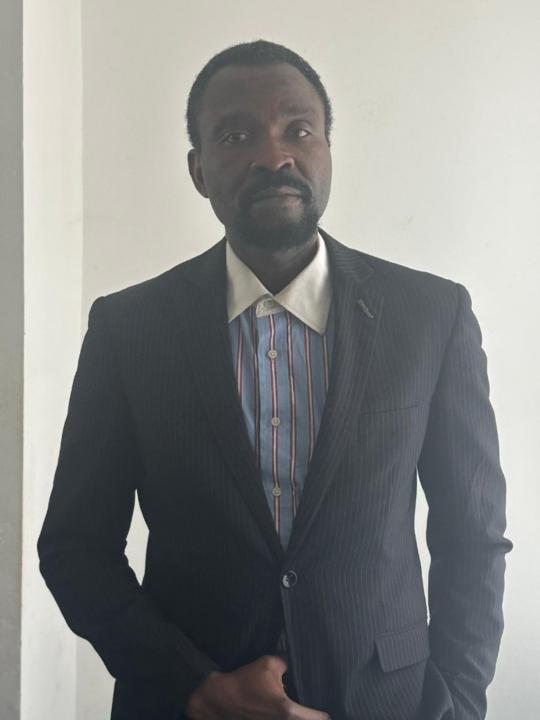
@iziegbe-usiohen-6249
IZIEGBE is a Mechanical Engineer and Energy Researcher creating impactful energy solutions via technical expertise and socio-technical research.
Active 2h ago
Joined Oct 23, 2025