
Pinned
5d •
Be honest with me — where are you with publishing right now?
I'm putting together something for this community, and I'd rather build it around you than around what I assume you need. Here's what nobody teaches you in a PhD: how to pick an idea that's actually worth six months of your life, how to write it to a standard a top journal will take, and how to make sure anyone reads it once it's out. Most "how to publish" advice only covers the middle bit — the writing. It assumes you already know what to work on, and it goes quiet the moment you hit submit. But the two ends are where careers are actually made. So I'm running a 6-week cohort that covers all three: find the idea → write the Q1 paper → get it read and build your name on it. One live workshop a week where I include my frameworks + work through a live draft on screen, and a small group that reads what you write. One honest thing before you answer: you don't need finished data to join. If you're still choosing a direction, you'll leave with a validated idea and a plan. If you've got a study that's been stuck for months, you'll leave with a draft and a way to finish it. It meets you where you are. Two questions for you. 1) Would you actually want this? 2) Where are you right now? Drop the letter in the comments: A) still working out what my next paper should be B) have the data (or nearly), need to write it well C) a draft exists but it's stuck D) published, and I want more people to read it That second answer genuinely changes how I run Week 1, so be honest. And tell me the one part of publishing you find hardest — I read every comment.
Pinned
23d •
Hiya team! How you can get the most out of this community
This space works best when you run the conversation. My role is to guide, support, and unblock you – not to broadcast at you. Here’s how to make the most of it. 1. Start the conversations you wish existed - Post your questions, challenges, and wins – even if they feel “small” - If you’re stuck (paper, career, project, idea), share context + a specific question - Think: “If someone else posted this, would it help me?” – if yes, hit post 2. Use my time intentionally You can access me best by: - Posting in the feed with a clear title and tag (e.g. “Publishing help”, “Career decision") - Tagging me when you want direct feedback or a second brain on something - Bringing concrete things: draft abstracts, LinkedIn posts, reviewer responses, research ideas, career decisions The clearer your ask, the more value I can give in less time. 3. Help each other (this is huge) - Reply to at least one post per week – even with a short thought or question - Share what has worked for you, not just what you’re struggling with - Treat this as a “lab group without borders”: we all get better when we think together If you only consume, you’ll learn something; if you contribute, you’ll learn much more.That's why I do this community! 4. Share your progress publicly - Post quick updates: “Today I…”, “This week I…”, “I finally…” - Celebrate small wins (finished a draft, submitted a paper, survived a review, posted on LinkedIn) - Reflect briefly: “What I learned from this…” – this helps others and cements your own learning 5. Simple norms to keep this valuable - Be specific, be kind, be honest - No “perfect posts” needed – rough and real is fine - Assume everyone here is busy and trying – respond the way you’d want others to respond to you If you’re not sure what to post first, try this: “Here’s where I am right now + the one thing I’m stuck on + the one thing I want from this community.” What’s one post you could make today that would immediately make this community more useful for you and for someone else?
7d •
Let's build our confidence files together (read on the bad days)
Quick one this week, and I'd love you to actually do the thing at the end rather than just nod along. I've been writing about confidence, and the short version is this: confidence isn't a personality trait you're born with or a mood that turns up if you wait long enough. It's a read-out of evidence. The problem is that academia is structurally terrible at giving you evidence of your own competence. Rejection is loud and fast. Praise is quiet and rare. Feedback is sparse and written to find fault. No wonder so many of us walk around feeling like frauds — a review of 62 studies found impostor feelings in anywhere from 9% to 82% of people, depending on how you measure it. It's basically the water we're all swimming in. So the fix isn't to feel better. It's to keep better records. Here's the tactic I want us to try as a group. It's called a confidence file. One document. You write down the evidence as it lands: the paper that got in, the reviewer who said something kind, the student whose feedback you helped, the talk that went well, the email from someone whose work you admire. Not to boast. To have somewhere to look when the doubt is loud and your memory has conveniently deleted every good thing you've ever done. I stole it years ago from a senior colleague who kept a folder labelled "for the bad days". I thought it was a bit soft at the time. Then, a grant I'd spent three months on got rejected, and that folder was the only thing that got me to open the next application. So here's the ask, and it takes five minutes: Drop one entry from your confidence file in the comments. Just one piece of evidence from the last two years that you can do this work. A win, big or small. A nice line from a review. A problem you cracked. Something you're quietly proud of and have probably never said out loud. Two reasons to do it here. First, writing it down is the point — it goes in your file. Second, it's a lot easier to believe other people's wins than your own, so reading thirty of these will recalibrate you faster than any pep talk.
1d •
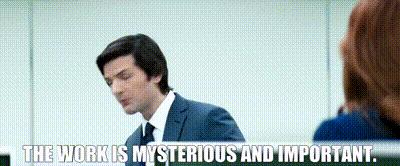
Sometimes you may feel lost (but your work is mysterious and important!)
Have you ever sat at your desk, staring at your screen, unsure whether what you’re doing even matters? I have. And I bet you have too. Here’s something nobody tells you when you start your research journey: feeling lost is not a sign you’re failing. It’s a sign you’re doing real research. Think about it. If the answer were already obvious, someone else would have found it. The confusion, the dead ends, the “what am I even doing here?” moments — that’s the territory of discovery. You’re not lost. You’re exploring somewhere nobody has been before.
9d •
Proposal Preparation for a 30-minute talk
Hi Community, I would like to test a talk topic with you for an upcoming event later this year. The deadline for the Call for Papers (CFP) closes tomorrow: https://compute.events/paris2026/cfp.html How does the proposal read to you? Is there an angle I missed, and would you want to spend 30 minutes listening to this topic? As with all abstract submissions, it needs to be short and to the point to get the message across to a reviewer in 30 seconds. Your feedback would be incredibly valuable in helping me tweak the text and land an invitation to speak! Thanks in advance for your thoughts and feedback! Gijs ============================================ Title: Navigating the Vanguard: A Practical Guide to Selecting Geospatial Foundation Models Brief Summary (Abstract) The recent explosion of Earth Observation Foundation Models (EO-FMs), such as AlphaEarth, TerraMind, and AnySat, has created unprecedented capabilities, but also severe "model fatigue". This talk provides a practical guide for data practitioners to make model selection easier and more transparent. We will map the current landscape of GeoAI models, demonstrate how to evaluate their predictive power using accessible open-source tools, and share a modular pipeline architecture to scale processing on standard cloud GPUs without requiring a high-performance computing (HPC) cluster (for testing the models' local accuracy). Finally, we will unpack the critical "semantic and temporal cautions" to ensure attendees understand the hidden uncertainties in their geospatial embeddings before making operational decisions, because all models are built for a specific purpose, and while they are called “Foundation Models”, there is not one model that fits all use cases - project domains are often very specific, and will need special tuned models to produce a solution. Description Objective & Central Thesis: The geospatial domain is currently experiencing a vanguard of multi-modal, general-purpose foundation models. The central thesis of this talk is that successfully navigating this landscape requires a structured approach to selecting and evaluating models, rather than treating them as magic black boxes. This practical guide aims to simplify model selection while emphasising scalable compute and rigorous uncertainty quantification.
1-30 of 214
powered by

skool.com/research-career-club-8446
Become 'go-to' research expert by delivering novel research; engaging outside academia; and building profile to amplify impact | Created by Prof Hanak
Suggested communities
Powered by