Activity
Mon
Wed
Fri
Sun
May
Jun
Jul
Aug
Sep
Oct
Nov
Dec
Jan
Feb
Mar
Apr
What is this?
Less
More
Memberships
Copywriting Launchpad
4.9k members • Free
Email Marketing & Copywriting
631 members • Free
ListKit's Cold Email Community
4.5k members • Free
4 contributions to Copywriting Launchpad

3d •
Stay ahead of AI
As AI rapidly changes everything, you don’t have to panic and assume you’ll end up doing manual labor just to survive. Four years ago, when people were still using ChatGPT for dad jokes, Mario Castelli said something that stuck with me: “Treat it like an intern.” That has been the most useful way to think about AI. AI is a tool. And people who know what they’re doing love good tools because they save time. But like any tool, if you don’t know what you’re doing, it won’t help you. Take copywriting. If you don’t understand what good copy looks like, AI won’t magically fix that. If you understand copy, you can treat AI like a junior assistant. You give it context, examples, and clear instructions. It gives you a draft you can actually use. And that’s the key. Most people still need to edit. AI doesn’t know what’s wrong unless you do. If you can’t see what needs fixing, you won’t get better output. Watch how the industry keeps shifting. First, people sold prompts. Then they sold courses on how to write prompts. Then they sold bots. Now they’re building AI agents that run tasks on their own. Some are even teaching people how to build systems of agents that work together. Same pattern. Better tools. There are a handful of people, like Mario and Luke Iha, who can push out ads that are basically ready to run. Even if you had their tools, it wouldn’t matter if you didn’t understand marketing like they do. So when everything starts moving fast and it feels overwhelming, I come back to one idea: Treat AI like an intern. If I want better results, I need to get better at directing it. That means staying up to date on marketing, understanding platforms, and knowing who actually has real expertise. More than anything, it comes down to critical thinking and common sense. That’s what keeps me pointed in the right direction. Over time, AI has made me better at marketing. But it’s also helped with random things like stain removal, fixing recipes, and figuring out what’s wrong with something around the house.
0
0
6d •
Four Facebook ads experts - free
I'm lucky to be in Jordan Hall's Rising Tide group. Even luckier to know Liana, Curt, and David personally from our live events. I've seen them present "What's Working Now" live and one thing I love is they are continually optimizing and experimenting. They honestly love helping people get around obstacles they've solved and generously share to save others the pain of figuring things out using trial and error. Please attend if you're interested and feel free to share the link. https://events.thevipcrew.com/ads Even though I don't manage Facebook ads for clients I would pay for this presentation just to stay up to date.
0 likes • 4d
@Nabeel Azeez thank you for letting me share this. I'm lucky my broad network keeps me informed. LOL. One person responded, "Thanks, but I don't work with Facebook ads." She doesn't see the value in see what's going on just to stay up to date. I'm constantly applying things I learn in one environment in other places. That's so much easier than inventing new things from scratch.
1 like • 3d
@Waisale Naqiolevu Less generous people charge hundreds of dollars for access to their "training material" that is often the stuff that used to work, but is out of date. That's the cycle... Do something that makes a lot of money. Don't tell people so they don't flood the market and compete. When everyone starts copying you and the algorithm or market changes, package your "system" and sell it to people who are less experienced and don't realize you're selling aging news. This is one of the first things Alen Sultanic pointed out. Even if you can't afford to join NHB+ or Fast Forward, you should follow his free Facebook group. He's posted things in there for free that saved people tons of money. Some of the things he's posted have been used to make a lot of money too.

Oct '25 •
🔐 {{START HERE}} Skool for Copywriters (Unlock Access)
Welcome to Copywriting Launchpad 🚀 Congratulations. You made an excellent decision to join us. You are now part of an exclusive community of ambitious, entrepreneurial individuals who are determined to achieve freedom through copywriting. This is your corner of the internet, a place where you can master your skills, share your experiences, and support your fellow copywriters on the same journey. In this community, you'll find a diverse group of copywriters who, like you, are taking aggressive action to achieve their goals. Are you ready to begin? Here's what you must do first. Unlock full community privileges so you can: - Create posts - Access your bonuses Start by introducing yourself to the community and welcoming other members below 👇 1. Scroll down to the comment area and introduce yourself. 2. Comment on 3 people's introductions. 3. Like 2 people's comments. Share a little bit about yourself and answer these questions: - Who are you? - Why did you decide to become a copywriter? - What is the current challenge you are trying to overcome? - Share an interesting, random, or noteworthy fact about yourself. PRO TIP: As you interact, you'll earn additional points which will unlock the ability to Post and DM other members, as well as potentially unlock additional gifts. Share freely and help other members out to climb the leaderboard and prove you are one of the real ones. Get the FULL WALKTHROUGH of the community & what you can unlock here.
2 likes • 15d
@Bob Mallory It's sad you had to go through that. Ever since 2015 social media censorship was a problem. Thank goodness the environment has changed and people like James O'Keefe, Nick Shirley, Tom Fitton, The Persistence, and Data Republican are exposing the magnitude of the widespread corruption and dishonest messaging.
3 likes • 15d
Hi everyone! I'm one of the original Nabeel fans who joined his group ages ago and I'm back to haunt you! 👻 Currently I split my time between Hawaii and Colorado without a set schedule. If you're new, make the most of this opportunity. I met one of my current friends and business partners in this group. He's helped me a ton in areas where I don't have the interest or talent to grind things out. (Namely tech stuff like integrations and automations and cool tools that will change marketing.) A bit about myself, after decades in the personal financial services industry (investment management, all lines insurance, trust and estates, qualified retirement plans, tax strategies, financial and retirement planning, and training and managing new business development officers), I got tired of looking out for other people's wealth. I always loved to write and informally rewrote a LOT of copy, seminars, etc. for banks and firms I worked at, so I didn't realize I was also a financial copywriter for decades. (This made me very compliance aware.) When I left financial and legal I started "real" copywriting. And when I saw businesses offered free trials, money back guarantees, and sold products and services for less than $2,500 my first reaction was, "Why aren't you selling thousands of dollars worth of this stuff every month?" 😆 So now I use my eclectic background and network of contacts to stay busy and help others. Some of my favorite projects right now: AI learning applications, $10,000 of free Google ads per month, two amazing products that minimize skin wrinkles and inflammation. If you read this far, you deserve a gold star. ⭐ Seriously, I've been in all sorts of groups like Copy Accelerator, Genius Network, Fast Forward and NHB+, Genesis, and Jordan Hall's Rising Tide mastermind. Nabeel's group is by far the best value for the financial cost! BUT, like anything else, your return varies directly with the amount and quality of effort. 💯
Oct '25 •
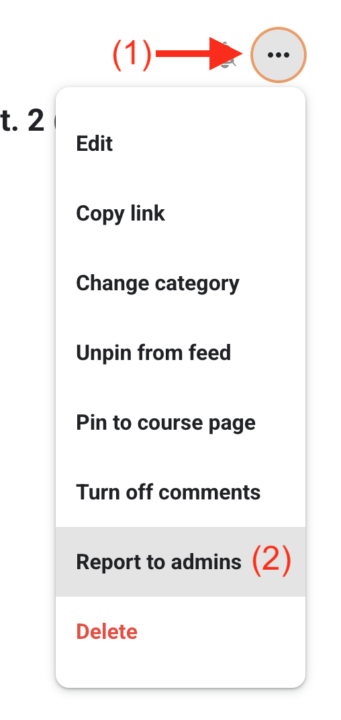
🚨 Important: Reporting Spam in Our Skool
We have a ZERO tolerance policy toward spammers, self-promoters, and low-effort posts. We want to keep this community high-quality and focused on helping each other succeed. Community Rules: 1. Be positive 2. Make an effort 3. No self-promotion ❌ No Soliciting / Self-Promotion: There is no soliciting allowed within this group. If someone is trying to sell you something or spamming you with unwanted messages, they will be removed from the group immediately. 🔍 How to Report a Post or Member who Breaks the Rules: (See attached screenshots) Let's work together to keep this Skool professional and valuable for everyone. Thanks for helping us maintain the integrity of our community.
0 likes • 15d
Keeping good guidelines is the best way to develop a true community and grow trust within the group. Thank you.
1-4 of 4

@carolyn-santo-9040
I solve business puzzles for profit and
write stories that stick like Velcro.
Active 3d ago
Joined Apr 1, 2026
Powered by